A single policy decision has overnight paralyzed the industrial heart of North America, shuttering plants and redrawing the continent’s economic map. The immediate trigger was President Trump’s imposition of 50% tariffs on steel and aluminum, a move that severed decades of integrated supply with devastating speed.
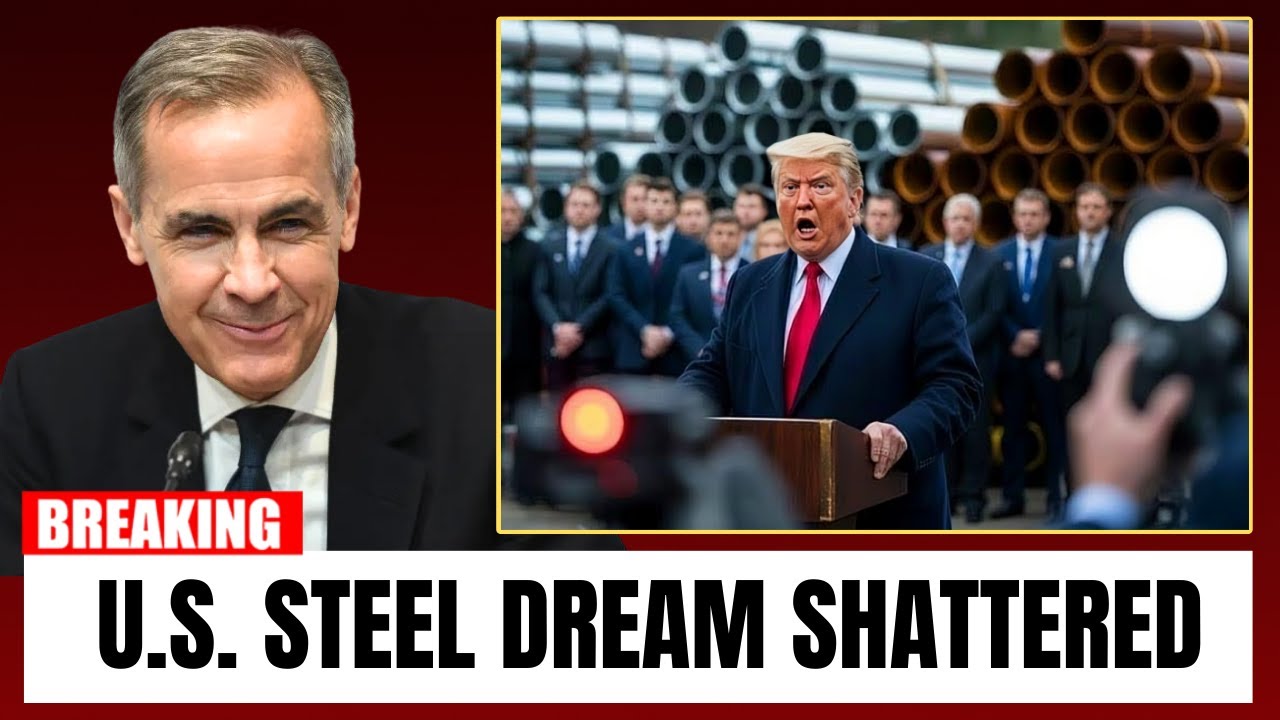
By August 1st, Canadian steel exports faced an additional 35% levy, catapulting a trade dispute into a full-scale economic confrontation. The justification, linked to fentanyl enforcement, was dismissed by Ottawa. Markets, however, moved faster than diplomats, triggering a catastrophic chain reaction.
Hot-rolled coil steel prices skyrocketed to $900 per ton, a $150 spike in just two weeks. This instant cost surge collapsed the financial structures of automakers wholly dependent on Canadian metal. Ford’s iconic F-150 uses roughly a ton of steel per truck.
Purchase orders were cancelled en masse to avoid tariff penalties. Rail networks seized as shipments stalled. At Ford’s historic River Rouge complex, stamping operations ground to a halt when steel supply simply vanished, symbolizing Detroit’s sudden paralysis.
The human impact was immediate and severe. Michigan’s unemployment rate jumped to 5.4%, the highest in the nation, as layoffs rippled through factory towns. In Windsor, a city built on auto manufacturing, a palpable anxiety settled over a workforce facing an uncertain future.
While Detroit faltered, Canada moved with decisive strategic purpose. Within 48 hours, Prime Minister Mark Carney unveiled a $1 billion industrial modernization plan, pivoting from crisis to long-term advantage.
The initiative accelerates the shift from coal-fired furnaces to electric arc and hydrogen-based production, leveraging Canada’s hydro and nuclear power. This simultaneously meets environmental goals and fortifies the sector for a low-carbon global market.
Ottawa then imposed its own 25% duty on Chinese steel and set import quotas, defending its domestic industry from dumping. A federal mandate requiring Canadian-made steel for all infrastructure projects was mirrored by provinces, shortening supply chains and securing jobs.
This measured, strategic response revealed a fundamental power shift. Canada was no longer waiting on U.S. purchasing decisions. With control of supply, it gained crucial leverage, reducing its reliance on a suddenly hostile southern market.
The cost to U.S. industry became staggering. Ford’s CEO warned Congress of a potential $2.5 billion annual hit, with steel adding nearly $900 to the cost of each F-Series truck. Sticker prices at dealerships jumped between $500 and $2,000.
Shortages spread beyond automotive. Texas energy firms scrambled for pipeline steel as Canadian producers prioritized domestic projects. Enbridge was forced to repurpose older inventory, while smaller contractors faced scarce supply and soaring costs.
Political appeals from Washington, with senators accusing Canada of a “blockade,” were met with targeted quotas that preserved Ottawa’s advantage. Canada quietly pivoted toward new international buyers in the EU, Japan, and India, aligning with their strict environmental standards.
By May 2025, Canadian steel exports to the U.S. had fallen from 75% to 68% of total output. Multi-year contracts through 2027 locked in revenue and stability elsewhere, fundamentally altering a decades-old trade relationship.
The human toll mounted on both sides of the border. An estimated 500,000 Canadian jobs remain linked to U.S. exports, and every stalled shipment threatened household stability. In the U.S., furloughs were announced at plants tied to Canadian steel.
Frustration grew as families postponed purchases and questioned the future of manufacturing careers. The crisis exposed how quickly assumed stability can vanish, and how ill-prepared communities are for such rapid, seismic change.
Parallel actions on Venezuela further illustrated the shifting global landscape. The revocation of Chevron’s license aimed to cripple Caracas by cutting off over 100,000 barrels per day of heavy crude bound for U.S. Gulf Coast refineries.
Instead of isolation, the sanctions created a vacuum. China, prepared by years of strategic partnership with Venezuela, moved to fill it. Beijing transitioned from opportunistic buyer to calculated controller of production.
Deploying its own platforms under a 20-year agreement, Chinese crews restored over 500 wells. Venezuelan output, once stagnant, is projected to hit 60,000 barrels per day by 2026, with roughly 90% of exports now flowing to China.
Washington’s assumption of unilateral economic control proved outdated. Each punitive step drove Caracas deeper into Beijing’s sphere, with China acting as financier, operator, and principal purchaser through a $60 billion debt-for-oil system.
The twin crises in steel and oil reveal a new economic reality. Preparedness, diversification, and long-term strategy have overtaken reactive confrontation. Nations that assumed supply chain permanence have watched their leverage fade overnight.
Canada’s focused investment and market diversification stand in stark contrast to the disruption facing U.S. manufacturers. China’s calculated capture of Venezuelan energy underscores the rise of a multipolar world where sanctions can backfire spectacularly.
The overnight shutdown of Detroit is more than a supply chain failure. It is a profound warning about economic interdependence in an age of strategic competition. The future belongs not to the largest economy, but to the most resilient one.