Something historic just happened—and most Americans didn’t see it coming.
In early 2026, Canada, a country with barely one-tenth of the U.S. population, triggered one of the most dramatic economic realignments since the Cold War. Not with tanks. Not with sanctions. But with patience, precision, and a strategy so calculated it left the White House scrambling.
At the center of it all is Mark Carney, Canada’s newly minted prime minister and former central banker who has spent his career navigating global financial crises.
On January 20, 2026, Carney stepped onto the stage at the World Economic Forum in Davos and delivered what sounded like a polite speech—but functioned like a declaration of independence.
“The American-led rules-based order has suffered a rupture,” he said.
Seven words. Sixty years of geopolitical assumptions shattered.
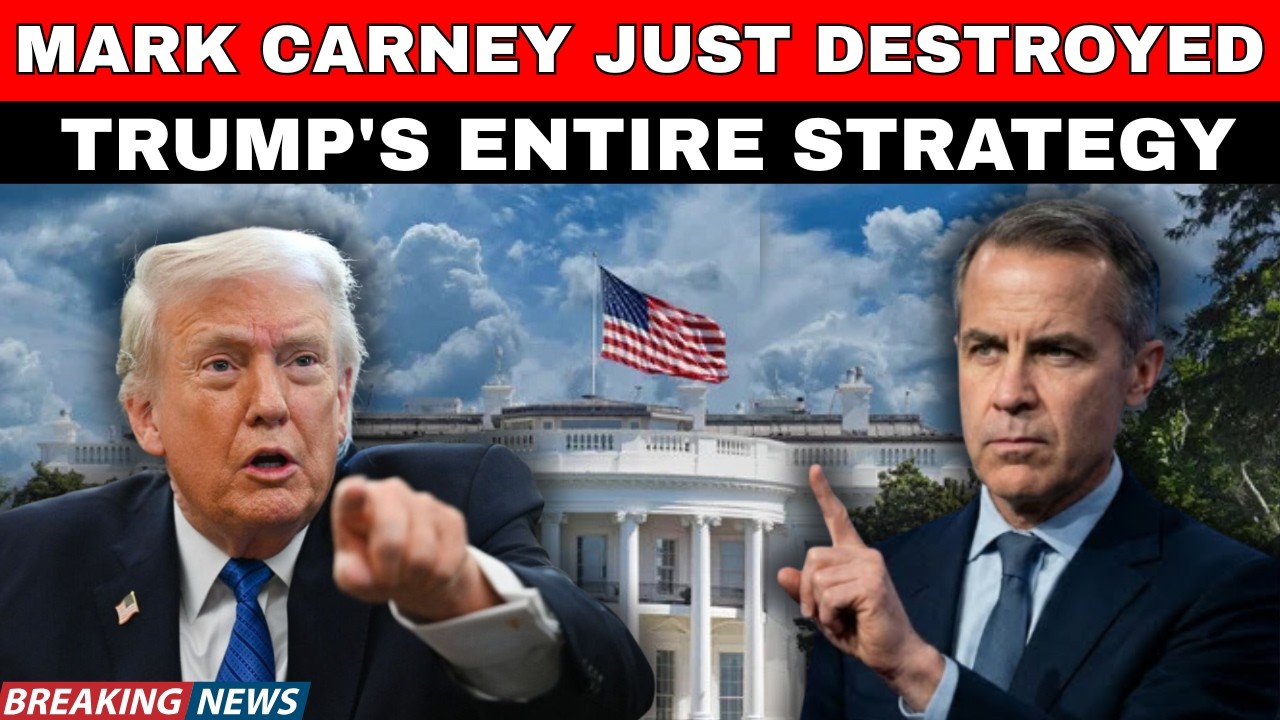
Then came the line that electrified the room: “If you’re not at the table, you’re on the menu.” Davos elites stood and applauded—something almost unheard of when someone openly challenges American dominance. In Washington, Donald Trump heard alarm bells.
Because this wasn’t symbolism. It was a signal.
Just four days earlier, Carney had quietly flown to Beijing, becoming the first Canadian leader in eight years to meet China’s president. What he walked away with stunned trade experts: a preliminary agreement unlocking roughly $7 billion in new export markets for Canadian agriculture, while slashing Chinese tariffs on Canadian canola from 85% to 15%.
In return, Canada allowed tens of thousands of Chinese electric vehicles into its market at a modest tariff—while the U.S. maintains a punishing 100% rate.
The math was brutal. China gained a backdoor into North America. Canada gained access to the world’s second-largest economy. And the United States gained… nothing.
Trump responded the only way he knows how: threats. On Truth Social, he warned Canada would face 100% tariffs if it dared deepen ties with China. He even referred to Carney as “Governor,” not Prime Minister—part of a long-running pattern where Trump openly muses about Canada becoming the “51st state.”
What Trump saw as intimidation, Canadians saw as disrespect. And the backlash was immediate.
Provinces began acting independently. Quebec stripped American products from shelves. Ontario canceled a $100 million Starlink contract. British Columbia doubled tolls on U.S. commercial trucks.
Nova Scotia banned U.S. alcohol outright. None of this came from Ottawa. It came from voters, premiers, and consumers.
Canadian travel to the U.S. plunged more than 30%. American liquor sales collapsed by as much as 85% in some quarters. Millions of Canadians weren’t following policy—they were making a cultural decision to walk away.
Behind the scenes, Carney was moving even faster. In just six months, Canada signed or finalized 12 new economic and security agreements across four continents, deliberately reducing its reliance on the United States. U.S.-bound exports dropped to the lowest share on record.
Every percentage point lost meant billions redirected to Asia, Europe, and emerging markets.
Trump’s tariffs, justified publicly by fentanyl concerns, collapsed under scrutiny. Less than 0.2% of seized fentanyl came from the Canadian border. Facts didn’t matter. Escalation did.
But here’s the trap Trump walked into: Canada isn’t just a trading partner. It’s a foundational supplier. Canadian steel builds American cars. Canadian aluminum shapes U.S. aircraft. Canadian energy heats homes and fuels refineries designed for crude found almost nowhere else.
You can’t replace that overnight. Or even in a decade.
As prices rose and supply chains fractured, pressure spread inside the U.S. Senate. In October 2025, bipartisan lawmakers moved to block Trump’s Canada tariffs. When senior Republicans publicly called the policy economically destructive, the message was unmistakable: the leverage was gone.
Now, with North American trade talks looming in 2026, Canada enters from a position of strength—and the White House doesn’t.
Carney’s real achievement isn’t humiliating Trump. It’s something far bigger. He’s written a playbook for middle powers everywhere: when economic integration becomes a weapon, don’t fight back symmetrically. Diversify. Coordinate. Build alternatives.
And once those alternatives exist, coercion stops working.
This wasn’t just Canada pushing back. It was the opening crack in an economic system built on American gravity. And once that gravity weakens, everyone—from Tokyo to Berlin to Seoul—starts recalculating.
The chain reaction isn’t coming.
It’s already here.