“I’VE HAD IT” STAR JENNIFER WELCH UNLEASHES ON STEPHEN MILLER.
“YOU’RE SOCIOPATHS” AND ARCHITECT OF “NAZI-STYLE IDEALS”
The current political landscape is defined by the endless cycle of accusations and outrage, but rarely does a confrontation land with the direct, unvarnished force of a viral audio clip. That is precisely what happened when Jennifer Welch, the highly successful co-host of the “I’ve Had It” podcast, demolished the public complaints of former White House adviser Stephen Miller and his wife, Katie Miller.
The couple had taken to the public airwaves to voice their “hateful” grievance over being continuously labeled white supremacists and Nazis, attempting to frame the labels as mere political attacks born of ideological disagreement. Welch’s response was immediate, powerful, and utterly uncompromising.

The confrontation is a perfect microcosm of the modern political media ecosystem: a high-profile, influential figure from the unapologetically liberal “Yap-olution” media is challenging a key architect of the hardline conservative establishment. Welch, who along with co-host Angie “Pumps” Sullivan, has carved out a massive following with their profane, straight-talking, and left-wing political commentary, wasted no time in dismantling the Millers’ defense.
A Vow for Universal Human Rights
Katie Miller, attempting to leverage her political history into the lucrative right-wing podcast griftosphere, clearly miscalculated the force of the inevitable counter-attack. Welch did not mince words, addressing the Miller’s complaint that the accusations against them were “hateful.”
“If you think that my opinion that you and your husband are Nazi white nationalists is hateful, good, good, because I will stand with every American, immigrants, people with brown and black skin and LGBTQ+, and I will stand with them because I believe in universal human rights.”
This statement serves as the moral foundation of her entire argument. Welch positioned the confrontation not as a typical partisan squabble over tax brackets or budgetary priorities, but as a fundamental clash over universal human rights—a core democratic ideal she believes the Millers’ policies actively repudiate. The message was preached directly to the audience, validating the shared outrage felt by those who view the Millers’ policies as fundamentally cruel and inhumane toward marginalized groups, including immigrants and people with brown and black skin.
The Cruelty and the Covert Agents
Welch then moved from the philosophical to the highly specific, zeroing in on the immigration policies that Stephen Miller is widely acknowledged to have engineered during his tenure as a senior White House aide. It is here that her accusation crossed the line from political criticism into the realm of alleged criminal and humanitarian crisis.
“I do not believe in any way, shape, or form in the cruelty that your husband is launching. He literally has masked agents going out into the streets and abducting people, sending them to El Salvador, and then, oops, are bad, then sending them back.”
This explosive claim references the highly controversial and frequently reported actions taken by the administration regarding deportations and the use of federal law enforcement. The details about “masked agents” and the specific mention of “El Salvador” point directly to documented legal and congressional concerns raised over the rendition and deportation of hundreds of individuals—many without proper due process—to prisons like the notorious CECOT in El Salvador, sometimes in direct defiance of U.S. federal court orders.
The phrase “oops, are bad, then sending them back” is a colloquial, yet damning, reference to cases where individuals, including U.S. residents or those with standing legal claims, were allegedly deported under dubious circumstances, forcing complex legal battles for their return.

Welch is clearly leveraging the widespread public and legal condemnation of Miller’s policies, which often circumvented judicial oversight and aggressively pursued mass arrests and removals.
Sociopaths at the Top of the List
The takedown reached its fever pitch as Welch delivered a final, visceral judgment on the character of the Millers. She vowed her fight would be endless, framing the Miller’s ideology as an existential threat to American values.
“It will always be called out. I will never stop calling out the injustice and the cruelty and Nazi-style ideals that your husband has. I will never stop, ever.”
The repeated use of terms like “cruelty” and “Nazi-style ideals” is a direct and intentional escalation, designed to deny the Millers the comfort of claiming mere political disagreement. Instead, Welch asserts that their worldview is inherently dangerous and morally repugnant. The culmination of her condemnation was intensely personal and public:
“I will always stand for universal human rights, and I will always believe that there are so many better Americans in this country than you and your husband, and the freaks that surround you all in the White House, it is embarrassing. You’re sociopaths. You are literally, when I think of horrible people in this country, you and your husband are at the very top of the list.”
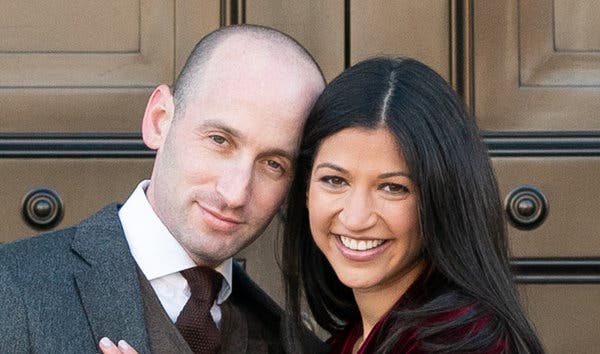
This powerful conclusion, delivered with the unvarnished honesty that defines the “I’ve Had It” brand, successfully demolishes the Millers’ attempt to seek pity or political sympathy. By labeling them “sociopaths” and placing them at the “very top of the list” of horrible people, Welch transformed the podcast segment into a defiant moral judgment that has resonated with millions.
It serves as a rallying cry for activists and ordinary citizens who view the normalization of the Millers’ hardline anti-immigrant and xenophobic policies as the primary evil of the recent political era. In the age of viral media, Welch’s words are not just an opinion; they are a gauntlet thrown down, vowing that the fight for universal human rights against those accused of evil little goons’ policies will not end.
The podcast clip White House aide Stephen Miller defends wrongful deportation of man to El Salvador provides context on Stephen Miller’s defense of a deportation to El Salvador, which is directly referenced in Jennifer Welch’s viral takedown.






