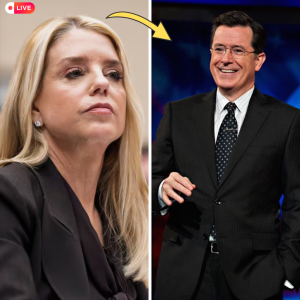
The late-night television landscape is bracing for what many are calling its most seismic upheaval in decades. **Stephen Colbert**, the sharp-tongued host of CBS’s *The Late Show*, has reportedly escalated his public feud with the network following its July 2025 decision to cancel his program, set to conclude in **May 2026**. Sources describe Colbert’s recent monologues and off-air comments as a direct “firing back” at CBS and parent company Paramount Global, accusing them of capitulating to external pressures rather than owning up to financial excuses. This defiance has ignited quiet but intense behind-the-scenes support from fellow late-night powerhouses **Jimmy Fallon**, **Seth Meyers**, and **John Oliver**, fueling speculation of a coordinated pushback that could redefine the genre.
The saga traces back to mid-2025, when CBS announced the end of *The Late Show* after 33 years (22 under David Letterman and 11 under Colbert), citing mounting losses—estimated at tens of millions annually—and a “challenging backdrop” in declining linear TV viewership. The timing raised eyebrows: the cancellation came mere days after Colbert lambasted Paramount for settling a $16 million lawsuit with President Donald Trump over alleged deceptive editing in a *60 Minutes* interview. Colbert called the payout a “big fat bribe,” and critics, including senators and media watchdogs, questioned whether political retribution played a role despite CBS’s insistence it was purely economic.
In the months since, Colbert has used his platform with uncharacteristic boldness. Post-cancellation monologues have grown more pointed, with the host daring executives to pull him early, framing any premature end as proof of ulterior motives. “They made one mistake: They left me alive!” he quipped to roaring crowds, turning potential vulnerability into a rallying cry. By early 2026, as the show’s final season progressed, Colbert’s reflections on 2025—shared in interviews like his CNN New Year’s Eve appearance—were blunt: the year’s events nearly “broke” him, yet he emerged more defiant, hinting at lessons in resilience against corporate and political interference.
This stance has resonated deeply among peers. Fallon, Meyers, and Oliver—longtime allies from collaborations like the 2023 *Strike Force Five* podcast during the writers’ strike—have shown solidarity in subtle yet unmistakable ways. Following the initial announcement, the trio (along with Jon Stewart and others) made surprise cameos on *The Late Show* in a memorable Coldplay-inspired “kiss cam” spoof, turning the audience into a gallery of support. Fallon and Meyers shared beers on camera, Oliver and Stewart flipped double birds at the lens, and the segment became an instant viral symbol of unity. Though no formal alliance has been declared, industry whispers suggest ongoing private discussions about mutual support, shared platforms, or even joint projects as Colbert’s run winds down.
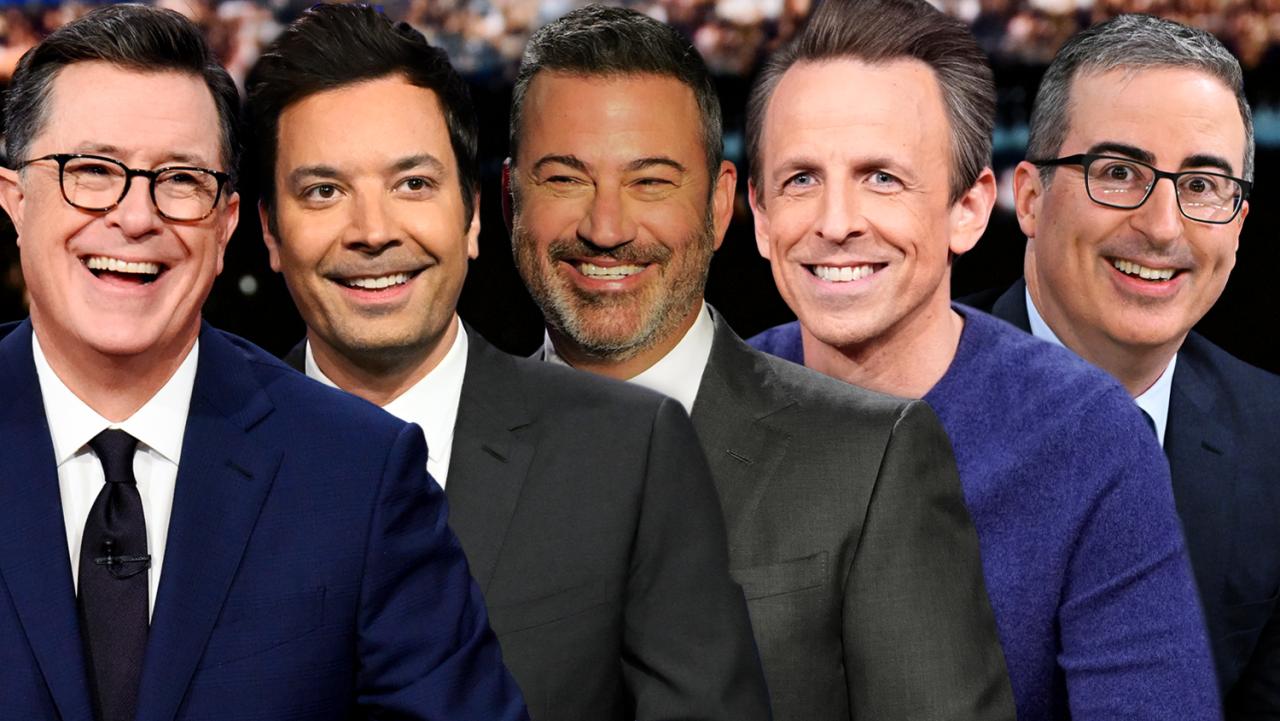
Fans have seized on every detail, flooding social media and comment sections with theories. “This feels bigger than a network dispute—it’s personal,” one anonymous insider told outlets, capturing the sentiment that Colbert’s fight transcends ratings or budgets. Online forums dissect monologues for coded messages, analyze guest lists for clues, and launch petitions urging boycotts or renewals. Some speculate the “quiet alignment” could evolve into something bolder: a cross-network special, a streaming series, or a creator-led initiative bypassing traditional gatekeepers. Past precedents—like the *Strike Force Five* podcast that raised funds for striking staff—lend credibility to the idea that these hosts can mobilize when stakes are high.
The stakes are indeed high. Late-night TV, once a cultural powerhouse, has struggled with cord-cutting, streaming fragmentation, and shifting ad dollars. Colbert’s show, despite topping broadcast ratings in its slot, faced the same headwinds. Yet its cancellation has sparked broader anxiety: if the No. 1 program can vanish, what does that mean for satire in an era of heightened political sensitivity? Trump’s public celebrations of the move, and threats against other hosts like Jimmy Kimmel (who faced his own suspension drama in 2025), have amplified fears of reprisal. Kimmel, Fallon, Meyers, and Oliver have all critiqued power structures in their own ways; a unified front could amplify that voice exponentially.
CBS executives, meanwhile, appear caught off-guard by the backlash. Public statements have reiterated the financial rationale, emphasizing Colbert’s “irreplaceable” status while retiring the *Late Show* franchise entirely—no replacement planned. Behind closed doors, however, the network faces mounting pressure: affiliate pushback, advertiser unease, and a talent exodus risk. Colbert’s continued on-air barbs have reportedly led to tense internal conversations about contract enforcement in his remaining months.
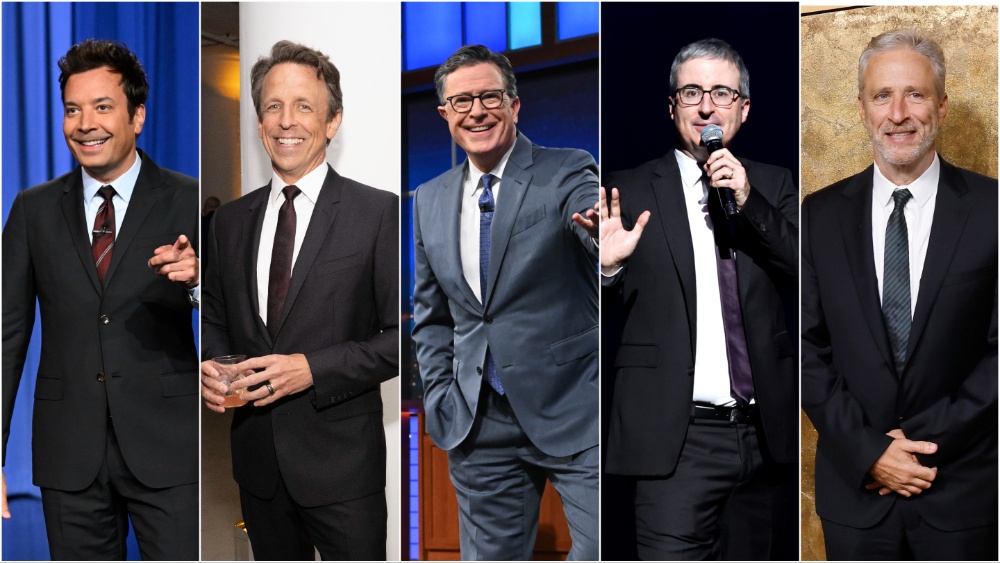
For Fallon, Meyers, and Oliver, the alignment is pragmatic as much as principled. Fallon’s crowd-pleasing style on NBC, Meyers’ thoughtful dissections, and Oliver’s in-depth exposés complement Colbert’s political edge. Their past collaborations prove they work well together, and with Colbert potentially free post-May 2026, rumors swirl of new ventures—perhaps a multi-host format on streaming, podcasts, or even a revived late-night block unshackled from network constraints.
As January 2026 unfolds, the drama intensifies. Colbert’s monologues grow fiercer, fans dissect every hint, and the late-night community watches closely. Will this escalate into open confrontation, or resolve quietly? One thing is certain: the old model of isolated hosts competing in network silos is cracking. If Fallon, Meyers, Oliver, and others stand fully behind Colbert, late-night TV could emerge transformed—not diminished, but reborn through creator solidarity.
The comments sections buzz with anticipation: “This is the revolution we’ve been waiting for,” one fan posted. “Late-night chaos is just beginning.” Whether it leads to collapse or renaissance, the showdown is underway—and audiences are glued to every twist.