In March 2025, Canada did something NATO countries almost never do once the ink is dry: it reopened a mega-deal for America’s flagship fighter jet.
The Carney government signaled it was taking a hard second look at the plan to buy 88 F-35A Lightning II jets—an agreement sold to the public as essentially settled, only to be jolted back into controversy by one brutal fact: the cost has been exploding. Canada’s Auditor General reported that the project’s estimated costs had climbed to C$27.7 billion by 2024—almost 50% higher than earlier figures, and that this still excluded major items needed for full operational capability, including infrastructure upgrades and advanced weapons that would add at least another C$5.5 billion.
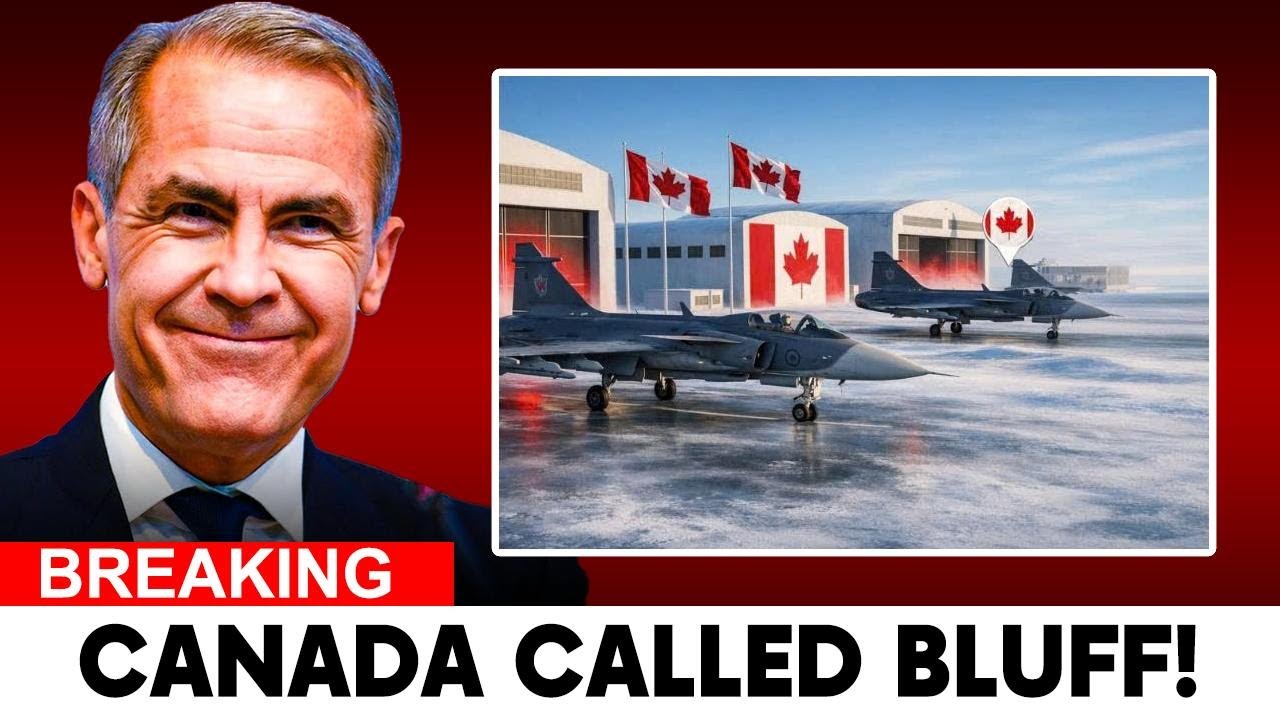
That’s how a fighter purchase turns into a political earthquake.
Because this isn’t only about price. It’s about control—who holds the keys to Canada’s air power for the next 30–40 years.
Enter Saab.
Sweden’s defense firm has been pushing the Gripen E as a different kind of deal: not just “buy our jets,” but build them here, upgrade them here, sustain them here. Saab has floated job numbers that instantly grab headlines—up to 10,000 jobs in some reporting, and even 12,600 jobs tied to a broader package that includes Gripen and surveillance aircraft.

That pitch lands hard in a country where defense spending is increasingly being treated as industrial strategy—technology, manufacturing capacity, and leverage—rather than a cheque written overseas.
But Washington’s discomfort isn’t mysterious. The F-35 isn’t just a plane; it’s an ecosystem—software, sensors, encrypted data-sharing, maintenance pipelines, upgrades, and a supply chain that binds allies into long-term dependence. If Canada starts peeling away from a full 88-jet fleet, it doesn’t merely change Canada’s air force—it sends a message to every other partner: you can reconsider too.
And Ottawa’s reconsideration is happening in a politically combustible moment.
In June 2025, the Auditor General’s report blew open the cost debate and amplified fears that the public-facing number didn’t capture the real bill. As trade tensions and tariff threats rose, Canadians began viewing defense procurement through a new lens: not “which jet is best,” but “how vulnerable do we become if politics turns?”
Saab’s argument is tailor-made for that mood. The company has been emphasizing technology transfer and domestic assembly—selling the Gripen not only as an aircraft, but as a path to autonomy. And the timing got even more interesting when Canada and Sweden publicly moved toward deeper aerospace and defense cooperation in August 2025, with Arctic security and industrial collaboration highlighted as shared priorities.

Still, the story has a twist that complicates the “Canada breaks free” narrative.
Leaked evaluation documents reported by Radio-Canada suggest the F-35 didn’t just win Canada’s fighter competition—it crushed the Gripen on scored criteria. The reported figures show the F-35 at 57.1/60, versus the Gripen at 19.8/60. That’s not a photo finish. That’s a gulf—fuel for critics who argue Ottawa is reopening the debate for political optics, not military necessity.
And even the “switching jets cuts U.S. influence” claim comes with an awkward catch: the Gripen E uses the GE F414 engine, which is American—meaning U.S. export approvals could still matter. Saab can offer more freedom than the F-35 architecture, but it can’t completely erase U.S. leverage if key components remain U.S.-controlled.
So why is this shaking Washington?
Because the move signals something larger than procurement drama. It’s Canada testing a new posture: interoperability without obedience—keeping alliance credibility while expanding options, industrial capacity, and negotiating power.
Ottawa has not, as of January 2026, publicly canceled the first tranche of F-35s already in motion. But the moment Canada openly weighs a split fleet—some F-35s for certain missions, and Canadian-assembled Gripens for Arctic patrol and routine defense—the politics become explosive. One path locks Canada deeper into America’s system. The other path risks friction, but buys breathing room.
And that’s the real shockwave: Canada isn’t just shopping for jets. It’s deciding whether the next generation of Canadian air power is owned, or merely operated.