Across North America, the World Cup machine is supposed to be humming. Grass trimmed like velvet in Los Angeles. Security rehearsals in Miami. Broadcast towers rising in New York.
FIFA says demand has gone nuclear—millions of fans chasing seats for what was marketed as the biggest, most unifying tournament ever.
But in early 2026, the mood shifted from celebration to panic, because the drama isn’t happening on the pitch.
It’s happening at the border.
A wave of viral claims has surged online suggesting “World Cup 2026 could be cancelled” or that Europe is preparing a full boycott after Donald Trump’s immigration crackdown allegedly turned the tournament into a “geopolitical lottery.”
Here’s what’s real—and why it’s still explosive.
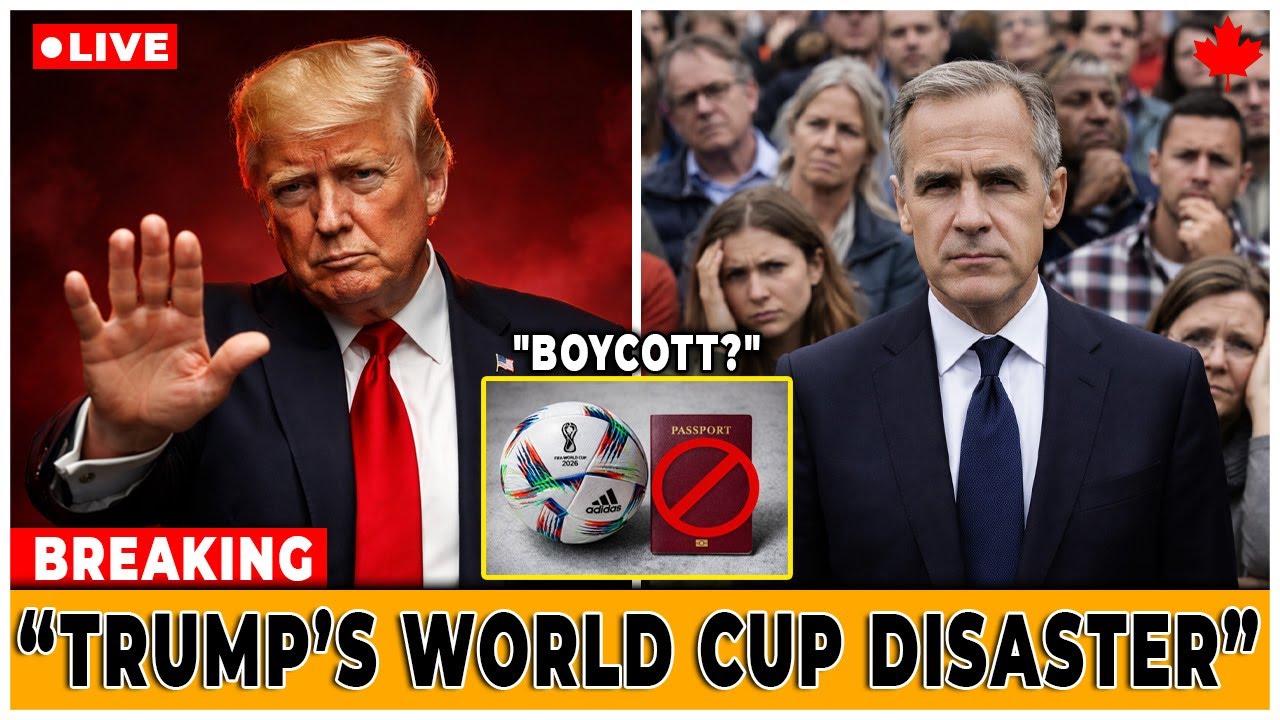
On January 15, 2026, multiple outlets reported that the U.S. State Department announced an indefinite halt to immigrant visa processing for people from 75 countries as part of a broader immigration escalation framed around “public charge” concerns.
That headline alone detonated anxiety around the World Cup—because fans immediately assumed it meant match-going supporters would be blocked en masse.
But there’s a crucial detail: reporting also indicates this move targets immigrant visa processing, and does not apply to visitors or short-term visa holders in the same way many people assumed.
That doesn’t erase the fear—it changes the battlefield. Instead of a clean “ban,” the chaos becomes administrative: delays, uncertainty, uneven enforcement, and the creeping feeling that entry could hinge on politics rather than paperwork.
And then came the optics grenade: Trump receiving FIFA’s inaugural “FIFA Peace Prize – Football Unites the World” during the World Cup 2026 final draw in Washington, D.C.
To critics, it looked like a trophy handed out on the same stage where global fans were starting to feel unwelcome. Even mainstream coverage framed the moment as highly controversial.
So where does the “Europe boycott” storyline come from?
There have been public calls and debate in Europe about whether teams should consider boycotting the tournament in protest—but Germany’s football federation has also explicitly ruled out a boycott, pushing back on the idea that a European walkout is settled policy.
In other words: the boycott threat is real as a political talking point—but not confirmed as a coordinated European decision.
Meanwhile, the political pressure campaign is undeniably spreading. In the UK, a cross-party group of MPs signed a motion urging international sporting bodies to consider stronger action against the U.S., with the 2026 World Cup pulled into the argument.
That doesn’t “kick America out” tomorrow—but it signals something darker: the World Cup has become a proxy war for global anger at Washington.
Now picture FIFA’s nightmare scenario: not an official cancellation, but a slow-motion collapse—empty seats, travel hesitation, sponsors sweating, and host cities stuck with stadium lights blazing over half-filled stands.
The tournament wouldn’t need to be cancelled to feel like a disaster. It would only need the world to decide, quietly and individually, that it’s not worth the risk.
So no, there’s no verified announcement that World Cup 2026 is “cancelled.” But the bigger story might be worse: a tournament designed to unite the planet is being dragged into the kind of political turbulence that makes fans feel like collateral damage.
The countdown is on—and the next headline could be written at an airport desk.