A $30 BILLION World Cup… and fans are quietly changing their plans.
The real battle of 2026 may not be on the field—it’s over where the world chooses to go.
The 2026 FIFA World Cup was supposed to be America’s moment.

With 78 matches, including every game from the quarterfinals to the final, the United States was positioned as the undisputed center of the biggest sporting event on the planet. Economists projected a massive economic boom—tens of billions of dollars in activity, nearly 200,000 jobs, and millions of international visitors flooding cities from Los Angeles to New York.
But something unexpected is happening.
As the countdown to kickoff begins, early signals suggest the spotlight may not shine as brightly on the United States as once predicted. Instead, fans are quietly shifting their attention north and south—toward Canada and Mexico.
And the reasons are raising serious questions.
At first glance, the numbers don’t seem alarming. Stadiums will still fill. Matches will still draw global audiences. But beneath the surface, a subtle shift is unfolding—one that could reshape the economic outcome of the tournament.
International tourism to the United States declined by more than 5% in 2025, even as global travel surged elsewhere. While travelers returned in growing numbers to Europe, Asia, and Latin America, the U.S.—the primary host of the World Cup—moved in the opposite direction.
That divergence is hard to ignore.
Cost is one of the biggest factors.

Ticket prices for matches in American cities are significantly higher than those in Canada or Mexico. For fans planning multi-city trips—often following their national teams across several games—those differences quickly add up.
A choice between Los Angeles and Mexico City isn’t just about football—it’s about affordability.
And increasingly, fans are choosing the cheaper route.
But price is only part of the story.
Entry requirements are becoming another key factor influencing decisions. While the U.S. offers visa-free travel for many countries through ESTA, recent proposals to expand screening—such as reviewing applicants’ social media history—have raised concerns among travelers.
Even the perception of stricter scrutiny can be enough to push visitors elsewhere—especially when Canada and Mexico offer simpler alternatives just across the border.
And that’s exactly what’s happening.
Cities like Toronto and Vancouver are already seeing strong booking activity for summer 2026, despite hosting fewer matches. In Mexico, excitement is building around the opening game at the iconic Estadio Azteca—a venue steeped in football history.
For international visitors, the appeal is clear.
Lower costs. Easier entry. Rich cultural experiences.
In a tournament spanning three countries, fans have options—and they’re using them.
This shift carries serious economic implications.
International tourists spend significantly more than domestic visitors—often up to four times as much on hotels, food, and entertainment. If the U.S. sees fewer overseas visitors and more local attendees, the total economic impact could fall short of those ambitious $30 billion projections.
And there’s more.
Several U.S. host cities have scaled back plans for large fan festivals—those vibrant public viewing areas that transform entire neighborhoods into global celebrations. In past tournaments, these events have drawn hundreds of thousands of people, generating massive spending and unforgettable atmosphere.
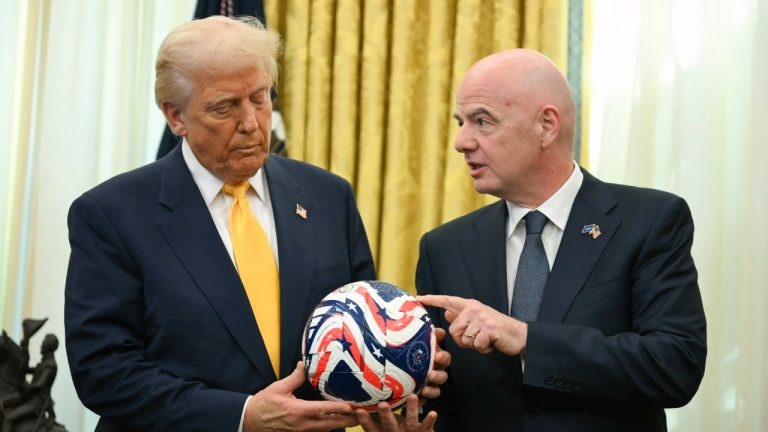
Without them, something essential may be missing.
Because the World Cup isn’t just about matches—it’s about experience.
The energy. The crowds. The feeling of being part of something global.
And that brings us to the most important factor of all: perception.
Global sporting events are more than economic opportunities—they are moments of national storytelling. They shape how countries are seen by millions of visitors and billions watching from afar.
In 1994, when the U.S. last hosted the World Cup, it was a turning point. Record attendance helped launch Major League Soccer and cemented the country’s place in global football culture.

The 2026 edition is even bigger—48 teams, 104 matches, and a scale never seen before.
The opportunity is enormous.
But so is the risk.
Because in a tournament shared across borders, fans are making choices—not just about where to watch games, but where they feel most welcome.
And that choice could define the true winner of the 2026 World Cup—not on the scoreboard, but on the global stage.