The warning didn’t come quietly. It wasn’t delivered behind closed doors or softened with diplomatic language. It was spoken in public—clearly, bluntly, and with consequences attached.
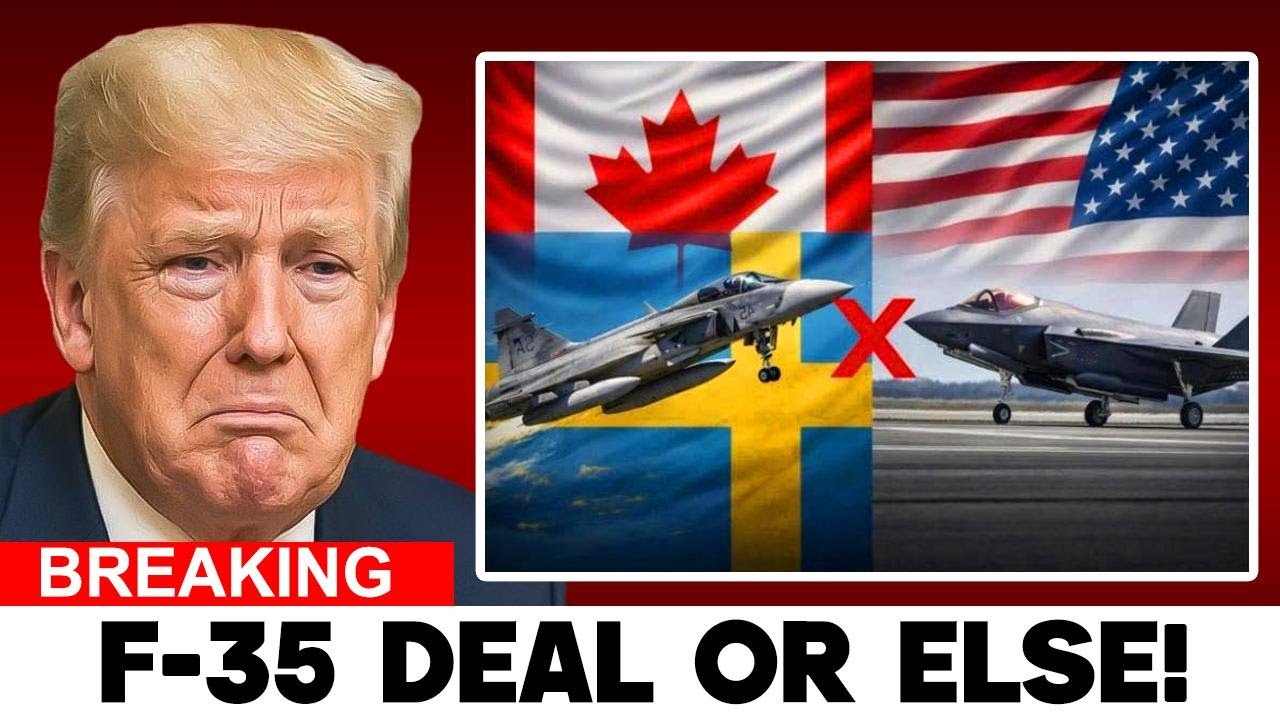
Canada, already locked in a tense trade fight with Donald Trump, suddenly found its national defense decision dragged into the economic battlefield. At the center of the storm: Canada’s multi-billion-dollar plan to purchase American-made F-35 fighter jets—and a U.S. ambassador who appeared to link military loyalty directly to trade survival.
At an international security conference, the message landed like a thunderclap. If Canada walked away from the F-35 deal, Washington would not pursue a trade agreement. No negotiation. No compromise. Just pressure.
For many in Ottawa, the moment crossed a line.
What should have been a sober discussion about defense capability, cost, and long-term strategy instantly became a test of sovereignty. Prime Minister Mark Carney’s government, which had already begun reassessing the F-35 program, now faced a stark question: Was Canada free to choose its own defense path—or not?
The F-35 project, long promoted as a symbol of alliance interoperability, has always carried controversy. Cost overruns, maintenance delays, and readiness shortfalls have followed the program for years. U.S. lawmakers themselves have acknowledged that large portions of the fleet remain grounded well below promised readiness rates, with billions lost to delays and overruns.
But the deeper concern isn’t just performance. It’s control.
Under the F-35 framework, the United States retains authority over the jet’s software, upgrades, and critical systems. Every aircraft is tied into a U.S.-controlled logistics network. That means Canada cannot independently modify, maintain, or fully operate its own fleet without American approval. In a political dispute, access to parts or updates could be delayed—or restricted entirely.
That reality has begun to unsettle even former supporters of the program. Retired Canadian generals who once backed the F-35 are now warning that operational sovereignty is compromised when a nation does not control its own weapons systems. Those warnings feel sharper when paired with Trump’s past rhetoric about Canada as a “51st state,” comments that many Canadians dismissed as bluster—until pressure like this appeared.
Then came the alternative.
Almost quietly, Sweden entered the conversation with a radically different proposal. Saab, backed by the Swedish government, offered Canada the Gripen E fighter jet—but with a twist that changed everything. The deal included full technology transfer, a domestic assembly plant, and the creation of up to 10,000 Canadian aerospace jobs.
Instead of being a customer, Canada would become a partner.
Under the Swedish model, Canada could build, maintain, upgrade, and even export the aircraft. Control would stay in Ottawa, not Washington. Defense analysts call this “sovereign sustainment”—a system designed to ensure that national security assets cannot be immobilized by foreign political decisions.
The contrast was impossible to ignore.

While the U.S. response relied on pressure and economic threats, Sweden offered autonomy, jobs, and long-term industrial growth. The Gripen’s operating costs are also dramatically lower—estimated at a fraction of the F-35’s per-hour flight costs—allowing for more training, more deployments, and less strain on defense budgets.
Canada’s Auditor General has already warned that F-35 ownership could cost tens of billions over its lifetime, including hundreds of millions more to retrofit hangars and infrastructure. Those expenses were never highlighted in glossy brochures or political talking points.
The diplomatic pressure only intensified public scrutiny. Critics pointed to Denmark’s experience, where components from Danish-owned F-35s were reassigned by the U.S. without consent, demonstrating just how conditional “ownership” can be under the program.
Suddenly, the issue was no longer about jets.
It was about leverage.
If trade agreements can be threatened to force defense purchases, what does alliance really mean? If a country cannot freely decide how to defend its own airspace, can it truly claim sovereignty?
Prime Minister Carney has remained measured, insisting Canada will choose what best serves its people—not foreign corporations or political agendas. Funding has been approved. The procurement window is open. But the pressure campaign has transformed the decision into something far bigger than a contract.
This is now a defining moment.
Will Canada assert its independence—or accept that even its defense choices come with strings attached?