JD Vance, Anti-Semitism, and the Republican Party’s Hardest Post-Trump Test
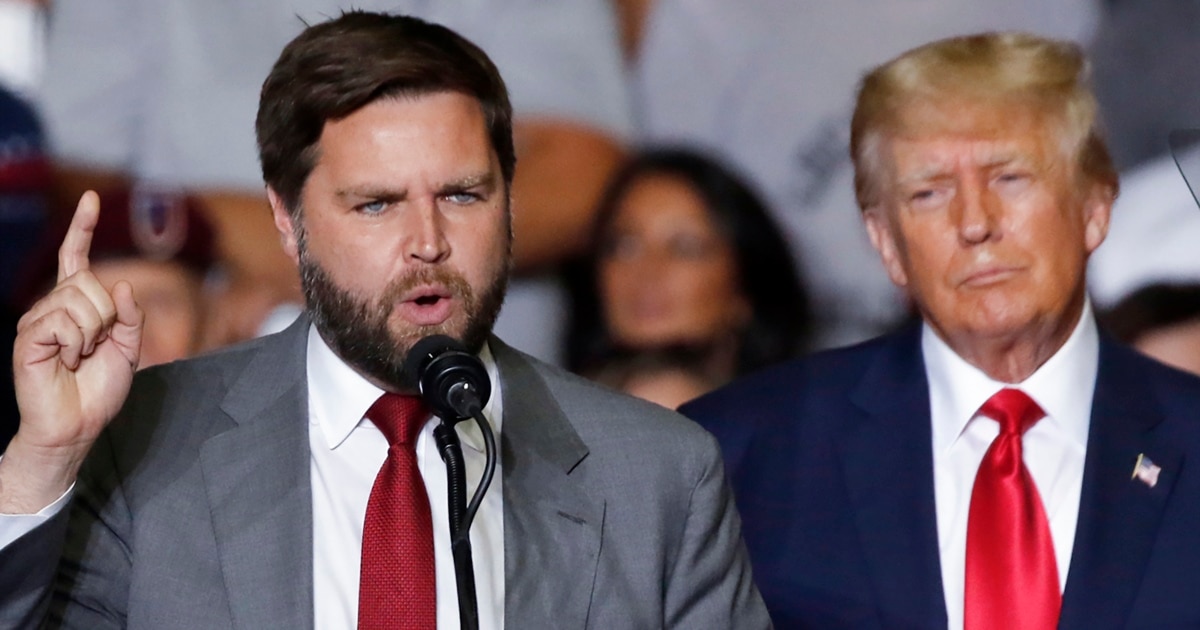
Across nearly every internal memo and public poll circulating in conservative political circles in recent months, Senator JD Vance of Ohio has emerged as the clear frontrunner in the race to lead the Republican Party after Donald Trump. Yet as Trump increasingly appears weakened—politically and physically—one question has become impossible for Vance to avoid: how will he confront the growing problem of antisemitism within the very movement that elevated him?
A seemingly innocuous cable-news interview recently exposed just how fraught that question has become.
A Softball Question — and a Costly Answer
During an appearance with Scott Jennings, a longtime conservative commentator closely associated with establishment Republican politics in Washington, Vance was asked whether the conservative movement needed to “warehouse” or reject individuals who espouse antisemitic views.
By the standards of political television, it was a softball — a low-risk opportunity to state a clear moral position without alienating any major faction of the party.
Vance chose otherwise.
Rather than responding directly, he broadened the issue, grouping antisemitism together with other forms of “ethnic hatred,” including anti-Black and anti-white sentiment. He pivoted to Christian values, emphasizing that conservatism is rooted in the belief that all people are made in the image of God and should be judged as individuals rather than as members of ethnic groups.
Rhetorically, the answer was polished. Politically, it backfired almost immediately.
Backlash From Conservative Jewish Voices
On X (formerly Twitter), Threads, and Substack — platforms that have become central to conservative intellectual discourse — Jewish commentators across the ideological spectrum criticized Vance for evading the core issue.
Avid Tolchisk Goldmid argued that refusing to address antisemitism on its own terms amounted to erasing accountability, dissolving a specific and growing threat to Jewish safety into a vague, all-purpose concept of “hate.”
The political strategist David Shor offered a sharper summary: “That’s a very long answer that could have just been ‘no.’”
Abe Greenwald, a prominent conservative Jewish writer, was more sardonic, noting that Judaism’s greatest contribution to Western civilization may not be the Bible, but sarcasm. Praising Vance for opposing “anti-white bigotry,” Greenwald suggested, was a telling misdirection at a moment when antisemitism on the right has become increasingly explicit.
A Problem Mainstream Media Rarely Confronts

Notably, much of this debate has played out outside mainstream media coverage. For years, major outlets have focused heavily on condemning antisemitism on the political left, particularly in debates surrounding Israel and Palestine.
Meanwhile, openly antisemitic figures on the right — from Nick Fuentes to a range of online influencers operating through podcasts and video platforms — have received comparatively limited sustained scrutiny.
Media critics argue that the reason is straightforward: many of these figures remain aligned with Trump. Confronting them would mean confronting a volatile segment of the MAGA base that Republican politicians and corporate media alike have been reluctant to antagonize.
JD Vance’s Structural Dilemma
Vance now faces a political contradiction that may be impossible to resolve.
To win a Republican primary, he needs MAGA voters — a coalition that includes individuals who tolerate or openly promote antisemitic conspiracy theories. To win a general election, he needs Wall Street Republicans, Jewish conservatives, and independent voters who view antisemitism as a moral red line.
Dodging the issue may preserve short-term unity. But over time, it raises a deeper question: can a party be led by someone unwilling to confront the extremism undermining it from within?
Lessons From Recent History
Several commentators have compared Vance’s current standing to that of Mitt Romney — a candidate once seen as inevitable, buoyed by early polling and elite support, yet ultimately unable to energize the party’s base or define a compelling moral narrative.
Institutional backing can buy money and credibility. It cannot guarantee turnout. And refusing to confront fundamental ethical failures risks alienating long-standing constituencies whose loyalty cannot be taken for granted.
A Test for the GOP’s Future
The controversy surrounding JD Vance’s answer is not merely a social-media skirmish. It is a stress test for the Republican Party itself.
In the post-Trump era, the GOP must decide whether it is willing to confront and reject hatred within its ranks — or whether it will continue to treat extremism as an inconvenient but acceptable cost of political power.
That decision will shape not only JD Vance’s future, but the trajectory of American politics for years to come.






