Justice Department Emails Raise Questions About Prosecutorial Independence in Wrongful Deportation Case
Federal prosecutors in Tennessee are facing growing scrutiny after newly released Justice Department emails appeared to contradict repeated assurances made to a federal judge that a controversial criminal prosecution was handled independently, without direction from senior officials in Washington.
The case centers on Kilmar Abrego Garcia, a Salvadoran national who was wrongfully deported despite an active asylum order and later returned to the United States following a series of judicial rulings. Shortly after his return, Mr. Garcia was indicted in federal court in Nashville on human smuggling charges, stemming from a years-old traffic stop that prosecutors had previously declined to pursue.
For months, federal prosecutors maintained that the decision to bring charges was purely local. But excerpts from internal Department of Justice emails, released this week by a federal judge, suggest that senior DOJ leadership played a direct role in urging the prosecution forward, raising concerns about selective or vindictive prosecution and the integrity of representations made to the court.
A Case Reopened After a Legal Defeat
Mr. Garcia’s legal ordeal began years earlier. In 2019, an immigration judge granted him protection under an asylum-related order, barring his removal from the United States. That protection remained in effect when immigration authorities deported him in early 2025 to El Salvador, where he was held in a notoriously harsh prison facility that has been the subject of repeated human rights complaints.
Federal judges later ruled that the deportation was unlawful, and the government was ordered to facilitate Mr. Garcia’s return. He arrived back in the United States amid intense scrutiny of the Department of Homeland Security and the Justice Department’s handling of immigration enforcement.
Then came a new development: a federal indictment in Tennessee alleging that Mr. Garcia had participated in human smuggling activity related to a 2022 traffic stop. The charges were serious—but they were not new. Local authorities and federal prosecutors had long been aware of the incident and had previously chosen not to pursue criminal charges.
Defense attorneys argued that the timing of the indictment was no coincidence.
Claims of Independence, Challenged by Emails
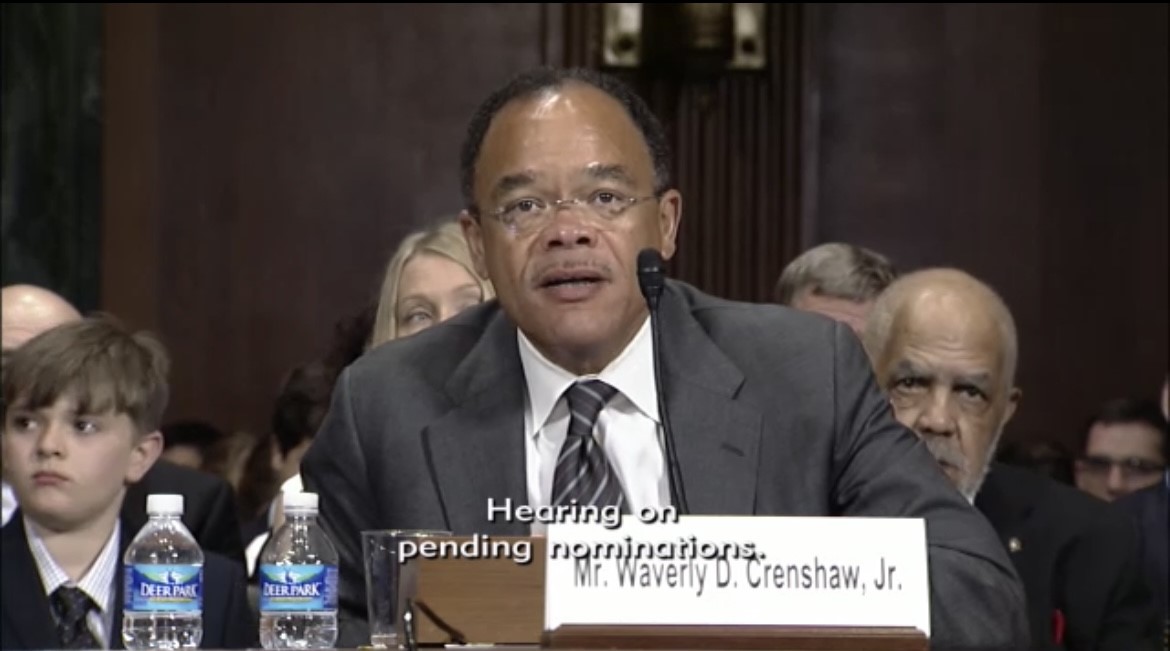
In court filings and oral arguments, prosecutors repeatedly told U.S. District Judge Waverly Crenshaw Jr. that the charging decision was made independently by the U.S. Attorney’s Office in the Middle District of Tennessee. There was, they said, no pressure from Washington and no involvement by senior Justice Department officials.
That narrative began to unravel when Judge Crenshaw ordered the government to produce internal communications related to the prosecution.
The emails that followed painted a different picture.
According to excerpts quoted in the judge’s order, senior DOJ officials—including Deputy Attorney General Todd Blanche, a former personal lawyer to President Donald Trump—expressed urgency and interest in ensuring that Mr. Garcia was charged “sooner rather than later.” One message described the case as a “top priority” for department leadership.
Judge Crenshaw described some of the communications as “remarkable,” noting that they suggested a level of involvement inconsistent with earlier representations made to the court.
The Legal Stakes: Vindictive Prosecution
The revelations strengthen a key argument raised by Mr. Garcia’s defense team: that the indictment constitutes vindictive prosecution, a doctrine that bars the government from retaliating against a defendant for exercising legal rights, such as challenging an unlawful deportation.
To prevail on such a claim, defendants typically must show either direct evidence of retaliatory motive or circumstances that give rise to a presumption of vindictiveness. Legal experts say the timing of the charges, combined with the newly disclosed emails, could meet that threshold.
“If senior officials pressured line prosecutors to bring charges after the government lost in court, that’s a serious problem,” said a former federal prosecutor who reviewed the judge’s order but was not involved in the case. “At minimum, it raises questions about candor to the court. At worst, it undermines the legitimacy of the prosecution itself.”
Candor to the Court Under Scrutiny
Beyond the fate of Mr. Garcia’s case, the episode raises broader concerns about the Justice Department’s obligation of honesty toward federal judges.
Federal prosecutors are bound by ethical rules requiring candor to the tribunal, particularly when responding directly to judicial inquiries. Misrepresentations—whether intentional or negligent—can result in sanctions, dismissal of charges, or referral for professional discipline.
Judge Crenshaw has not yet ruled on whether prosecutors violated those duties. However, he has indicated that further proceedings may be necessary, including the possibility of testimony from senior DOJ officials involved in the email exchanges.
Among those who could be called to testify are Mr. Blanche and other high-ranking department officials. One former DOJ official, now a federal appellate judge, was also referenced in the communications, though it remains unclear whether judicial immunity or separation-of-powers concerns would shield him from inquiry.
A Pattern or an Anomaly?
The controversy arrives at a sensitive moment for the Justice Department, which has repeatedly emphasized its commitment to prosecutorial independence amid accusations of politicization from across the political spectrum.
Supporters of the administration argue that reopening older cases is sometimes justified when new information emerges or when enforcement priorities change. Critics counter that selectively reviving dormant charges—particularly after a defendant successfully challenges government misconduct—risks transforming law enforcement into a tool of retribution.
On social media and legal commentary platforms, former prosecutors, constitutional scholars, and civil rights advocates have described the case as emblematic of a deeper institutional tension: the struggle to maintain public trust in the rule of law while navigating intense political pressure.
What Comes Next
Judge Crenshaw now faces several options. He could dismiss the indictment outright if he finds that vindictive prosecution has been established. Alternatively, he could order an evidentiary hearing, compelling testimony from DOJ officials and further disclosure of internal communications.
Either path carries consequences well beyond Mr. Garcia’s case.
A dismissal would represent a sharp rebuke of the Justice Department and could embolden similar challenges nationwide. A hearing, meanwhile, could expose internal deliberations that departments typically guard closely, further testing claims of independence from political influence.
For Mr. Garcia, who remains on pretrial release in Maryland while immigration proceedings continue, the stakes are deeply personal. For the Justice Department, the stakes are institutional.
As one legal analyst put it, “This is not just about one defendant. It’s about whether courts can rely on what prosecutors tell them—and whether the public can rely on the Justice Department to wield its power fairly.”
The court’s next ruling is expected in the coming weeks.






