The Ghost in the Constitution: The Domestic Emolments Clause
At the heart of Raskin’s questioning was a provision of the U.S. Constitution that rarely makes headlines: Article II, Section 1, Clause 7. Known as the Domestic Emolments Clause, its language is as clear as it is restrictive. It states that the President:
“…shall, at stated Times, receive for his Services, a Compensation, which shall neither be encreased nor diminished during the Period for which he shall have been elected, and he shall not receive within that Period any other Emolment from the United States, or any of them.”
Raskin’s argument was surgical. He pointed to the unprecedented scenario of a sitting president suing federal agencies—specifically the IRS—for billions of dollars. If Donald Trump were to “work out a deal” with his own subordinates to settle a $10 billion lawsuit while in office, would that settlement constitute an “emolment”?
The constitutional danger Raskin highlighted is the Unitary Executive Theory. Under this theory, the President has total control over the executive branch. If the President is both the plaintiff (the person suing) and the ultimate boss of the defendant (the DOJ or IRS), the concept of an “arm’s length” settlement disappears. The fear is that the Treasury could become a personal piggy bank under the guise of legal settlements.
A Hierarchy of Privacy: The Tax Returns vs. The Survivors
The debate took a sharp, emotional turn when Raskin pivoted from the financial interests of the President to the privacy of the Jeffrey Epstein survivors. He established a provocative comparison:
- The President’s Privacy: Trump’s tax returns were leaked by a contractor. While illegal, the harm was largely political embarrassment.
- The Survivors’ Privacy: Personally identifying information (PII)—including names, phone numbers, and addresses—of Epstein victims was published despite federal laws specifically designed to keep them anonymous.
Raskin’s question was a moral trap: If the President’s privacy violation is worth a theoretical $10 billion, what is the value of the lives of survivors who are now in “far greater danger” because the government failed to protect their identities?
This line of questioning exposes a “valuation of harm” that often feels skewed in the American legal system. When a powerful figure suffers a breach of protocol, it is treated as a constitutional crisis. When vulnerable victims suffer a breach of safety, it is often treated as a bureaucratic error.

The Rules of the Room: “You Have to Be Quiet”
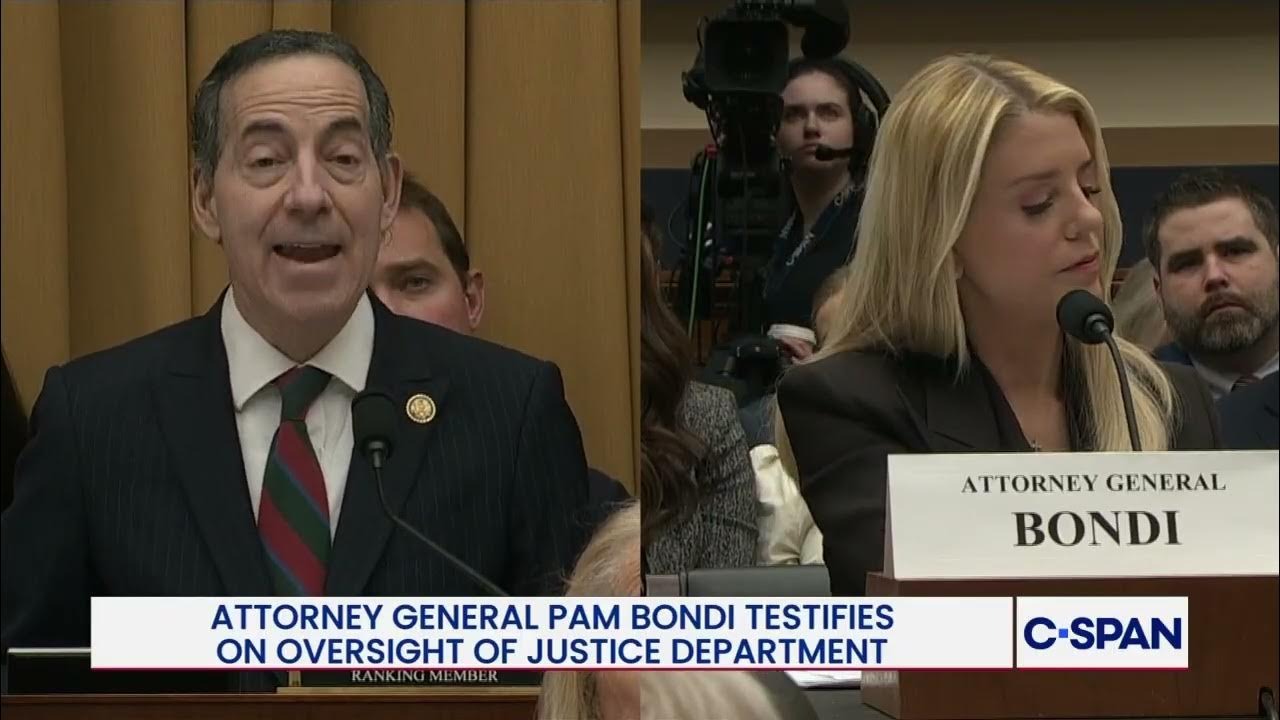
Beyond the legal theories, the hearing provided a masterclass in the procedural power dynamics of Congress. The exchange became a “fiery” confrontation when Bondi attempted to pivot the conversation toward a local criminal case in Raskin’s district—that of Chase Mulligan.
Raskin’s response was a sharp reminder of the House Rules of Procedure. In a congressional hearing, the five-minute clock is the member’s sovereign territory.
The Procedural Power Balance
| Feature | Congressional Member Authority | Witness Responsibility |
| Time Control | The Member “owns” the 5 minutes. | Must stop speaking when time is reclaimed. |
| Questioning | Can interrupt to stay on track. | Must provide germane answers. |
| Reclaiming Time | Can stop a “wild goose chase” or tangent. | Cannot filibuster the clock with unrelated data. |
Raskin’s blunt instruction—“You have to be quiet. You have no choice.”—was not just a moment of personal friction; it was an assertion of Legislative Oversight. The executive branch, represented by the Attorney General, is accountable to the people through their elected representatives. When a witness uses their time to deflect or read pre-prepared statistics, they are, in the eyes of the committee, obstructing that oversight.
The Chase Mulligan Diversion
Bondi’s strategy was to shift the focus to Chase Mulligan, a predator in Raskin’s district, accusing Raskin of not knowing who was in his “own tiny little district.” While Bondi framed this as a failure of local attention, Raskin viewed it as a “wild goose chase” designed to run out the clock and avoid answering the $10 billion question.
This tactic is a staple of modern political theater: when the legal argument is losing, switch to a moral emotional appeal. By bringing up a child predator, Bondi sought to seize the moral high ground, even if it was procedurally out of order.
Conclusion: The Task Force for Accountability
The hearing ended with a call to action. Raskin challenged the Attorney General to create a joint task force between the DOJ and state authorities to investigate crimes against the thousand-plus victims of the Epstein network.
The exchange left the public with a chilling realization: the battle over the “Epstein Files” and the “Trump Lawsuits” are two sides of the same coin. They both ask whether the Department of Justice exists to protect the powerful from embarrassment and financial loss, or to protect the vulnerable from physical and systemic harm.
As the gavel came down, the questions remained: Can the Constitution withstand a President who sues his own government? And can the survivors ever find justice when their own government publishes the very secrets it promised to keep?






