‘Walmart Warning’: Retail Giant’s Potential Pullback Triggers Economic Alarm in Washington
Sources familiar with internal discussions at the company’s Bentonville headquarters describe a “crisis atmosphere” as executives model scenarios that could see store closures, reduced inventory, and significant workforce reductions if current trade policies persist. The development reportedly reached President Donald Trump within hours, triggering emergency consultations at the White House with economic advisors and trade officials.
“This is not a routine adjustment. This is a five-alarm fire for the American consumer,” said a senior retail industry analyst who requested anonymity to discuss sensitive corporate deliberations. “When Walmart sneezes, the entire economy catches a cold. If Walmart actually contracts, millions of families will feel it in their wallets and in their ability to put food on the table.”
The Tariff Tsunami
The crisis traces directly to the Trump administration’s aggressive trade policies, which have imposed sweeping tariffs on imported goods from China, Mexico, Canada, and key European trading partners. While designed to protect American manufacturing and reduce trade deficits, the tariffs have dramatically increased costs for retailers who rely on global supply chains to stock their shelves.
Walmart, which operates approximately 5,000 stores across the United States and employs nearly 1.6 million Americans, imports vast quantities of merchandise—from electronics and apparel to furniture and automotive parts. But the most immediate threat to consumers involves groceries, where Walmart commands approximately 25% of the U.S. food market.
“Every tariff is a tax on the American consumer,” a Walmart executive told investors during a hastily arranged conference call. “We have absorbed costs where possible, but there are limits. We cannot continue to sell imported goods below our cost indefinitely.”
The Products at Risk
According to internal documents reviewed by this publication, the categories most vulnerable to disruption include fresh produce, where a significant percentage of winter fruits and vegetables come from Mexico; seafood, much of which is imported from Asia; and packaged goods, where components and raw materials cross borders multiple times before reaching store shelves.
Food industry experts warn that the impact would fall hardest on lower-income Americans, Walmart’s core customer base. “Walmart built its empire on ‘Everyday Low Prices,’” said retail historian Nancy Koehn of Harvard Business School. “If they cannot deliver on that promise—if prices rise or shelves empty—it’s not just a business problem. It’s a social stability issue.”
The company’s massive private-label brands, which offer lower-cost alternatives to national brands, face particular pressure. These products rely on complex international sourcing arrangements that tariff policies have rendered economically unviable.
Washington in Turmoil

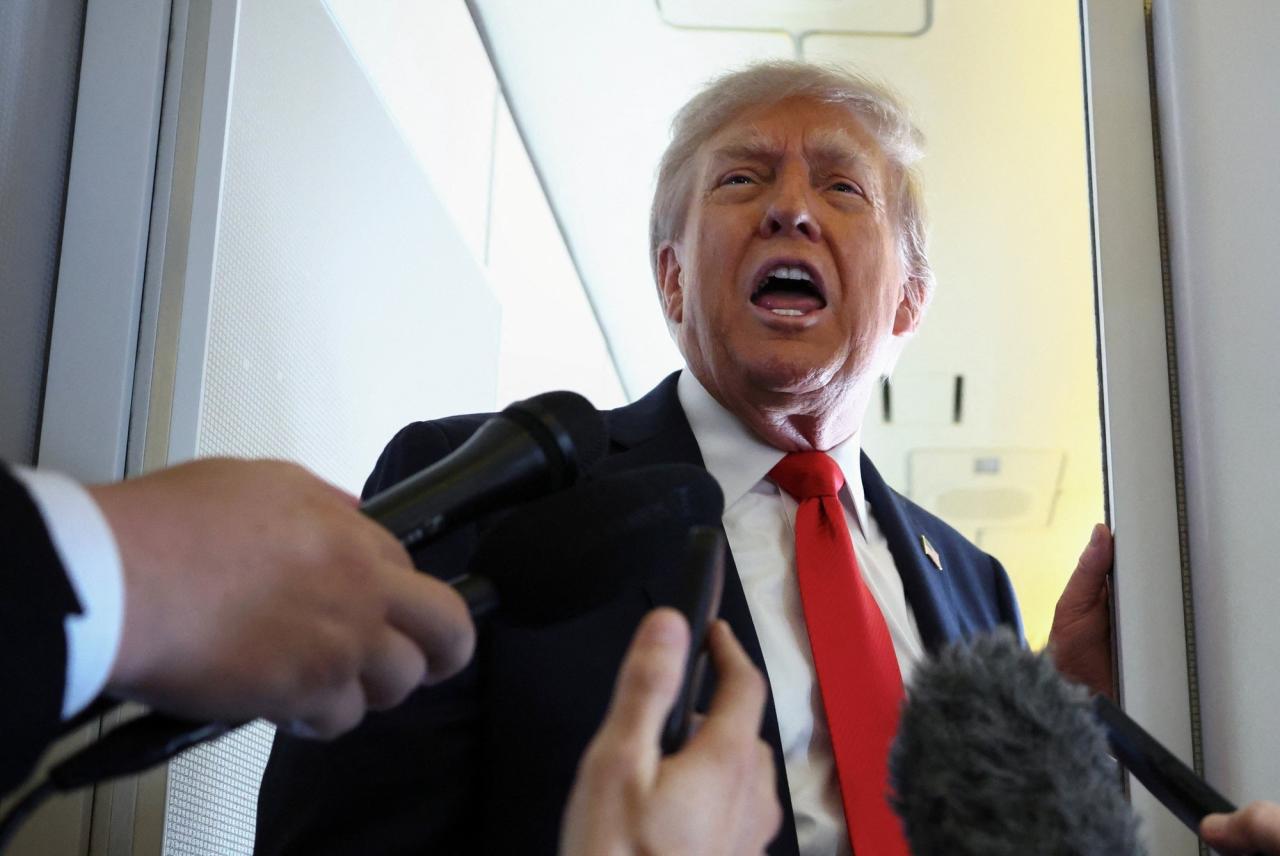
The White House response has been characteristically volatile. Sources describe President Trump as “furious” upon learning of Walmart’s internal deliberations, viewing the potential pullback as both an economic threat and a political liability heading into a critical election cycle.
Press Secretary Karoline Leavitt issued a statement dismissing the reports as “speculation” while simultaneously warning against corporate overreaction. “President Trump’s trade policies are restoring American manufacturing and protecting American workers. Any company threatening to reduce its American footprint in response should examine whether they are truly putting America first.”
Behind the scenes, however, administration officials are scrambling. Treasury Secretary Scott Bessent has reportedly reached out to Walmart executives directly, seeking clarification and exploring whether targeted relief might prevent the feared contraction.
The Supply Chain Domino Effect
The potential Walmart pullback extends far beyond the company itself. As the dominant player in numerous product categories, a reduction in Walmart’s purchasing would ripple backward through global supply chains, affecting factories in Vietnam, farms in Mexico, and warehouses across America.
Transportation companies that depend on Walmart’s freight volume would face reduced business. Packaging manufacturers would lose their largest customer. Even competing retailers could suffer if Walmart’s reduced orders disrupt production runs that make certain products economically viable for the entire industry.
“Walmart doesn’t just participate in the economy—it organizes vast portions of it,” said supply chain expert Yossi Sheffi of MIT. “A significant contraction at Walmart would be like removing the keystone from an arch. Everything connected to it would shift, and some things would collapse.”
The Political Calculus
For President Trump, who has staked his political identity on economic nationalism and protecting American workers, the Walmart situation presents a painful paradox. His tariffs were designed to benefit companies like Walmart by encouraging domestic production. Instead, they are threatening to harm the very consumers whose support he needs.
Democratic opponents have already seized on the reports. Senator Elizabeth Warren (D-Mass.) called for immediate hearings, declaring that “working families are paying the price for this administration’s failed trade war.” House Democrats announced plans to subpoena Walmart executives for testimony about the potential impacts.
The political geography is particularly sensitive. Walmart’s stores are concentrated in rural and exurban America—precisely the communities that delivered Trump’s 2016 and 2020 victories. Any disruption to those stores would hit his base directly.
Walmart’s Delicate Dance
The company itself is navigating treacherous waters. Publicly, Walmart continues to project confidence, with CEO Doug McMillon recently emphasizing the company’s “resilience and adaptability.” Behind the scenes, however, contingency planning accelerates.
Options under consideration include accelerating automation investments to reduce labor costs, shifting sourcing to domestic suppliers where possible (though often at higher prices), and reducing product variety to focus only on fastest-selling items. In the worst-case scenario, sources say, store closures in the hardest-hit markets cannot be ruled out.
“We are committed to serving our customers and communities,” a Walmart spokesperson said in a carefully worded statement. “We continue to monitor the trade environment closely and are working with suppliers, policymakers, and industry partners to navigate these challenges.”
The Consumer Impact
For ordinary Americans, the Walmart warning translates into immediate concerns. Higher prices at the register. Fewer choices on the shelves. Potential store closures that transform neighborhoods into food deserts. And for Walmart’s 1.6 million employees, anxiety about job security.
“I’ve worked at Walmart for twelve years,” said Maria Santos, a department manager at a store in suburban Phoenix. “We’ve always been the place people can count on for affordable food and supplies. If that changes, I don’t know what happens to our community.”
Economic forecasters are already revising projections. Oxford Economics warns that a sustained Walmart contraction could shave 0.3% from GDP growth and eliminate 200,000 jobs directly and indirectly. The psychological impact on consumer confidence, they note, could be even more significant.
What Happens Next
The coming weeks will determine whether the Walmart warning becomes a self-fulfilling prophecy or a wake-up call that forces policy adjustment. Company executives are scheduled to meet with White House officials next week, and further discussions with congressional leaders are anticipated.
President Trump faces a difficult choice: double down on tariff policies that risk harming American consumers, or pivot toward accommodation that could be perceived as weakness. Either path carries political consequences.
For Walmart, the calculation is equally stark. As the company’s founder Sam Walton famously said, “There is only one boss. The customer.” If tariffs prevent Walmart from serving that boss effectively, the company’s response—whatever form it takes—will reshape American retail for a generation.
The retail earthquake has begun. The question now is whether Washington and Bentonville can find common ground before the shaking becomes structural collapse.






