Concerns about government fraud and misuse of taxpayer funds have become an increasingly prominent issue in the United States, and some political voices are pointing to tougher enforcement as a key step toward restoring public trust.
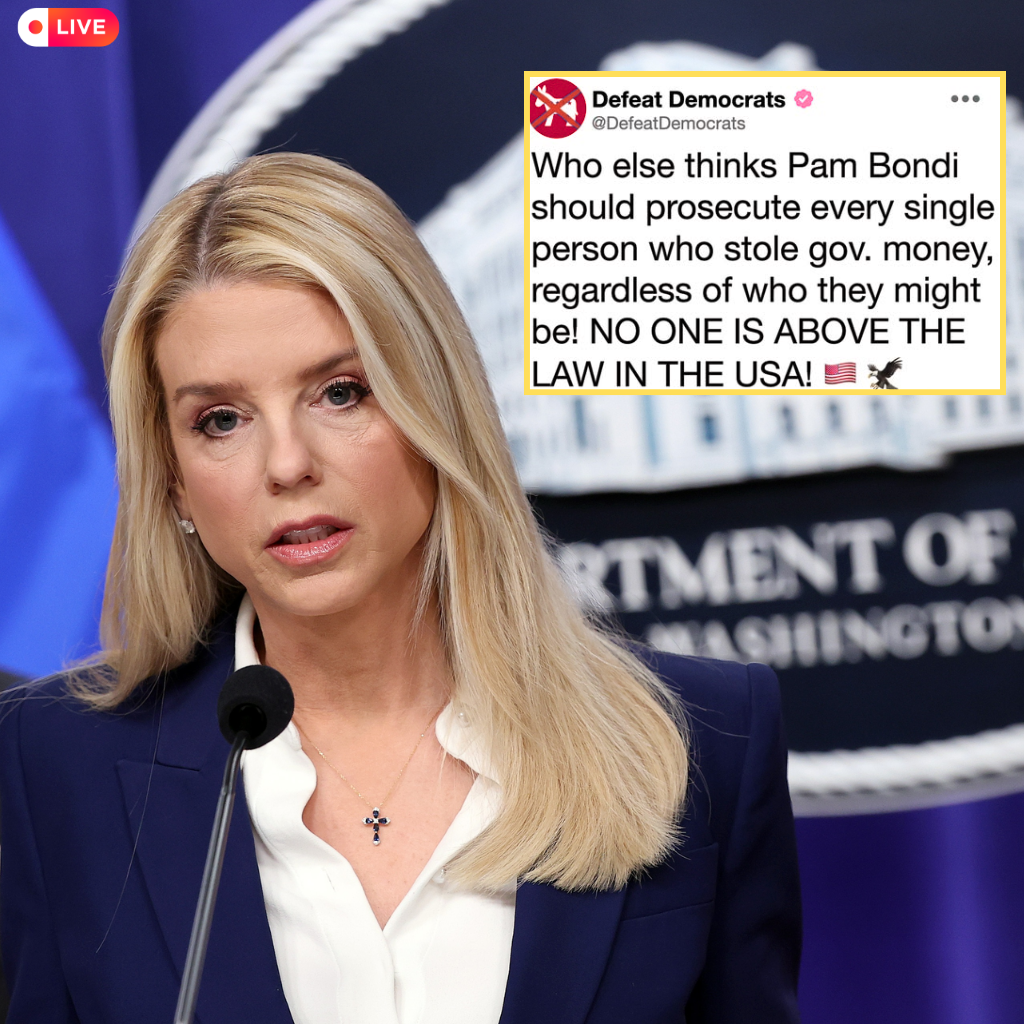
Among those drawing attention is Pam Bondi, a former Florida attorney general who has built a reputation for taking a firm stance on legal accountability and financial misconduct cases. Supporters say stronger oversight and aggressive prosecution are necessary to ensure public funds are protected.
Focus on Fraud and Accountability
Fraud involving government programs—particularly large relief or emergency funding initiatives—has been the subject of numerous investigations in recent years. Federal watchdogs and law enforcement agencies have reported billions of dollars lost to scams, fraudulent claims, and improper payments.
Advocates for stricter enforcement argue that these losses undermine public confidence and divert resources away from the people and communities the programs were designed to help.
Supporters of Pam Bondi say her approach emphasizes a simple principle: accountability should apply equally to everyone, regardless of political influence, professional status, or institutional connections.
Debate Over Enforcement and Oversight
The broader discussion reflects a larger debate in Washington about how best to combat financial misconduct in government programs.
Some policymakers and legal analysts say expanding investigative resources, strengthening oversight systems, and increasing transparency could help reduce fraud in large federal initiatives. Others emphasize the importance of prosecuting high-profile cases to deter future wrongdoing.
Supporters of stronger enforcement believe visible legal action can send a powerful message that misuse of taxpayer money will not be tolerated.
Restoring Public Confidence
Public trust in government institutions often depends on the perception that laws are enforced fairly and consistently. Analysts say high-profile fraud cases, especially those involving public funds, can significantly affect that trust.
For advocates of tougher anti-fraud efforts, the goal is not just punishment but deterrence—ensuring that future relief programs and public spending efforts are protected from abuse.
As debates continue about oversight and enforcement, the conversation around accountability remains central to how Americans evaluate the effectiveness and integrity of their institutions.






