The hearing was supposed to be about the opioid crisis, a subject so urgent and devastating that no serious lawmaker should have wanted the room dragged anywhere else.
But Washington has a way of exposing its deepest anxieties when everyone is pretending to discuss something narrower, safer, and easier to manage.
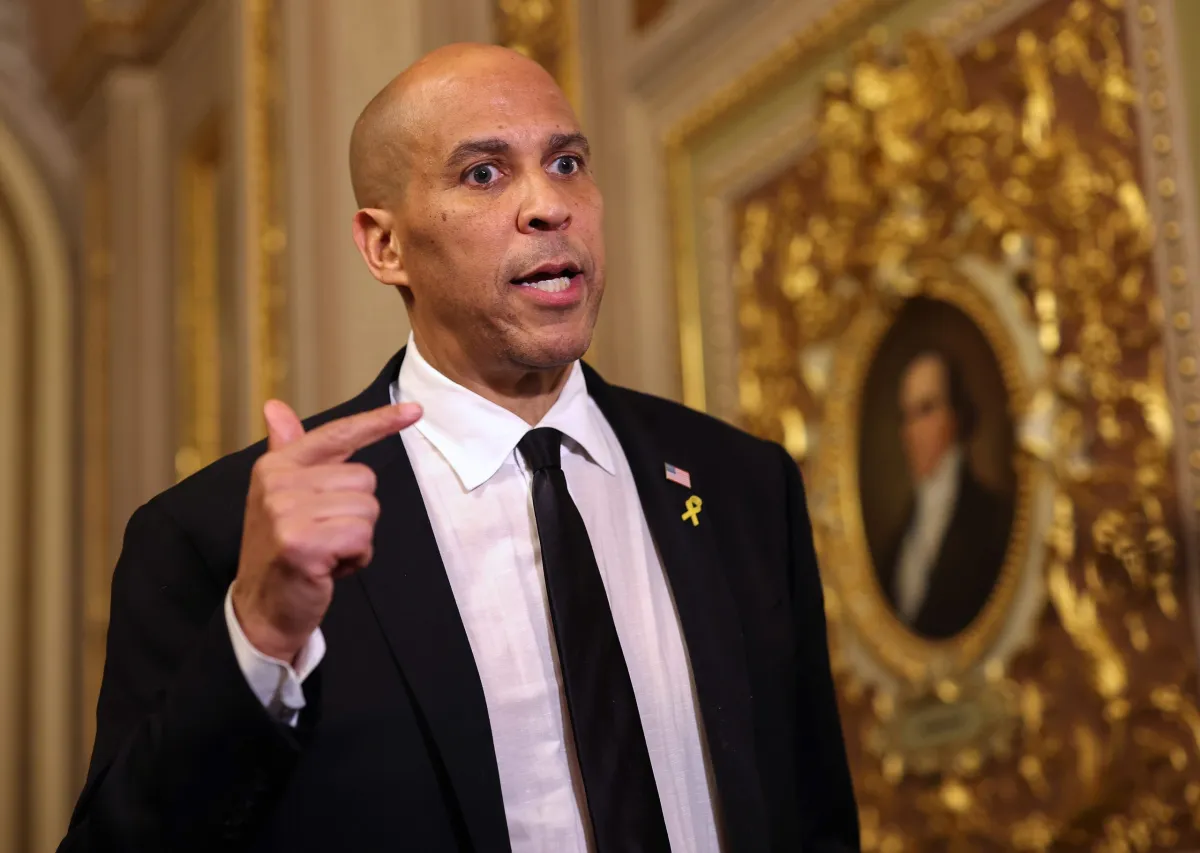
That is exactly what happened when Cory Booker interrupted the comfortable rhythm of procedure and forced the committee to confront a question many powerful people clearly wanted kept at arm’s length.
Why was a request for transparency on the Epstein files suddenly being treated like an inconvenience that needed to be buried inside another legislative fight.
The temperature in the room changed immediately.
What had sounded like technical disagreement over amendments began to feel like a struggle over whether Congress was protecting a bipartisan bill or protecting itself from an explosive public demand.
Booker understood the danger of that moment and leaned into it.
He did not frame his argument as a fringe obsession, but as a basic obligation to victims, to public trust, and to the principle that powerful people should not disappear behind procedural smoke.
That was the force of his intervention.
He was not merely objecting to legislative wording, but accusing the committee of using process as camouflage for avoidance.
He looked at the amendment in front of him and argued that its first lines were not a neutral policy adjustment.
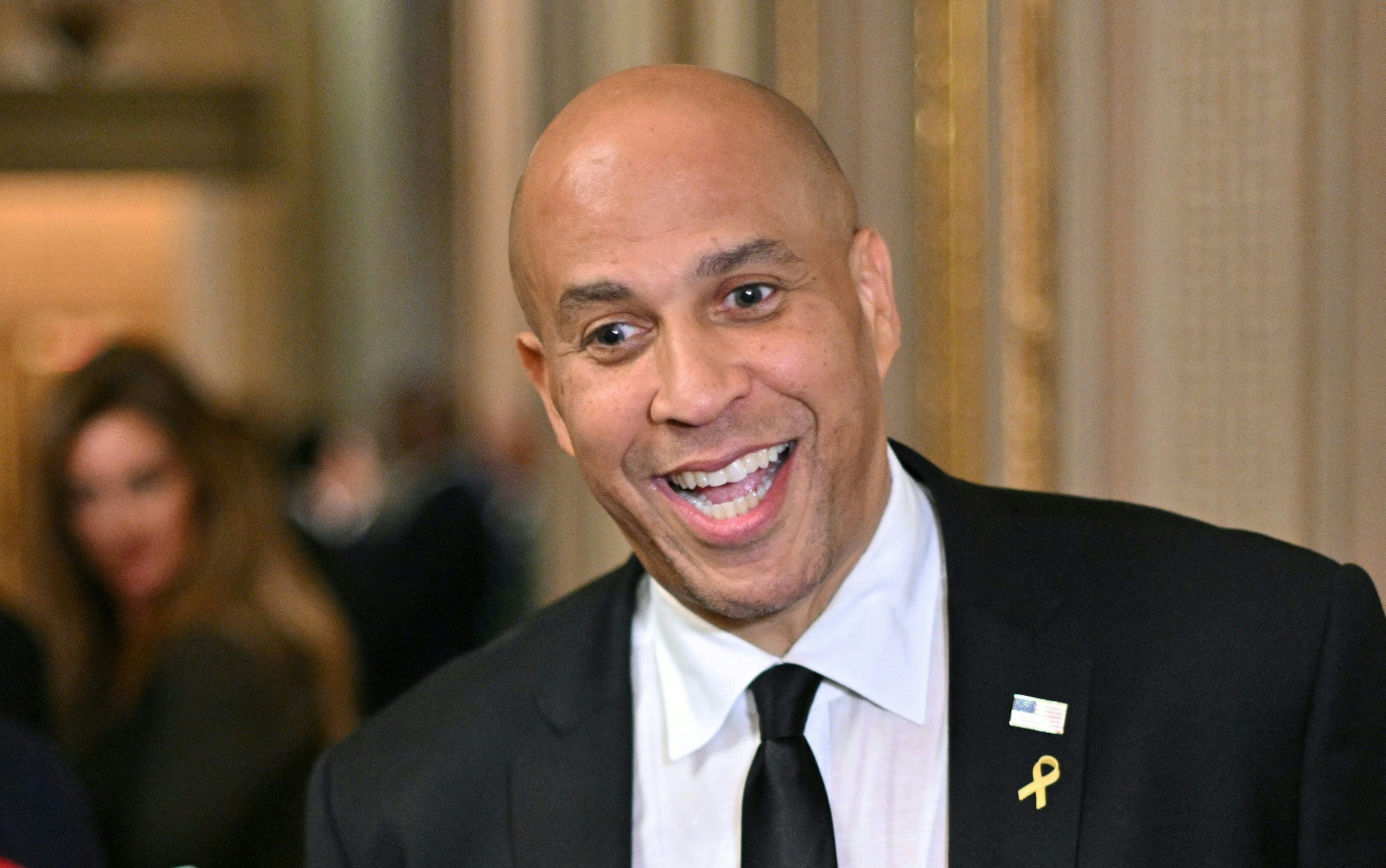
In his telling, they were a blunt attempt to erase his transparency amendment before the committee could even confront what it really meant.
That accusation hit hard because it sounded plausible in the way only Washington accusations can.
Not dramatic in a cinematic sense, but chilling in a bureaucratic sense, where the most consequential decisions are often made through a few lines of text nobody outside the room is supposed to notice.
Booker’s anger gave the hearing its electricity.
He was not calmly negotiating language, but publicly asking why so many people in power seem determined to keep the full story around Epstein behind a wall of legal caution and political convenience.
That question resonates because the Epstein case has never truly faded.
It has remained alive in the public imagination not simply because of the crimes, but because of the enduring suspicion that the network around those crimes was never fully illuminated.
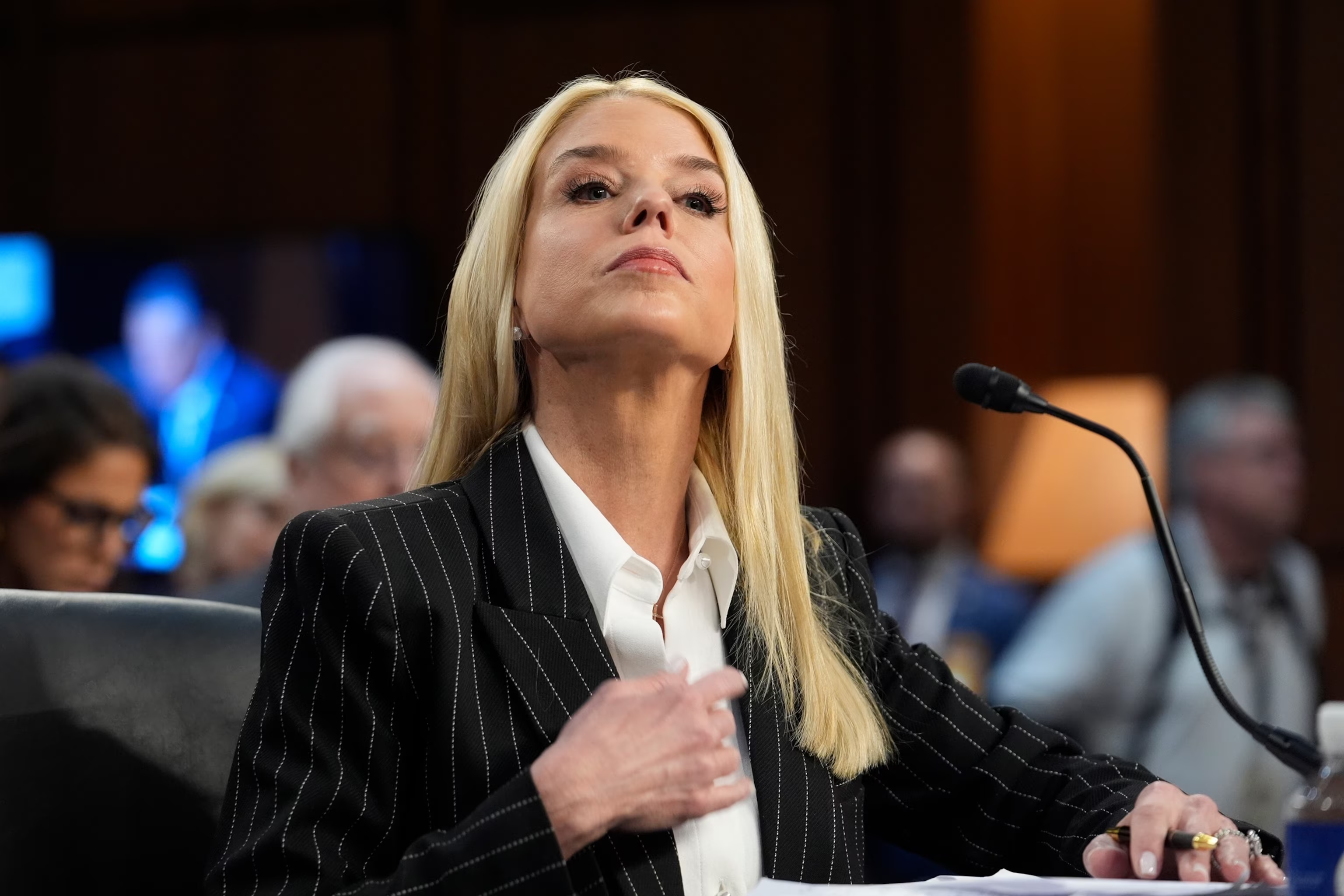
Booker brought that suspicion into the committee room without apology.
He invoked victims, public statements about evidence, and the simple idea that transparency should not be treated as controversial when the case itself is one of the most morally revolting in modern memory.
This is why the hearing suddenly felt much bigger than the opioid bill on the table.
The room became a stage for a deeper national fight over accountability, institutional trust, and whether procedure is now routinely used to keep explosive truths at a safe distance.
Booker’s argument was not subtle.
If officials have spoken publicly about evidence, if people on both sides of the aisle have demanded more openness, and if victims are still waiting for answers, then why is transparency being treated like the dangerous amendment.
That line of reasoning cornered the room in a way many hearings never do.
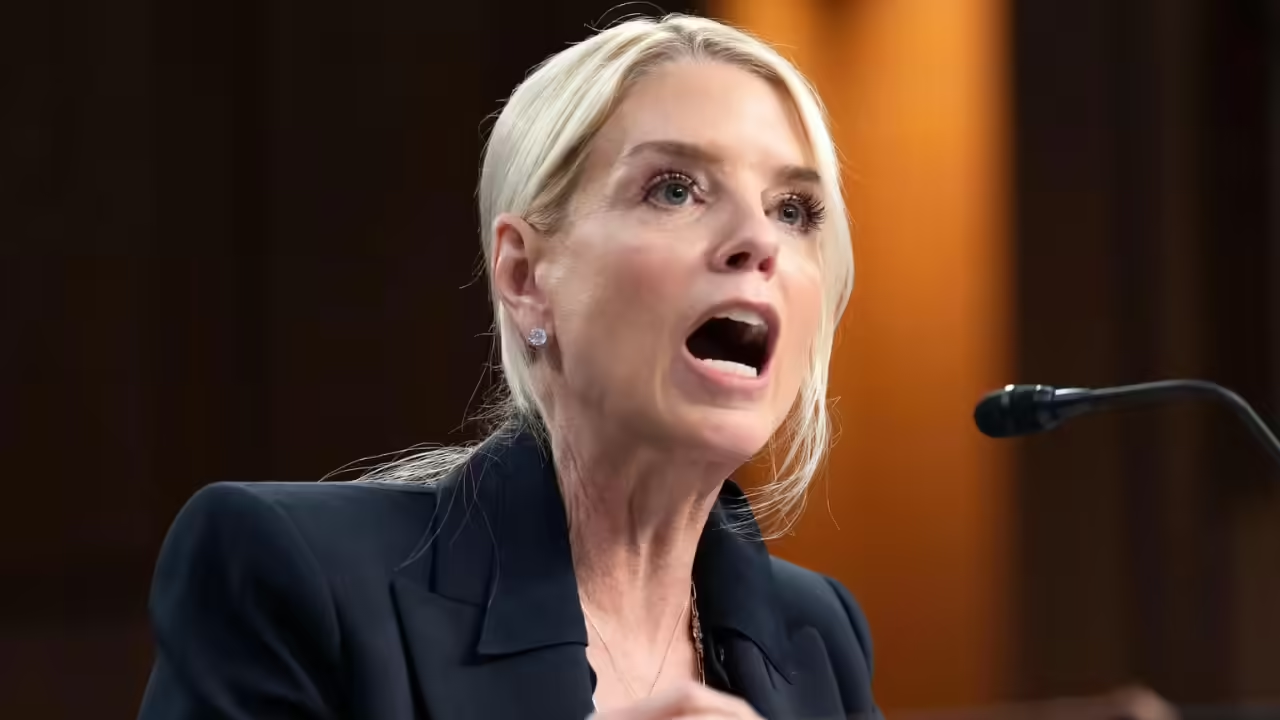
Because once the public hears that transparency itself is what lawmakers are maneuvering to avoid, suspicion grows faster than any formal explanation can contain it.
John Cornyn pushed back, and in doing so revealed the second half of the conflict.
He framed the issue as one of trust in the attorney general and trust in the legal system to determine what can and cannot be released responsibly.
That is a serious position, and not an absurd one.
Governments do have legitimate obligations involving privacy, ongoing legal matters, and the risk of turning politically explosive material into a public free-for-all without due restraint.
But Booker was not buying that defense in the moment.
To him, it sounded less like legal seriousness and more like the oldest trick in the institutional handbook, trust us, wait longer, and stop asking who benefits from the delay.
That tension is what made the exchange so powerful.
One side presented caution as responsibility, while the other presented caution as concealment dressed in legal language.
Booker did not stop at institutional critique.
He made it personal by refusing to accept the suggestion that his insistence on transparency somehow meant he cared less about other victims or other crimes.
That was a major turning point in the clash.
Because once the conversation shifted toward whether he cared about victims at all, Booker heard it not as disagreement, but as a moral insult designed to delegitimize the very ground on which he was standing.
His response carried real outrage.
He rejected the implication that concern for victims in one context must cancel concern for victims in another, and he treated the accusation as both cynical and offensive.
That exchange mattered because it exposed how often Washington responds to uncomfortable questions.
Instead of answering the question directly, it expands the moral battlefield until the questioner must defend his character rather than press the issue itself.
Booker recognized the trap and tried to drag the room back.
He kept returning to the same central point, that his amendment was about accountability and that the public demand for answers about Epstein is not some fringe obsession, but a mainstream expectation.
That claim is politically potent because it is rooted in something real.
Americans across ideological lines do not trust that the full Epstein story has been told, and every procedural dodge deepens that distrust instead of cooling it.
This is what gives the hearing its viral force.
It is not just a Senate spat, but a familiar drama in which the public watches powerful people decide whether truth is too inconvenient to be handled directly.
The opioid bill gave the conflict a second layer of complexity.
No one wants to look like the person who jeopardized anti-opioid legislation, especially when addiction continues to devastate communities and families across the country.
That is why Cornyn and Grassley had strategic ground to stand on.
They could argue that Booker was risking badly needed bipartisan legislation by tying it to a transparency demand guaranteed to generate conflict and delay.
But Booker clearly believed the burden should not be on him.
He seemed to view the real danger not as adding transparency language, but as exposing how quickly even worthy legislation can become a shield behind which other uncomfortable subjects are pushed out of sight.
That is the darkest reading of the moment, and also the most politically explosive.
If true, it means the system has learned how to defend itself not by openly rejecting accountability, but by wrapping evasion inside urgent public need.
That possibility is exactly why people watching reacted so strongly.
They were not only seeing a fight over one amendment, but seeing a larger American pattern, real suffering on one side, institutional caution on the other, and truth perpetually postponed.
Booker’s refusal to withdraw carried symbolic weight for that reason.
He was making the point that some issues remain unresolved precisely because everyone keeps saying now is not the right time to confront them.
And if not now, then when.
That is the question sitting behind his entire performance, and it is a question institutions rarely answer honestly because delay is often the institution’s favorite survival tactic.
The committee eventually pushed forward procedurally, because committees always do.
Votes get called, parliamentary limits reassert themselves, and the official machinery lumbers on even after a moral confrontation has broken the room in two.
But the official process did not erase the emotional fact of what had just happened.
A senator had publicly accused his colleagues of trying to hide behind immigration language and policy mechanics to avoid a direct stand on Epstein transparency.
That is not the sort of charge that disappears with a roll call.
It lingers, because it feeds a suspicion millions already carry, that on the most powerful cases, procedure becomes the mask power wears when it does not want to answer plainly.
Supporters of Booker will say he exposed the game.
They will argue he forced everyone watching to see that the issue was never really about amendment mechanics, but about whether Washington still fears the full consequences of sunlight.
His critics will say he endangered a bipartisan bill for political theater.
They will argue that transparency demands are easy applause lines when detached from the legal complexity and practical consequences of governing.
Both interpretations will continue to circulate because both contain some political truth.
But the reason the moment will endure is that Booker made the committee look morally uncomfortable at exactly the point where it most wanted to look orderly.
That is never easy to clean up.
Once the public senses that procedure is being used as a shield, every future explanation starts sounding thinner, more strategic, and less trustworthy.
The Epstein case remains uniquely dangerous because it operates in that zone of permanent public unease.
Too many years, too many rumors, too many names, too much elite proximity, and too much unresolved anger have made the issue impossible to neutralize with polished language alone.
Booker knew that, and he used it.
He turned a committee fight over amendments into a much broader accusation that the American people are still being denied accountability in a case where accountability should have been relentless.
That is why the hearing still matters after the gavel.
Because beneath all the talk of process, schedules, and legislative priorities, one brutal question remains hanging over Washington, what exactly are they so afraid the public will see.
And until that question is answered in a way people can believe, the pressure will not go away.
It will return in more hearings, more amendments, more arguments, and more moments like this one where procedure collides with rage and the room can no longer pretend not to notice.