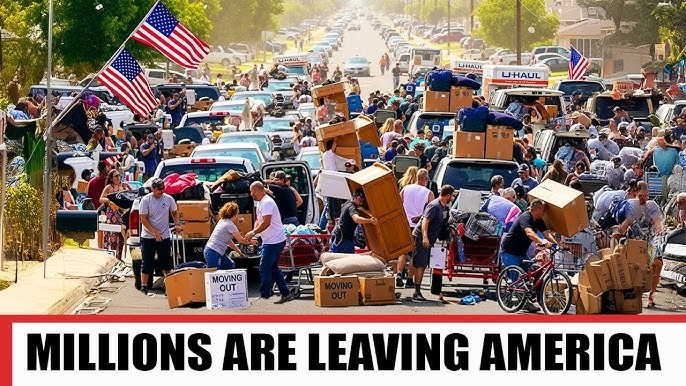
A quiet but profound demographic shift is accelerating across the United States, as millions of citizens relocate in search of stability they can no longer find at home. New data reveals a sustained exodus from ten states, driven not by wanderlust but by a convergence of crushing costs, strained public systems, and a fading sense of opportunity. The movement of over eight million Americans from their home states in recent years is reshaping communities and local economies. This trend signals a widespread reassessment of the American dream, where foundational pillars like affordable housing, reliable services, and public safety are increasingly seen as unstable.

Hawaii’s idyllic image masks a severe affordability crisis forcing residents to depart. With the average home price near $1.1 million and basic groceries costing multiples of the national average, local workers are being priced out. Nearly one percent of the state’s population left in a single year, many for mainland cities like Las Vegas.
Cultural erosion compounds the financial strain. Neighborhoods once defined by multi-generational families are transforming into tourist-centric zones, with homes converted to short-term rentals. The state’s natural beauty endures, but the capacity for its people to sustain a life there is diminishing rapidly. West Virginia confronts a seventy-year population decline rooted in economic transition. The contraction of the coal industry has left a void, with over 18,000 residents leaving last year alone. The outmigration resembles an entire small town vanishing annually, creating a cycle that discourages new business investment.
While the mountainous landscape retains its rugged beauty, many describe it as confining in adulthood. Young people seeking diverse careers find limited pathways, leading to a demographic imbalance. The state’s average income trails national figures, pushing families to work multiple jobs to cover necessities. Illinois is hemorrhaging residents at a staggering pace, with nearly 800,000 departures in the past decade. The core issue for many is a punishing tax burden, with property taxes often exceeding $9,000 annually. Residents report a pervasive sense of paying more while receiving diminished public services in return.
Chicago’s elevated crime rates and the state’s monumental public pension liabilities, exceeding $40 billion, exacerbate the financial pressure. Middle-class families, facing stagnant income growth, are increasingly shouldering the weight, leading many to conclude their futures are more secure elsewhere. Alaska’s vast wilderness and annual oil-wealth dividend cannot offset its extreme isolation and cost of living. Nearly 40,000 people have moved away since 2013. The necessity of shipping in goods drives prices for everything from food to building materials to extraordinary heights.

The environment itself poses a relentless challenge. Winters are long, dark, and brutally cold, testing infrastructure and personal resolve. Crime rates are surprisingly high for such a low-density state. Many who come for adventure or independence find the daily demands of survival ultimately unsustainable.
Connecticut’s refined reputation and graceful towns are struggling to retain residents. The state has lost billions in household income over the last decade as families seek states where their earnings hold more power. Soaring property taxes and high everyday expenses are primary drivers.

Professionals like teachers, nurses, and engineers find even modest neighborhoods financially straining. The result is an aging demographic in many historic communities, as younger generations depart for regions where starter homes align with starting salaries, leaving a gap in the state’s future.
Mississippi’s rich cultural legacy is overshadowed by entrenched economic distress. With some of the nation’s lowest income levels and a poverty rate affecting nearly one-fifth of residents, opportunity is scarce. Over half of its counties are classified as economically distressed. This widespread strain fuels a prolonged population decline. While the state’s identity remains powerful in music and storytelling, the structural challenges—from education to job creation—are prompting many, particularly the young, to seek stability beyond its borders.
Louisiana’s population flight is propelled by both economic and environmental forces. Coastal erosion and rising seas are literally dissolving land, threatening communities and industries. The memory of catastrophic storms like Hurricane Katrina continues to influence long-term decisions. Tens of thousands relocate annually, often after repeated weather disasters damage property and disrupt lives. The combination of physical vulnerability and economic uncertainty creates a powerful incentive for families to rebuild their lives in less precarious locations.
North Dakota experienced a dramatic population boom during its oil rush, followed by an equally sharp cont






