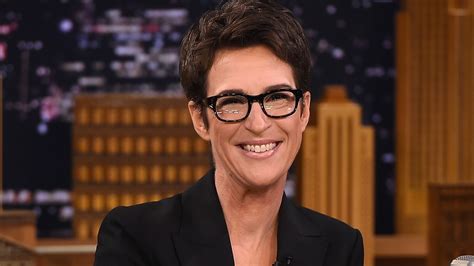
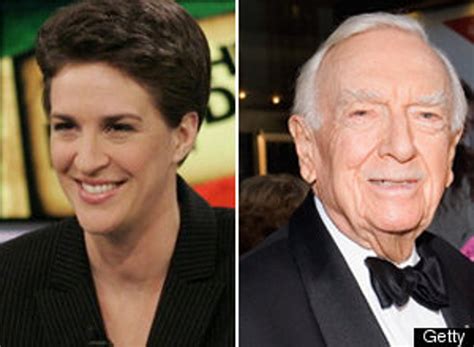
Rachel Maddow is capturing national attention in a new chapter of her career, one that bridges television and deep-dive journalism at a moment many analysts describe as a test of democratic resilience. In mid-December 2025, Maddow was honored with a prestigious journalism prize at the Walter Cronkite Awards held in Washington, D.C., where she used her platform not merely to celebrate journalistic excellence, but to sound an alarm about the condition of American civic life.
Her acceptance speech at the awards underscored a central theme of her recent work: democracy is not merely under debate—it is being lived, contested, and documented in real time. She called the current political moment “less a future threat than a present challenge,” emphasizing that societal reaction to institutional pressures is now shaping the nation’s political trajectory. This message reflects Maddow’s evolving focus as a journalist: moving from sharp nightly commentary to what she describes as chronicling a democratic crisis as it unfolds. Advocate.com

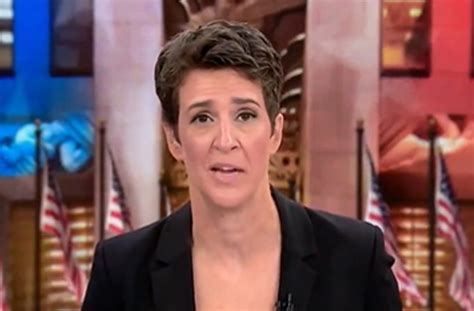
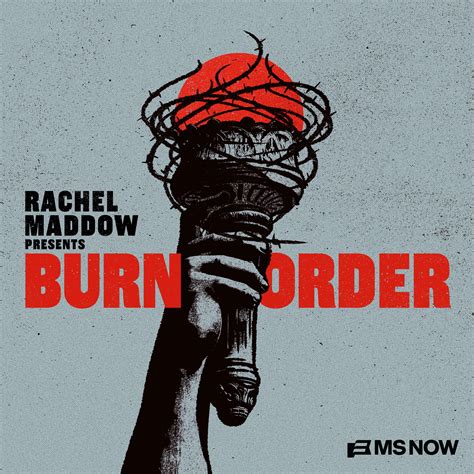
Beyond awards, Maddow has expanded her reach through a new podcast series titled Burn Order, exploring historical government abuses and buried truths. The project traces incidents like the U.S. government’s World War II incarceration of Japanese Americans and probes the ways official narratives have been reshaped, suppressed, or forgotten. Her aim, as explained in recent remarks, is to illuminate how historical abuses inform contemporary political fractures — a theme she connects to debates over executive power and accountability today. Advocate.com
This blend of historical perspective and present-day reporting has reinforced Maddow’s role not just as a commentator, but as a narrative curator for a politically charged era. Her work now crosses mediums — cable television, long-form podcasting, and public speaking — positioning her as one of the nation’s most persistent voices probing the relationship between power, history, and public memory.
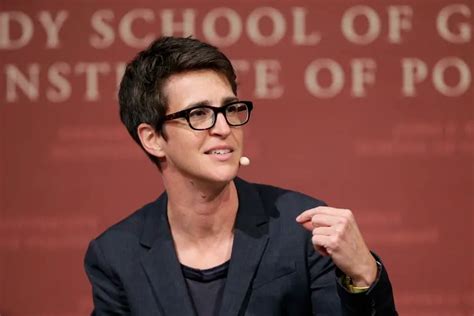
Across platforms, Maddow continues to argue that understanding why democracy falters is just as crucial as reporting on what falters. Her evolving career — from cable anchor to “chronicler of civic stress points” — reflects broader shifts in media and politics, where the act of giving context has itself become a form of political influence.






