A quiet address to Canadian troops has triggered the most profound shift in the nation’s defense and foreign policy in modern history. What Prime Minister Mark Carney framed as a holiday-season tribute has been revealed as the foundational doctrine for a new, assertive era of Canadian sovereignty, ending decades of strategic dependency.

The speech, delivered without fanfare, contained a simple, seismic declaration: Canada will defend Canada. Analysts now confirm this was not rhetorical reassurance but a direct order to fundamentally rewire the nation’s strategic posture. The message, measured in tone, was a permanent break from hoping for protection.
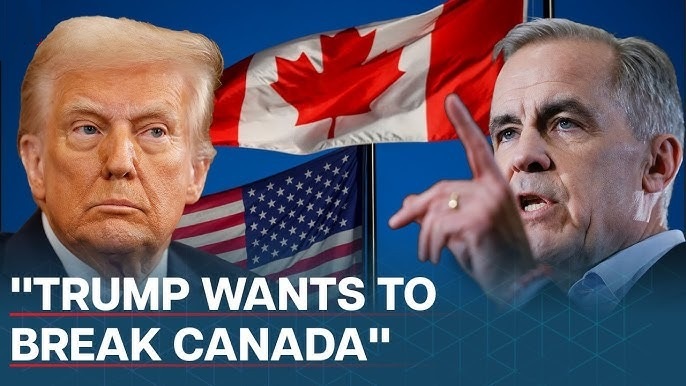
For generations, Canadian security was treated as a guaranteed byproduct of stable alliances. That assumption has shattered. The catalyst was a sustained period where Canada’s closest ally weaponized trade and dismissed its sovereignty, revealing a dangerous vulnerability masked by partnership.
Carney’s response was not panic or bluster, but a cold recalculation. He reframed national defense not as a cost, but as the essential insurance for independence. The government has subsequently moved with unprecedented speed to translate this doctrine into irreversible action and investment.
The scale of commitment is staggering. Canada will now meet the NATO defense spending target of 2% of GDP half a decade early. A near-$82 billion commitment over five years signals immediate, structural change. Recruitment, pay, and Arctic deployment bonuses are being surged to rebuild a hollowed-out force.
The Arctic, once a remote symbol, is now the central front. Recognizing that melting ice exposes sovereignty, Carney has prioritized permanent, enforceable control. The region is no longer monitored passively but will be actively defended as critical strategic territory.
A stunning procurement revolution underscores the shift. For decades, 75% of military spending flowed to American defense contractors, locking Canada into foreign supply chains. That era is over. New rules mandate that Canadian tax dollars must build Canadian industrial capability and create domestic jobs.
This principle is most evident in the cornerstone of the new strategy: submarines. A plan to acquire 12 new conventional vessels represents a 50-year generational lock on sovereignty. Contracts worth over $100 billion will mandate Canadian steel, aluminum, and manufacturing, buying control of the nation’s waters for the first time.
Even the skies are being reclaimed. While committed to some American fighter jets, the government is actively evaluating alternatives that can be built and maintained domestically. The goal is to ensure no single foreign government controls access to critical defense assets.
The timeline confirms this is not a temporary political reaction. The plan stretches deliberately to 2035, with a target of spending 5% of GDP on defense. At roughly $150 billion annually, this investment transforms Canada from a supporting player into a system-building architect of Western security.
This level of spending builds new Arctic bases, expands domestic defense industries, and creates internal supply chains resilient to external political shifts. The strategy flips from reactive crisis management to proactive deterrence, making challenges to Canadian sovereignty too costly to attempt.
The geopolitical signal is already being received. Allies are recalibrating their view of Canada from a passive participant to a capable contributor. Adversaries are recalculating the risks of testing its resolve. Respect is following demonstrable capability.
What makes this shift permanent is its embedded economic reality. Once shipyards expand, aerospace manufacturing anchors in the economy, and thousands of jobs depend on this sector, there will be no political will to reverse course. Security and prosperity are being fused.

By 2035, Canada will not merely defend its own borders but will help shape the entire security architecture of the West. It will provide protection, not just plead for it. This marks the moment Canada stopped waiting for the world to stabilize and decided to guarantee its own place within it.
Critics may label this militarization, but that misunderstands the core driver. This is a reclamation of identity and agency. Carney has systematically removed the nation’s dependency, understanding that true sovereignty cannot exist when security, borders, and critical supply chains are outsourced.
The shift is not about rejecting allies but about meeting them as a full equal. Strength creates choice, and choice creates a more stable, resilient nation. Canada is preparing for a world where it alone decides its future, carrying the cost of independence not with emotion, but with decisive, quiet resolve.
The line has been crossed. There is no going back.