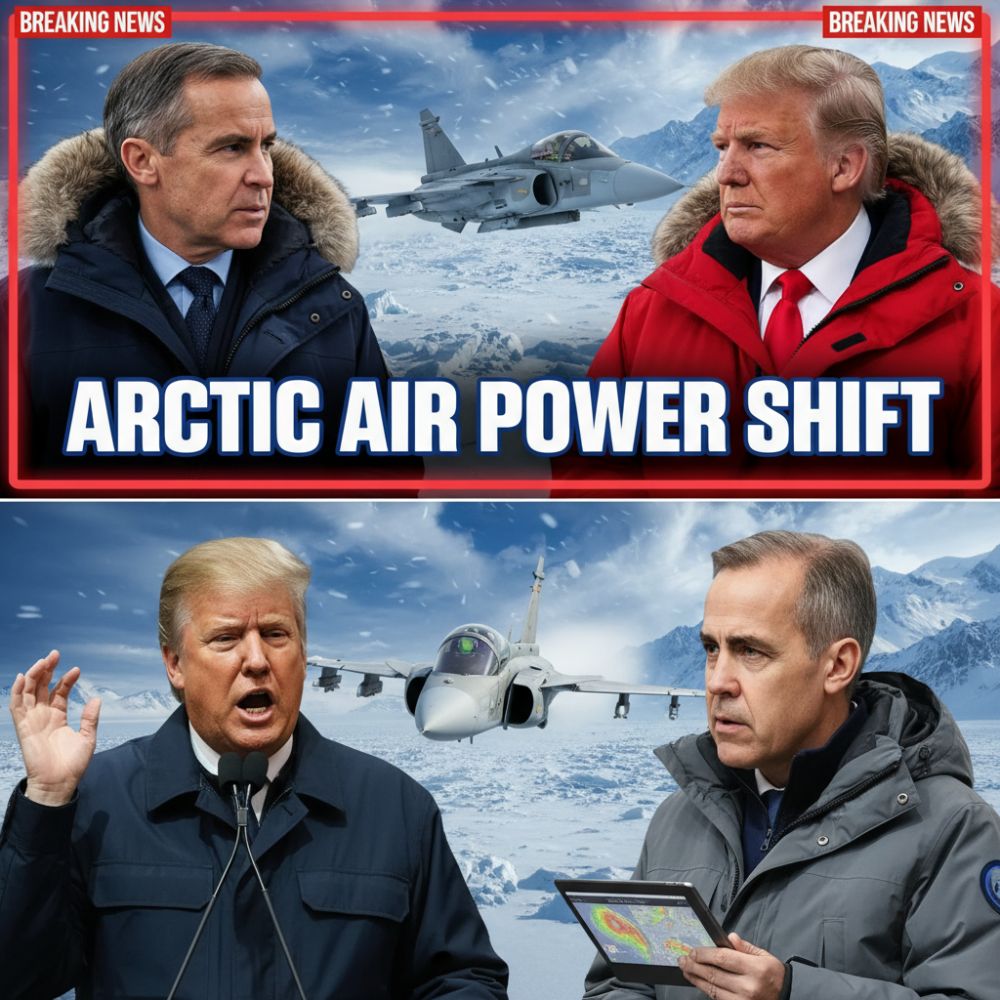
OTTAWA — For decades, the economic relationship between Canada and the United States rested on a widely accepted assumption: Canada had little choice but to depend on its southern neighbor. Geography, infrastructure, and sheer market size reinforced the belief in Washington that Canadian prosperity was inseparable from American demand.
New trade data from October 2025 suggests that assumption is no longer true.
According to the latest figures, the share of Canadian exports destined for the United States has fallen to one of its lowest levels in decades, approaching the smallest proportion recorded since 1997. At the same time, Canadian exports to the rest of the world have surged to record highs. The result is not a decline in Canada’s overall trade performance, but a fundamental shift in where its economic ties now lie.
Economists say the data points to a structural change rather than a temporary fluctuation.
A Turning Point Hidden in Plain Sight
October 2025 did not arrive with dramatic announcements or political declarations. There were no emergency summits, no retaliatory tariffs, and no public rupture in bilateral relations. Instead, the transformation unfolded quietly, through trade flows and balance sheets.
While exports to the United States declined sharply, Canada’s total exports remained strong, buoyed by rising demand from Europe, Asia, the Middle East, Latin America, and parts of Africa. In effect, Canada did not lose demand for its goods. It replaced it.
This distinction matters. Trade disruptions often carry economic pain. In this case, the numbers suggest adaptation rather than damage. Canada appears to have diversified successfully at a moment when reliance on a single dominant market became increasingly risky.
From Dependence to Diversification
For years, Canadian governments spoke of trade diversification as a long-term goal, but progress was often slow. The U.S. market was convenient, familiar, and deeply integrated into Canadian supply chains. Leaving it behind was neither realistic nor desirable.
What changed was not Canada’s attitude toward trade, but the behavior of its largest trading partner.
Over time, the United States adopted a more confrontational and unpredictable trade posture. Tariff threats, political pressure, supply-chain disputes, and the use of market access as leverage introduced a level of uncertainty that businesses find difficult to absorb.
“When trade policy becomes volatile, companies start looking for stability elsewhere,” said one trade analyst based in Toronto. “Predictability is as important as access.”
Canada responded not with confrontation, but with investment. Trade agreements with Europe were strengthened. Asian markets moved from being viewed as secondary options to strategic priorities. Relationships in emerging regions were no longer framed as future opportunities, but as immediate economic partners.

The Limits of Trade Leverage
The decline in U.S. share of Canadian exports also raises uncomfortable questions for Washington. Trade power depends on scarcity. It works only when access to a market is seen as irreplaceable.
Once alternatives exist, leverage weakens.
The October data shows that the United States, while still a major trading partner, no longer occupies the central position it once held in Canada’s economic universe. It is now one option among many — and, by some measures, not the fastest-growing one.
This does not mean Canada has turned away from the United States. The bilateral relationship remains extensive and deeply intertwined. But it does mean that Canada is no longer economically cornered.
Not Anti-American, but Strategic
Some observers may frame this shift as a rejection of the United States. That interpretation misses the point. The data reflects strategy, not sentiment.
Canada did not set out to punish Washington. It responded to incentives. When exposure to a single market began to carry political and economic risk, diversification became the rational choice.
In this sense, Canada’s actions mirror those of any economy seeking long-term stability. Rather than fighting uncertainty, it reduced its vulnerability to it.
The result has been notable: Canada’s economy did not weaken as its reliance on U.S. trade declined. Instead, it became more balanced and resilient. That outcome challenges a long-standing narrative that Canada needs the United States more than the United States needs Canada.
A Warning Embedded in the Numbers
For policymakers in Washington, the data carries a broader lesson. Trade influence is not permanent. It must be maintained through reliability as much as scale.
When partners perceive access as conditional or politically weaponized, they will search for alternatives — even if doing so requires significant investment and adjustment. Once those alternatives are in place, the leverage that once seemed automatic begins to erode.
Canada’s experience suggests that even highly integrated economies can adapt faster than expected when conditions demand it.
October 2025 as a Marker
History may not remember October 2025 for a single headline or diplomatic incident. But economists are likely to treat it as a marker — the moment when Canada’s export profile clearly demonstrated a new reality.
For the first time in decades, Canada showed it could reduce dependence on its largest trading partner without sacrificing growth or stability. That achievement was not announced. It was measured.
Numbers, in this case, spoke louder than words.
Canada did not argue with the United States. It adjusted. And in doing so, it revealed a truth that reshapes North American economic assumptions: once a country proves it can thrive without you, control quietly disappears.
Posted Under Uncategorized
Điều hướng bài viết
A Verbal Showdown on 60 Minutes: Jasmine Crockett’s Direct Challenge to Trump Turns Prime-Time Television Into a Test of Power, Truth, and Public CredibilityCanada at the Crossroads: How China’s Trade Offer Signals the End of American Economic Dominance.
Để lại một bình luận
Email của bạn sẽ không được hiển thị công khai. Các trường bắt buộc được đánh dấu *
Bình luận *
Email *
Trang web






