For months, Donald Trump believed Canada would eventually fold. History, habit, and proximity all suggested the same thing: when Washington applies pressure, Ottawa adjusts. But this time, the script flipped—and Trump’s plan unraveled in real time.
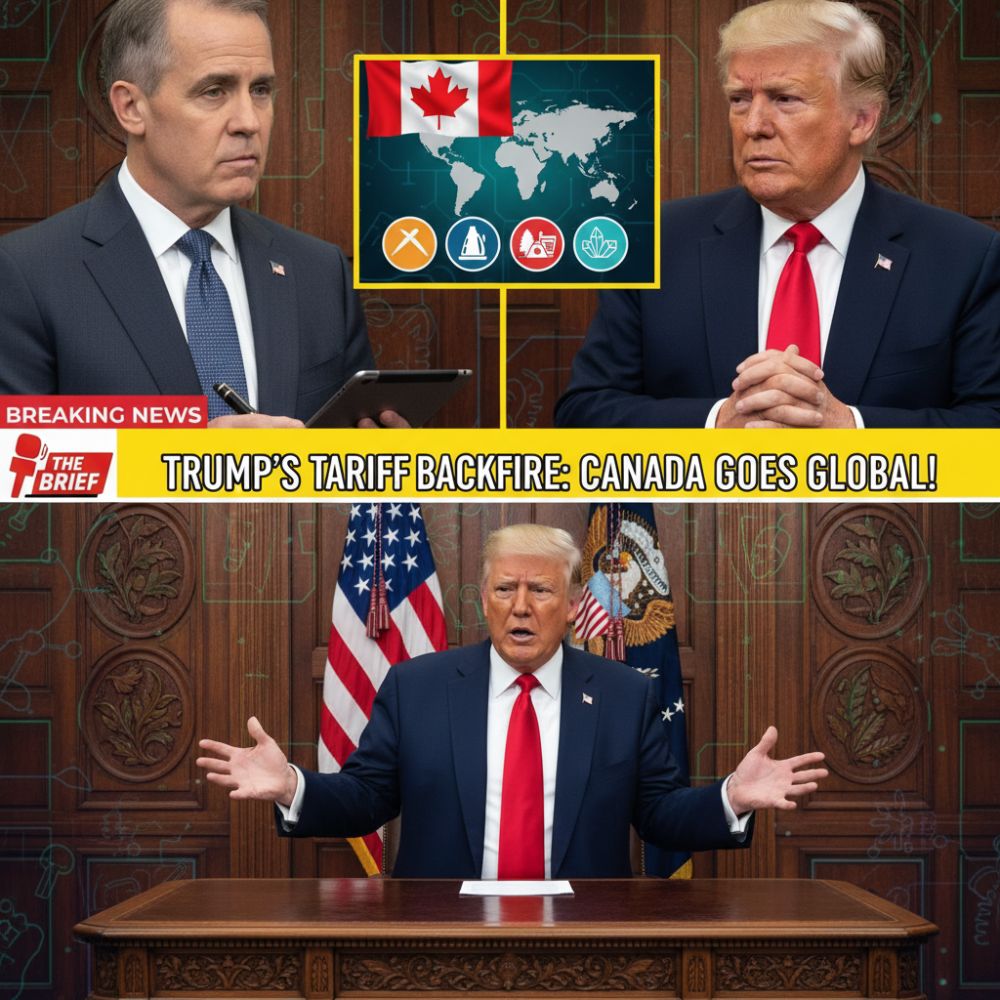
Canada is no longer warning. Canada is acting.
Under Prime Minister Mark Carney, Ottawa has quietly but decisively begun carving out a new strategic path—one that reduces reliance on the United States and expands Canada’s leverage across the global economy. What started as firm language has now escalated into concrete agreements, new alliances, and a message that Washington can no longer ignore.
The clearest signal came during Carney’s recent high-level state visit to China. While Trump continues to posture as the self-declared “king of tariffs,” Canada arrived with proposals, structure, and long-term strategy. The result was a breakthrough deal that stunned observers on both sides of the Pacific.
Canada agreed to gradually lower tariffs on Chinese-made electric vehicles, allowing up to 49,000 EVs into the Canadian market under preferential terms—roughly 6% duties, a sharp departure from recent protectionist trends. In return, China slashed tariffs on Canadian canola and key agricultural exports, restoring vital access for Western Canadian farmers who have long paid the price for geopolitical crossfire.
But the deal goes far beyond cars and crops.
China also committed to significant investment in Canada’s liquefied natural gas sector, aligning with Carney’s bold target: 50 million tonnes of LNG production annually by 2030, largely destined for Asian markets. For Canada, this isn’t just energy policy—it’s economic rebalancing on a global scale.
Carney made the logic explicit. The EV quota represents less than 3% of Canada’s auto market, but it opens the door to affordable electric vehicles under $35,000, a segment Canada desperately needs. More importantly, it lays the groundwork for future Chinese manufacturing partnerships inside Canada, potentially creating jobs, supply chains, and domestic production rather than simple imports.
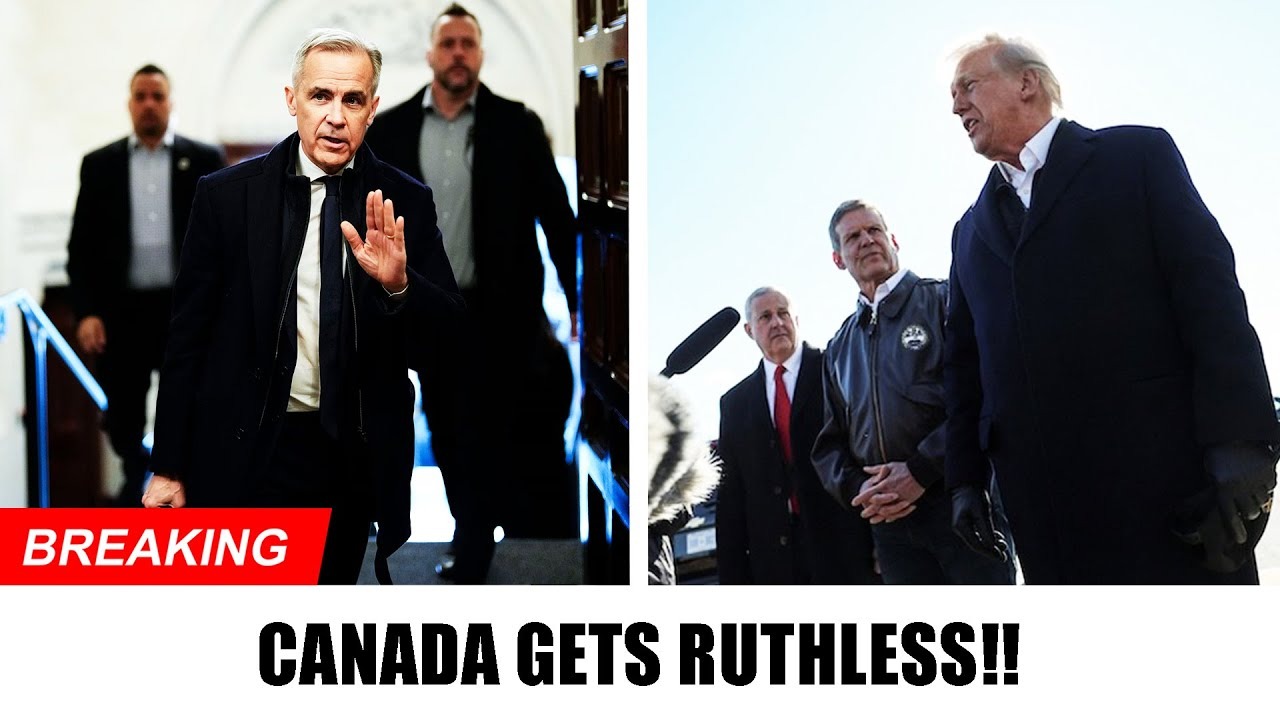
While Ottawa was building, Trump was threatening.
In stark contrast, the U.S. president doubled down on his combative worldview, publicly boasting, “I am the king of tariffs,” before floating new punitive measures tied not just to trade, but even to geopolitical compliance—suggesting tariffs could be used against countries that don’t align with U.S. positions on Greenland. The message was clear: economic pressure as political weaponry.
Canada watched—and adjusted.
Carney’s response wasn’t defiance for show. It was structural. He spoke not of punishment, but of a new world order where trade rules are increasingly shaped by coalitions, bilateral frameworks, and pragmatic partnerships rather than unilateral dominance. In that vision, Canada expands its options instead of shrinking under threats.
This shift is already producing political ripple effects at home. Restored access to the Chinese canola market strengthens Carney’s standing in Western Canada, traditionally skeptical of federal leadership. At the same time, it complicates opposition attacks: criticize China too aggressively, and risk alienating farmers and exporters who are finally seeing relief.
Internationally, the timing is critical. As the CUSMA/USMCA renegotiation approaches, Trump has repeatedly signaled disdain for the agreement, even suggesting he’s prepared to tear it up. But Canada is no longer entering those talks cornered or dependent. By diversifying trade, energy exports, and investment partners, Ottawa has reduced the effectiveness of U.S. pressure.
That reality appears to be sinking in.
Public opinion across Europe shows confidence in the United States as an ally has fallen sharply, in some countries to barely 20%. Against that backdrop, Canada’s calm, methodical repositioning stands out. Where Washington escalates, Ottawa stabilizes. Where Trump improvises, Carney builds.
This doesn’t mean Canada is turning its back on the U.S. It means Canada is refusing to be managed through fear.
Trump’s strategy relied on leverage—tariffs, threats, unpredictability. Canada’s counterstrategy relies on resilience, alternatives, and long-term planning. And in that clash, Trump’s plan is cracking.
The irony is hard to miss. Trump repeatedly told Canada to “pivot” away from the U.S. Now that Canada is doing exactly that—on its own terms—Washington seems rattled.
This is no longer about one deal or one visit. It’s about a fundamental shift in how Canada sees its place in the world. Less reactive. Less dependent. More sovereign.
Trump may keep escalating. But the ground beneath his strategy has already shifted. Canada is moving forward—deliberately, decisively, and without looking back.






