For more than two centuries, the idea of an American state leaving the Union—especially to join another country—belonged to history books and fringe hypotheticals. That changed the moment Jesse Ventura spoke.
In late January 2026, the former Minnesota governor, decorated Navy SEAL, and political outsider stunned listeners by floating a thought that once would have been unthinkable: Minnesota might be better off joining Canada.
Not as a joke. Not as a throwaway line. But as a serious reaction to what he described as a collapsing federal system in the United States.
The moment didn’t come out of nowhere. It arrived after weeks of escalating tension in Minneapolis, where two American citizens were killed by federal agents during protests—17 days apart, in the same city.
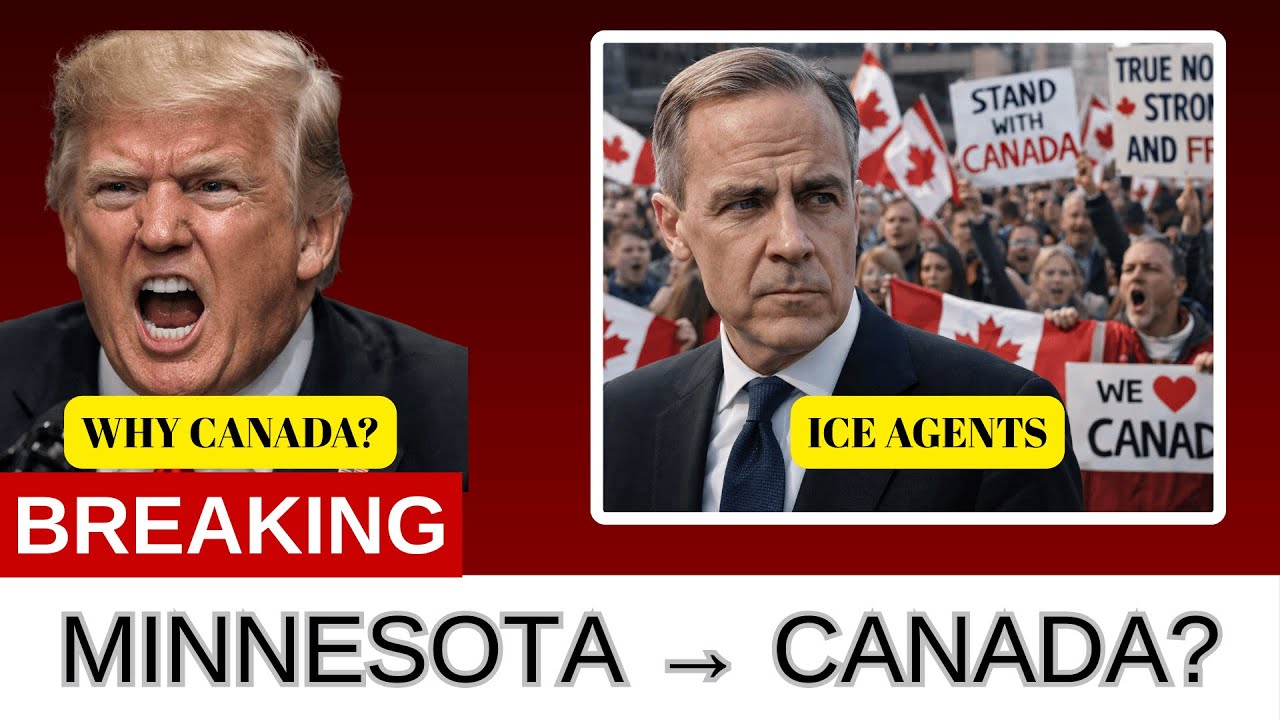
On January 7, 2026, Renee Good was shot and killed during demonstrations. On January 24, ICU nurse Alex Pretty became the second fatality, this time involving Border Patrol agents operating deep inside an American city.
For many Minnesotans, that was the breaking point.
Ventura’s response was blunt and deeply unsettling: when federal agents are patrolling cities with lethal authority, he argued, the country starts to resemble a “third world nation.” Coming from a man who swore an oath to defend the U.S.
Constitution and once governed a major state, that language landed like an earthquake.
Then came the line that echoed all the way to Ottawa.
“Since Trump dislikes Minnesota so bad,” Ventura said, “let’s join Canada.” He flipped decades of American political arrogance on its head. Instead of Canada becoming the “51st state,” Ventura suggested Minnesota become Canadian.

What followed wasn’t laughter. It was silence—and serious attention.
Canada, long accustomed to being casually belittled by American politicians, suddenly found itself framed as the more stable, more credible option. Constitutional order instead of federal chaos.
Universal healthcare instead of medical bankruptcy. Provincial autonomy instead of federal intimidation. For the first time in modern history, an American political figure with real stature was openly questioning whether U.S. citizenship still served his state’s interests.
On paper, the idea isn’t as absurd as it sounds.
Minnesota shares a 547-mile border with Canada. Its economy is deeply intertwined with Canadian markets. Culturally, environmentally, and politically, the state often aligns more closely with Canadian norms than with much of the United States.
Healthcare philosophy, environmental policy, education standards—Minnesota routinely looks north, not south.
Ventura even joked about the logistics, imagining American anglers suddenly needing passports to fish northern lakes. But beneath the humor was a serious strategic argument: Minnesota already lives like a Canadian neighbor while being governed like a distant federal subject.
The broader context matters. Throughout January 2026, Donald Trump repeatedly insulted Canadian sovereignty, mocked Canada’s leadership, and revived rhetoric about the country becoming the 51st state—all while deploying federal force inside American cities and branding states “out of control.”
To Ventura, the contradiction was obvious: Washington demanded loyalty while offering instability.
From Ottawa’s perspective, the situation is delicate. Canada would never encourage American state secession. The diplomatic fallout would be immense. But ignoring the signal is impossible.
An American state of nearly six million people is openly questioning whether the U.S. federal system still works.
Canada’s response has been quiet and strategic: don’t encourage, don’t discourage—just keep governing competently. Let stability speak for itself. Let healthcare function. Let federal–provincial relationships remain respectful. Let international credibility continue to rise while American credibility erodes.
Ventura isn’t predicting imminent secession. Minnesota isn’t packing its bags. But that’s not the point. The conversation itself has crossed a line that can’t be uncrossed.
Five years ago, this idea would have been dismissed as delusional. In 2026, it’s being debated seriously—not because Canada changed, but because America did.
The Minnesota moment signals something bigger: a psychological shift. For the first time, Americans are looking north not with jokes or condescension, but with curiosity—and even envy.
The border between Minnesota and Canada is no longer just a line on a map. It’s starting to look like a boundary between two competing models of governance. And the fact that a former U.S. governor openly wondered which side is better may be the most destabilizing signal of all.