The world woke up to a geopolitical earthquake on February 6, 2026. Canada, standing shoulder to shoulder with seven NATO allies, made an unthinkable move: a coordinated effort to shut the United States out of Greenland.
Not quietly. Not diplomatically behind closed doors. But openly, publicly, and with unmistakable defiance.
This wasn’t a misunderstanding or a temporary spat. It was a line drawn in Arctic ice — and Washington was told, bluntly, not to cross it.
At the center of the storm sits Nuuk, Greenland’s capital, where a newly opened Canadian consulate has become far more than a diplomatic outpost.
Overnight, it transformed into the most controversial building in the Western world — a symbol of resistance against American pressure and a flashpoint in the most serious NATO crisis in generations.
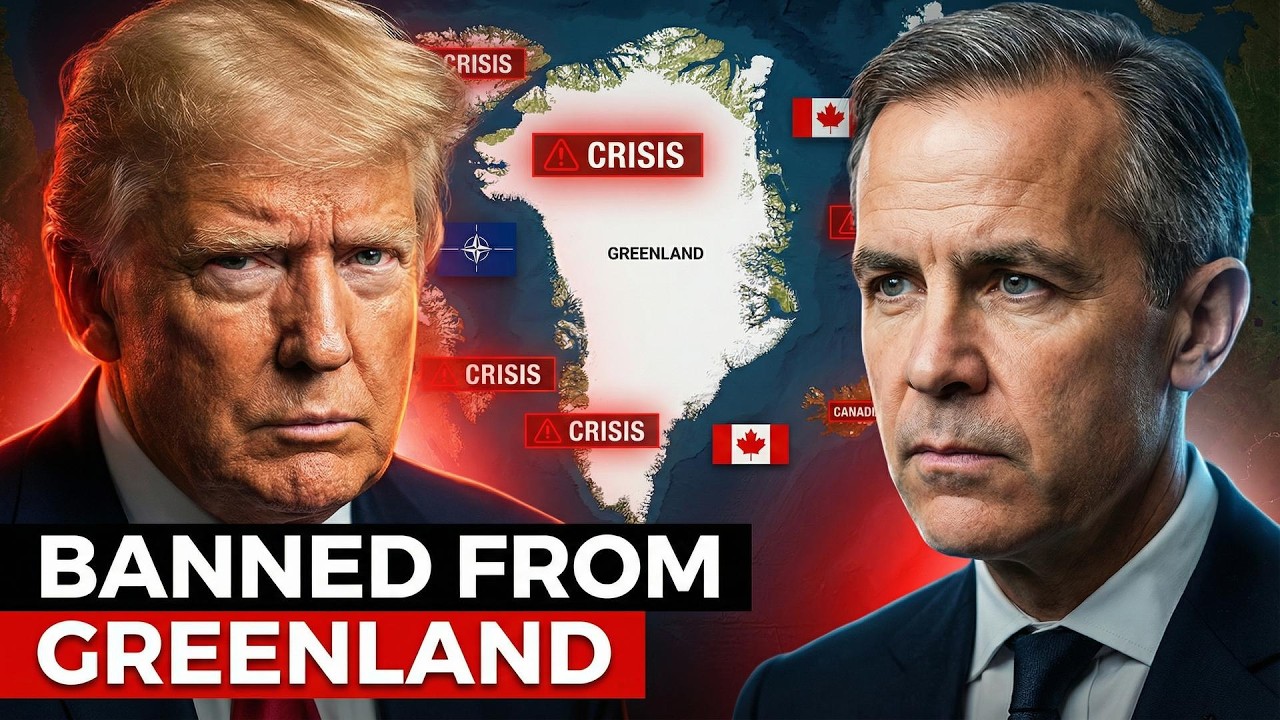
Greenland, an autonomous territory of Denmark, is no frozen backwater. It is the strategic keystone of the Arctic — rich in untapped minerals, energy reserves, and perfectly positioned between North America and Europe.
For more than 75 years, an unwritten understanding held the alliance together: Greenland’s value served collective Western defense. That understanding is now in ruins.
The fuse was lit weeks earlier. On January 17, 2026, the United States reportedly issued a stark ultimatum to Denmark and its European partners: agree to transfer sovereignty over Greenland — or face devastating economic retaliation. The threat included sweeping tariffs aimed not just at Denmark, but at any nation that dared to stand in solidarity.
The list was long and explosive: Norway, Sweden, Finland, Germany, France, the United Kingdom, the Netherlands — and Canada.
What Washington framed as “national security necessity” was received in Europe as economic warfare. The European Union viewed it as an assault on its single market. NATO allies saw it as a betrayal of the very principles the alliance was built on.
Denmark’s prime minister had once called the idea of selling Greenland “absurd.” Now that absurdity was threatening to tear NATO apart.
But this crisis wasn’t only about strategy or trade. It struck at something deeper — the identity and future of Greenland’s 56,000 residents. For decades, Greenland has been moving steadily toward greater autonomy, with independence as a long-term goal.
Its government repeated the same message relentlessly: Greenland is not for sale.
Protests erupted. Indigenous leaders spoke out. To many Greenlanders, the American demand felt like a colonial throwback — a denial of their right to self-determination. That is why the allied response was so unified, so fast, and so unyielding.
The result was a stunning counteroffensive known as Operation Arctic Endurance.
Warships from Britain, France, the Netherlands, Denmark, Norway, Sweden, and Finland formed a visible maritime shield around Greenland. Canadian fighter jets intensified Arctic patrols.
NATO’s newest members found themselves deterring not an external enemy, but their most powerful ally. The message was unmistakable: any move against Greenland would trigger collective resistance.
Then came the diplomatic masterstroke.
On February 6, Canada formally opened its consulate in Nuuk. Canadian leaders arrived alongside Inuit representatives from across the Arctic, while a massive Coast Guard icebreaker loomed in the harbor.
France quickly announced plans for its own consulate. These were not offices — they were declarations. Greenland would choose its partners. Pressure would not decide its future.
Within days, the pressure worked — but not the way Washington expected.
At the World Economic Forum in Davos, boxed in by allied unity and looming retaliation, the United States abruptly backed down. Tariffs were dropped. The ultimatum vanished. A vague NATO “Arctic Sentry” framework was announced to save face. But the damage was done.
The myth of unchallenged American leadership was broken — not by rivals, but by friends.
In Greenland, public opinion flipped dramatically. Polls showed overwhelming support for closer ties with Europe, while confidence in the U.S. collapsed. Across Europe and Canada, businesses accelerated plans to reduce dependence on the American market. NATO survived — technically — but trust did not.
The Greenland crisis of 2026 will be remembered as a turning point: the moment the unipolar West fractured, and a new, more divided global order emerged from the ice.