BREAKING NEWS: Trump’s 25% Auto Tariff Threat Sparks Canada’s Pivot Away From U.S. Supply Chains
A Trade Shock That Reaches Far Beyond Economics
A fresh wave of tension is rippling across North America after former U.S. President Donald Trump reportedly threatened to impose a 25% tariff on imported automobiles, a move that immediately rattled political leaders, automakers, and trade strategists on both sides of the border.
Though the tariff has not been formally enacted, the mere prospect of such a sweeping measure has already begun reshaping calculations in Ottawa—and accelerating conversations Canada had long postponed.
The Power of a Single Tariff Threat
According to government and industry sources, the tariff proposal was framed as leverage rather than finalized policy.
That distinction mattered little.
In a sector as tightly integrated as automotive manufacturing, even the suggestion of a sudden cost shock was enough to trigger alarm throughout Canada’s industrial base.
Autos at the Center of the Storm
Automobiles sit at the core of the U.S.–Canada economic relationship.
Parts and components routinely cross the border multiple times before final assembly, making the industry uniquely vulnerable to abrupt trade barriers. A 25% tariff would not simply raise prices—it would fracture production logic built over decades.
Canada’s Strategic Recalculation Begins
Rather than waiting for escalation, Canadian policymakers moved quickly to reassess their dependence on U.S.-linked supply chains.
The tariff threat was widely interpreted as a warning: long-standing assumptions about predictability and partnership could no longer be treated as guarantees.
Quiet Moves Away From U.S. Dependence
Behind closed doors, officials in Ottawa began exploring alternative sourcing strategies.
European and Asian partners—particularly in electric vehicles, batteries, and advanced manufacturing—entered discussions that had previously been considered secondary or long-term options.
The Political Logic Behind the Threat
For Trump, tariffs have long functioned as both economic policy and political signal.
Supporters argue that aggressive trade measures defend domestic jobs and revive U.S. manufacturing. The threat itself, they contend, is part of a negotiation strategy designed to extract concessions.
Critics Warn of Blowback
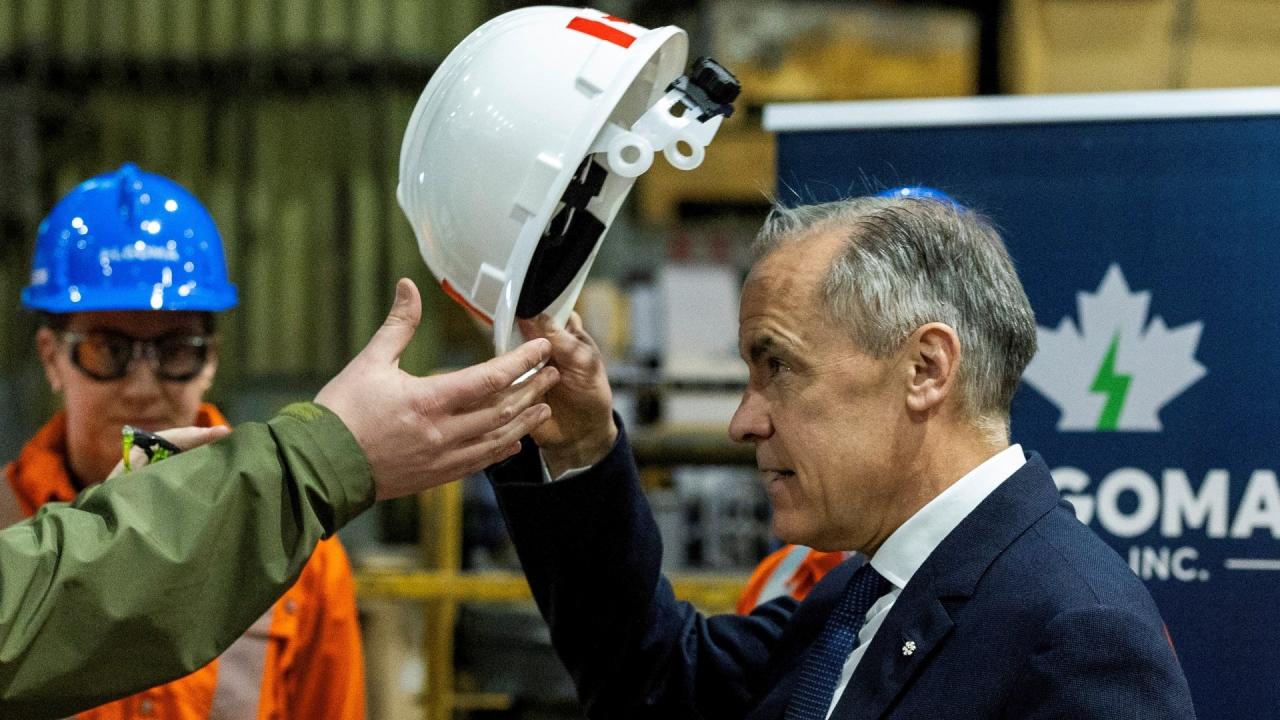
Critics counter that tariff brinkmanship carries risks that extend far beyond short-term leverage.
They warn that pressuring allies accelerates supply-chain diversification—pushing partners to reduce reliance on the U.S. rather than deepen it.
Personality as Policy
As one of the most globally recognizable political figures, Trump’s statements generate immediate consequences.
Markets, governments, and corporate boards react not only to formal policy, but to the unpredictability attached to the individual making the threat.
Public Calm, Private Alarm in Ottawa
Canadian leaders maintained a calm, diplomatic tone in public.
Privately, officials acknowledged growing concern that political volatility—not economic fundamentals—was becoming the dominant risk factor in cross-border trade.
Automakers Forced to Rethink the Model
Major automakers operating in Canada reportedly began stress-testing their production strategies.
Contingency planning accelerated as executives weighed the costs of future instability against the expense of diversifying supply chains.
Electric Vehicles Raise the Stakes
The shift toward electric vehicles has intensified the moment.
Battery supply chains, critical minerals, and clean-energy manufacturing have become strategic assets—making reliability as important as cost.
A Signal to Allies Worldwide
Canada’s response is being closely watched by other U.S. allies.
The episode illustrates how tariff threats—intended as pressure—can instead prompt partners to rethink long-term alignment.
From Trusted Partner to Strategic Risk?
For decades, the U.S. was viewed in Ottawa as Canada’s most dependable economic partner.
This moment has reopened debate over whether that assumption still holds in an era of economic nationalism.
Supply Chains Once Moved, Rarely Return
Industry analysts note a crucial reality: supply chains are hard to rebuild once they shift.
Short-term political leverage can result in permanent structural change—often long after the original dispute fades.
A Test of Resolve
The standoff tests both sides.
Canada must balance economic exposure with political independence, while Washington confronts the limits of pressure on even its closest partners.
Uncertainty Becomes the New Constant
What is clear is that uncertainty has entered decisions once driven purely by efficiency.
Political risk is now a core variable in North American manufacturing strategy.
A Defining Moment in Cross-Border Trade
The 25% auto tariff may never be imposed.
Yet its impact is already visible—in trust, planning, and the quiet redirection of supply chains.
Looking Ahead
As global trade fragments and alliances recalibrate, moments like this carry lasting weight.
The decisions made now may shape North American automotive and industrial networks for years to come.