Washington came to the table with conditions.
Ottawa walked away with leverage.
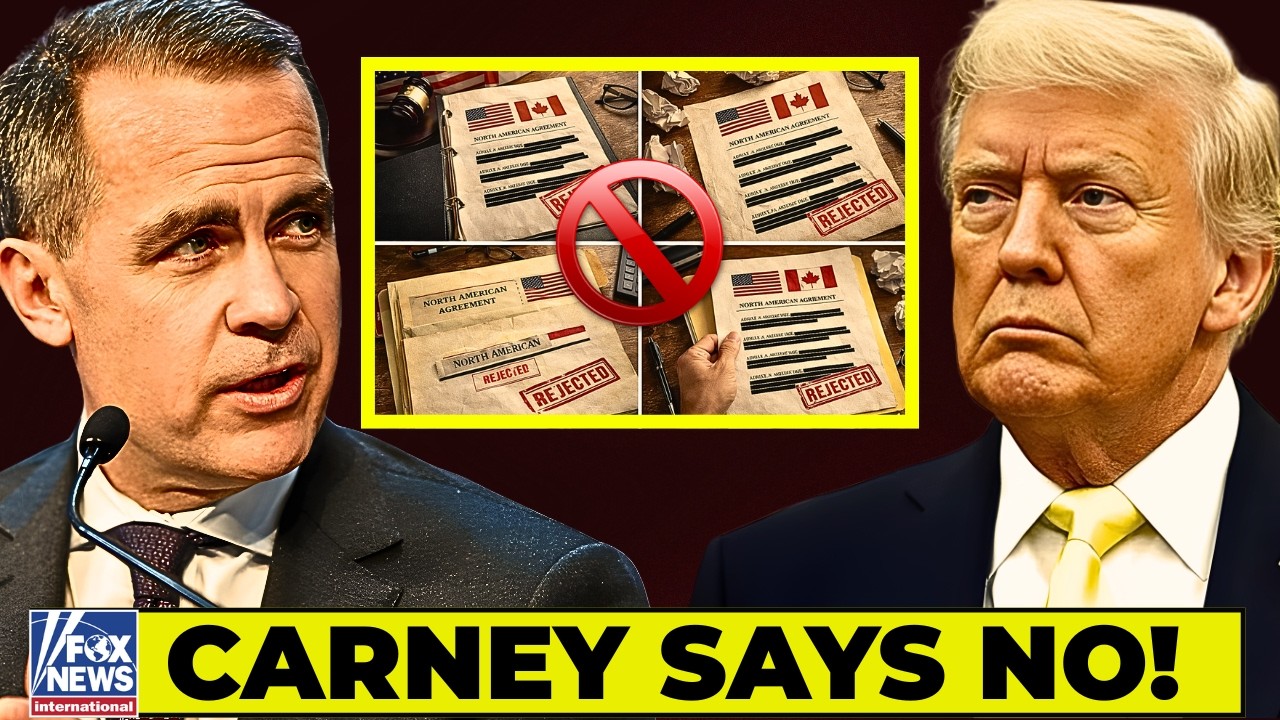
In the latest escalation surrounding the review of the North American trade agreement known as CUSMA (USMCA), the United States laid out five specific demands it says Canada must meet to secure a long-term extension of the deal. The message from U.S. Trade Representative officials was blunt: comply — or risk continued tariffs on steel, aluminum, lumber, autos, and other key sectors.
Most governments, faced with that kind of economic pressure, might seek quiet compromises.
Mark Carney chose a different path.
He rejected all five demands publicly.
The first flashpoint: dairy.
The U.S. wants expanded access to Canada’s tightly controlled dairy market, long protected under Canada’s supply management system. American officials argue current tariff-rate quotas limit fair competition, with over-quota tariffs reaching above 200%.
Carney’s response was swift and unequivocal: supply management is not on the table.
He delivered that message in French — a deliberate signal to Quebec, where dairy farming is economically and politically central. Canada had already passed legislation reinforcing protection of the system, effectively closing the legal door to major concessions. Even if Ottawa wanted flexibility, its room to maneuver is now limited by law.
Second: digital media.

Washington argues that Canada’s Online Streaming Act and Online News Act unfairly target U.S. tech giants by requiring platforms to invest in Canadian content and compensate domestic publishers. American trade officials say the measures discriminate against U.S. companies.
Carney framed it differently: cultural sovereignty.
Canada’s position is that without these rules, global platforms would overwhelm local media and creative industries. Rolling them back under trade pressure would, in Ottawa’s view, surrender control of its digital landscape to Silicon Valley. Again, the answer was no.
Third: alcohol.
Several Canadian provinces imposed restrictions on certain U.S. alcohol products in response to American tariffs. Washington wants those measures lifted as part of a trade reset.
Canada’s counterpoint is simple: remove the tariffs first. Retaliation, Ottawa argues, followed U.S. action. Asking Canada to withdraw defensive measures while American tariffs remain would require unilateral concession. Carney declined.
Fourth: government procurement.
U.S. officials have criticized provincial policies that favor domestic suppliers for public contracts. Yet the United States maintains its own Buy American requirements across federal procurement, particularly in infrastructure and defense.
Carney’s camp reportedly viewed this demand as asymmetrical — a request for Canada to dismantle practices the U.S. continues to enforce domestically.
Fifth: energy.
Concerns were raised about provincial energy policies allegedly disadvantaging U.S. electricity imports. Canadian officials rejected the characterization. More broadly, Canada remains a crucial energy supplier to the U.S., exporting millions of barrels of crude oil daily and supplying electricity to several American regions during peak demand.
That energy interdependence complicates any escalation.
What makes this standoff remarkable isn’t the list of demands — it’s what wasn’t emphasized: autos.
North America’s auto industry operates as a deeply integrated supply chain. Components cross borders multiple times before final assembly. Industry leaders have repeatedly warned that trade instability threatens billions in annual savings created by regional integration.
If CUSMA weakens, disruption hits manufacturers on both sides.
Carney appears to understand that dynamic.
Rather than reacting emotionally, he is signaling confidence rooted in diversification. Canada has expanded trade ties with Europe under CETA, explored sector-specific arrangements with Asian markets, and invested in critical minerals essential to clean energy and advanced manufacturing. While roughly three-quarters of Canadian exports still flow to the U.S., efforts to reduce overdependence are visible.
Meanwhile, more than 100 U.S. industry groups — spanning autos, agriculture, and energy — have urged American lawmakers to preserve trade stability.
The strategic calculation is clear: leverage runs both ways.
The U.S. can threaten tariffs. But Canada supplies energy, raw materials, manufacturing capacity, and market access critical to American industries. An all-out rupture would carry significant domestic costs in the United States as well.
Three potential outcomes now loom: a long-term extension of the agreement, a withdrawal by one side, or a shift to rolling annual reviews that prolong uncertainty.
Uncertainty alone can chill investment.
Carney’s rejection of the five demands is being framed by supporters as strength — a refusal to trade core policy pillars under pressure. Critics warn it risks retaliation.
But one reality is undeniable: the era of quiet acquiescence appears to be fading.
As July negotiations approach, Canada enters the room not as a reactive partner, but as a country signaling it has options.
In North America, leverage no longer flows in only one direction.
And this time, Ottawa made that clear — publicly.