TRUMP FACES DISASTER AS CANADA QUIETLY SLASHES BILLIONS FROM U.S. FLIGHTS IN 2026
A subtle but powerful shift is unfolding across North America, and it is not coming from speeches or summits. It is happening inside airline booking systems and route-planning meetings, where Canadian carriers are steadily pulling back from the United States. Since Donald Trump began his second term, cross-border travel patterns have changed enough to trigger concrete, data-driven decisions that now threaten billions in U.S. tourism revenue.

This week, Air Transat confirmed it is suspending the last of its U.S. summer routes, including flights from Montreal and Quebec City to Florida destinations like Orlando and Fort Lauderdale. The move was not caused by aircraft shortages or weather disruptions, but by weakening demand. Days earlier, WestJet cut 15 Canada–U.S. city pairs in a single adjustment, signaling that this was no isolated seasonal tweak but part of a broader pattern.
Airlines are not political actors; they are ruthless calculators. Routes exist for one reason only—profitability. When forward bookings soften, load factors fall, and pricing pressure rises, aircraft are redeployed elsewhere. The fact that multiple carriers made similar cuts within the same week suggests a sustained demand shift, not a temporary fluctuation. For decades, Canadian travel to the U.S. was predictable and nearly automatic. That assumption is now breaking.
The economic implications are significant. Canadian travelers have long been a backbone of U.S. tourism, particularly in Florida, where snowbirds, families, and retirees fuel hotel occupancy, restaurants, car rentals, theme parks, and cruise terminals. Billions of dollars flowed south each year through this cross-border tourism pipeline. When even a fraction of that traffic disappears, the ripple effects spread quickly through local economies.
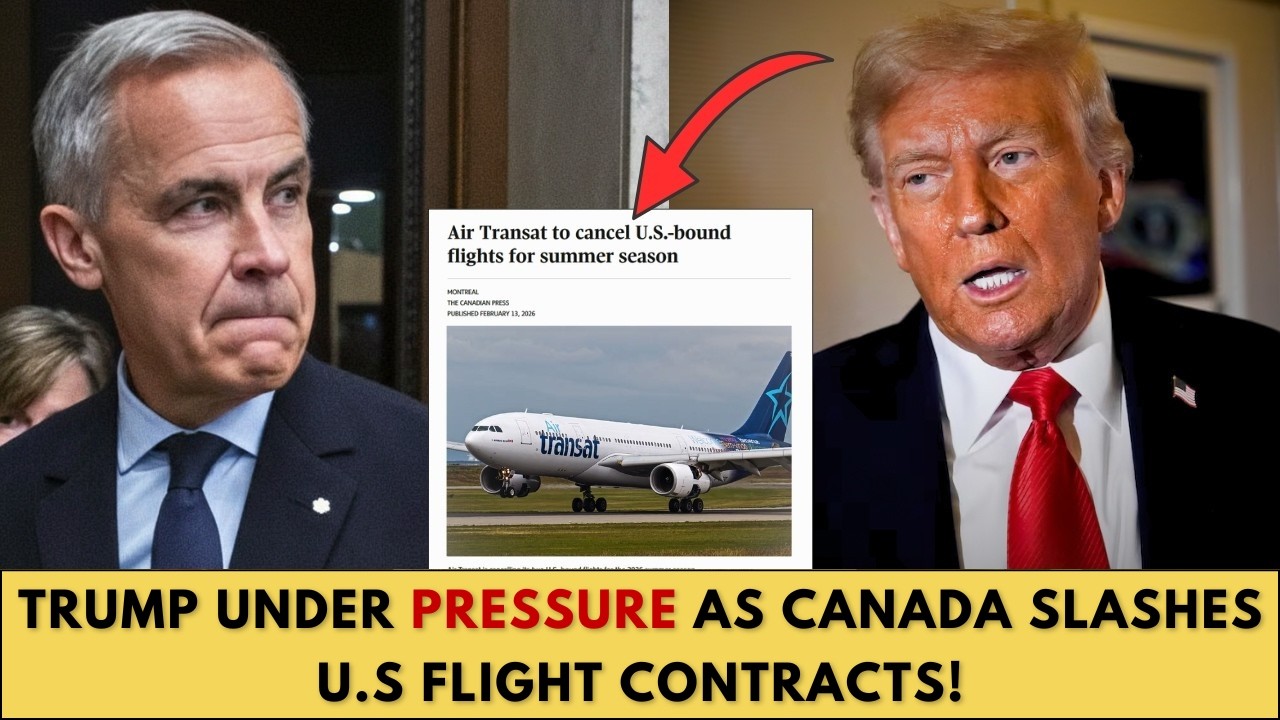
What makes the moment striking is that Canadians have not stopped traveling. Airports remain busy and planes remain full—but increasingly, they are headed elsewhere. Airlines are expanding routes to Europe, North Africa, and other international sun destinations. Capacity is not shrinking; it is being redirected. That redirection is one of the clearest signals in aviation, revealing where consumer confidence and enthusiasm are actually growing.
The reasons behind the shift are complex but telling. Political tension, trade uncertainty, currency pressure, and years of turbulent headlines have subtly reshaped consumer sentiment. Travelers do not need to make a formal statement to change behavior; they simply choose different destinations. When that behavior changes at scale, airlines respond by moving aircraft across continents—a decision that reflects long-term expectations, not short-term noise.
Route planning happens months in advance, with crews assigned, marketing budgets locked, and schedules finalized well before tickets are sold. Cutting routes at this stage means executives believe the weakness is durable enough to justify a network reset. That is strategic repositioning, not panic. Airlines may not comment on politics, but their actions quietly reveal how markets are voting with their wallets.
Whether this becomes a temporary dip or a lasting realignment remains uncertain. But one fact is already clear: Canadian travel to the United States is no longer automatic. And when automatic patterns break—even quietly—the economic consequences can echo far beyond the runway, leaving destinations, hotels, and entire regions feeling the impact long after the flights are gone.






