Trump Thought He Had Leverage — Carney’s Response Put a $6.4B Trade Route at Risk 🇺🇸⚠️🇨🇦
U.S. President Donald Trump has abruptly threatened to block the imminent opening of the Gordie Howe International Bridge, putting a $6.4 billion Canada-funded trade artery linking Windsor, Ontario, and Detroit, Michigan, at risk. This sudden move has ignited fierce political conflict and uncertainty over a critical North American commerce corridor.
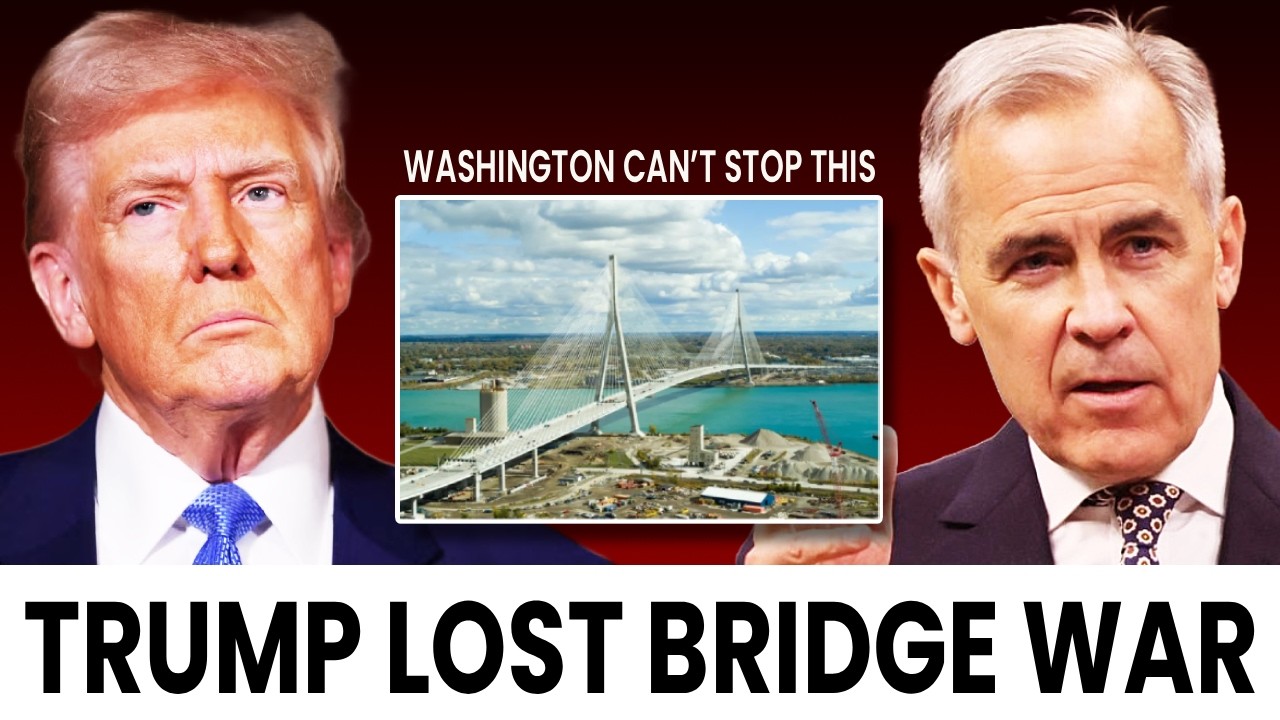
The Gordie Howe Bridge, a massive infrastructure venture entirely financed by Canada, is poised to transform trade logistics by directly connecting Ontario Highway 401 with Interstate 75 in Michigan. The project aims to alleviate severe congestion on the existing Ambassador Bridge, which has long monopolized cross-border commercial traffic.
Trump’s confrontation emerged in a social media post that accused Canada of owning both sides of the bridge and demanded compensation before allowing it to open. The president positioned the bridge as leverage amid broader trade disputes, including issues surrounding Ontario’s restrictions on American alcohol and trade agreements with China.
Contrary to Trump’s claims, a formal 2012 agreement clarifies that Michigan holds 50% ownership of the bridge despite Canada fronting the $6.4 billion construction cost. Under the deal, Canada’s initial outlay will be reimbursed through toll revenues, after which Michigan receives half the net toll proceeds, a structure ratified by state and federal authorities years ago.
Political figures swiftly condemned Trump’s threat. Former Michigan Governor Rick Snyder detailed the agreement, stating Michigan’s half-ownership came without construction expenses, protecting taxpayers while boosting economic interests. Governor Gretchen Whitmer emphasized the bridge’s role in job creation, supporting the auto industry, and bipartisan cooperation on infrastructure.
Senator Alyssa Slotkin warned blocking the bridge would disrupt Michigan’s supply chains and increase costs for consumers dependent on efficient trade routes. House Speaker Matt Hall highlighted the risks of retaliation, noting the privately owned Ambassador Bridge’s monopoly and the potential chaos if the new public crossing were obstructed.
The existing Ambassador Bridge, built in 1929 and controlled by the Moroun family, manages the lion’s share of commercial truck traffic in the Detroit-Windsor corridor, producing over $60 million in annual toll revenue. The Gordie Howe Bridge project aimed to introduce competition and modernize cross-border freight efficiency.
Opposition from the Moroun family included a costly ballot initiative and multiple federal lawsuits attempting to block the new bridge. Despite their efforts and Trump-era advertisements urging cancellation, the project secured permits, legislative support, and funding within the Trump administration itself, reflecting longstanding bipartisan backing.
The Gordie Howe International Bridge is crucial, handling about 25% of all Canada-U.S. merchandise trade. The region’s auto manufacturing depends on just-in-time delivery of parts crossing the border repeatedly. Delays impact assembly lines, driving up costs and reducing productivity for both American and Canadian workers.
Unlike the Ambassador Bridge’s urban bottlenecks funneling trucks through Windsor city streets, the new crossing offers freeway-to-freeway access, cutting commercial transit times by up to 20 minutes per trip. Over 30 years, this efficiency is projected to save trucking companies approximately $2.3 billion, benefiting industries across the border.
Trump’s social media post framed the bridge controversy within a broader narrative accusing Canada of economic unfairness. However, the bridge’s ownership and financing arrangements are well-documented and were endorsed by both Canadian and U.S. governments under prior administrations, including Trump’s own first term.
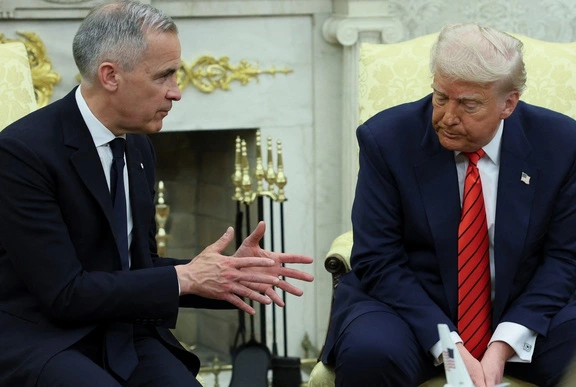
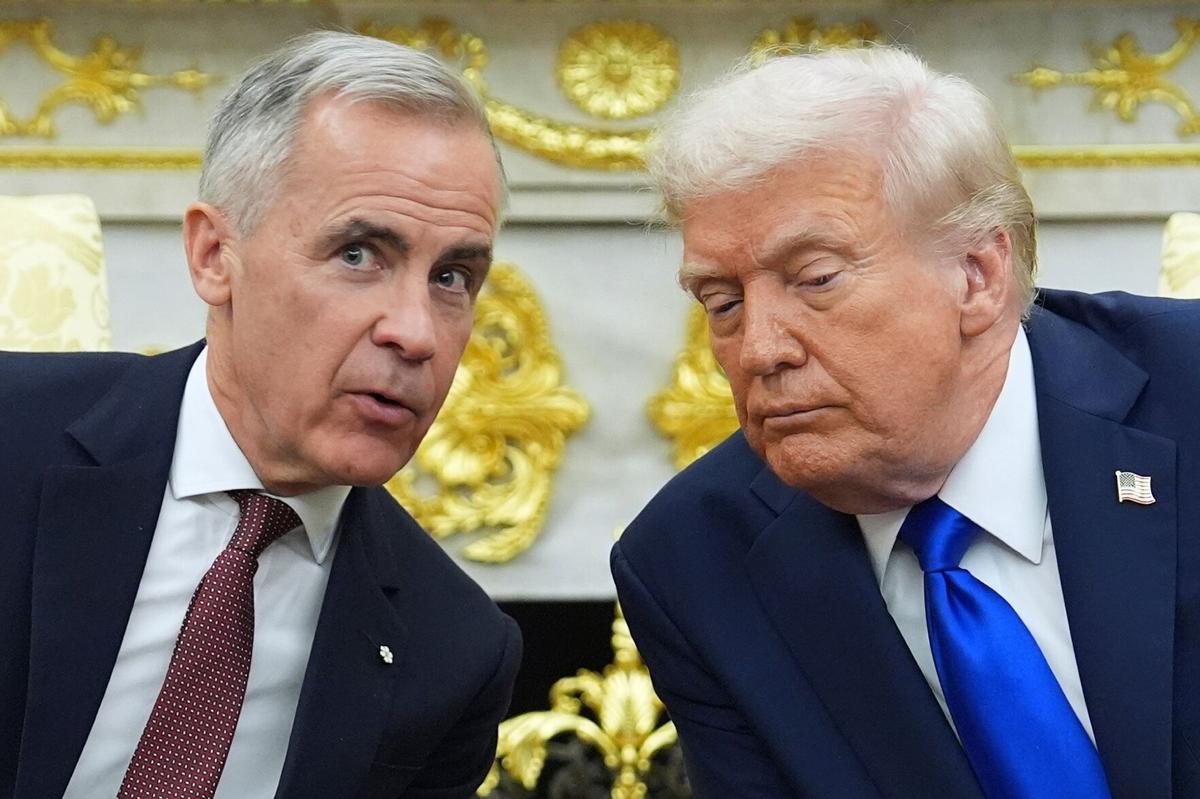
Following the social media storm, Canadian Prime Minister Mark Carney responded measuredly, detailing four key points affirming Canada’s financing, shared ownership, and joint construction featuring steel and labor from both countries. He brokered a direct conversation with Trump to ease tensions and promote continued dialogue.
Carney called the bridge a symbol of cooperation essential to commerce, tourism, and employment, reinforcing its foundational role in North American trade. He enlisted U.S. Ambassador Pete Huxra, a Michigan native, to facilitate diplomatic engagement, signaling a preference for reasoned communication over public political sparring.
Washington’s trade environment is fraught, with rising prices and job insecurity putting pressure on lawmakers, especially in swing districts like Michigan. Bipartisan resistance to aggressive tariff measures against Canada has grown, complicating executive strategies aimed at leveraging trade disputes for political gains.
Carney’s recent trade pact with China, lowering tariffs on Canadian canola and opening billions in export markets, further antagonizes U.S. officials wary of shifts in trade dynamics. Ontario’s restrictions on American alcohol sales compound tensions, embedding the Gordie Howe Bridge dispute in a complex web of international economic rivalry.
Despite the upheaval, construction advanced steadily with thousands of workers from both nations. The bridge incorporates American steel on the Michigan side and Canadian materials elsewhere, symbolizing cross-border industrial collaboration. A ribbon-cutting ceremony is scheduled soon, with officials heralding the project as a milestone in regional development.
Once operational, about 6,000 Canadians will cross daily to work in Detroit, and approximately 8,000 trucks will use the bridge each day, underscoring the corridor’s vital role in sustaining intertwined economies and supply chains. Disruptions risk significant job losses and elevated costs on both sides of the border.
Throughout the contentious exchanges, the underlying agreements remain intact. Michigan holds half ownership; Canada recoups its construction costs via tolls before revenue sharing begins; and U.S. federal authorities approved permits and funding years ago. The political rhetoric, however, threatens to stall the project’s benefits.
Infrastructure projects are anchored in contracts and reciprocal commitments, immune to abrupt political shifts. The Gordie Howe Bridge survived lawsuits, ballot challenges, and political lobbying over more than a decade. This sudden threat exposes how fragile critical trade infrastructure can become amid volatile political climates.
Michigan leaders across party lines chose to emphasize protecting jobs, supply chains, and long-term state revenues rather than inflaming cross-border tensions. Their unified stance contrasts with the charged rhetoric from Washington, highlighting a pragmatic recognition of the bridge’s economic imperative.
Carney’s grounded response avoided confrontation, aiming to preserve a cooperative trade relationship essential for North America’s integrated economy. As the opening approaches, attention refocuses on measurable economic gains rather than political posturing, underscoring the bridge’s profound impact beyond partisan battles.
Thousands of daily commuters rely on seamless transit between Windsor and Detroit for employment, while the freight corridor supports crucial sectors including manufacturing and agriculture. Disrupting this flow jeopardizes productivity and economic stability across an interconnected regional landscape.
The 20-minute reduction in travel time per commercial trip accumulates into billions in savings over decades, reinforcing the importance of efficient infrastructure for global competitiveness. The Gordie Howe Bridge is not merely a structure; it is a linchpin in sustaining supply chains that cross national borders multiple times in production processes.
The bridge’s ownership model ensures Michigan benefits substantially without upfront financial risk, shielding taxpayers while securing significant revenue streams from toll collections. Canada’s fronted investment and subsequent cost recovery establish a transparent and equitable financial framework agreed upon by all parties.
This controversy raises urgent questions about the use of infrastructure as political leverage in trade disputes. While political messaging may score short-term points, it risks undermining vital economic corridors, 𝓉𝒽𝓇𝑒𝒶𝓉𝑒𝓃𝒾𝓃𝑔 jobs and industries that depend on dependable border crossings to thrive.
Ultimately, the Gordie Howe Bridge saga illustrates the complex collision of trade, politics, and regional economies. When infrastructure becomes a bargaining chip, those closest to the ground—workers, businesses, and communities—bear the consequences, not the politicians orchestrating the standoff.
As the ribbon cutting nears, stakeholders call for a return to facts and cooperative resolve. The bridge’s promise is clear: an era of improved commerce and connectivity that transcends political tumult and strengthens the economic fabric of both Canada and the United States.