A YouTube rant called it “war.”
The paperwork calls it recruitment—and it’s lighting a fuse across North America.
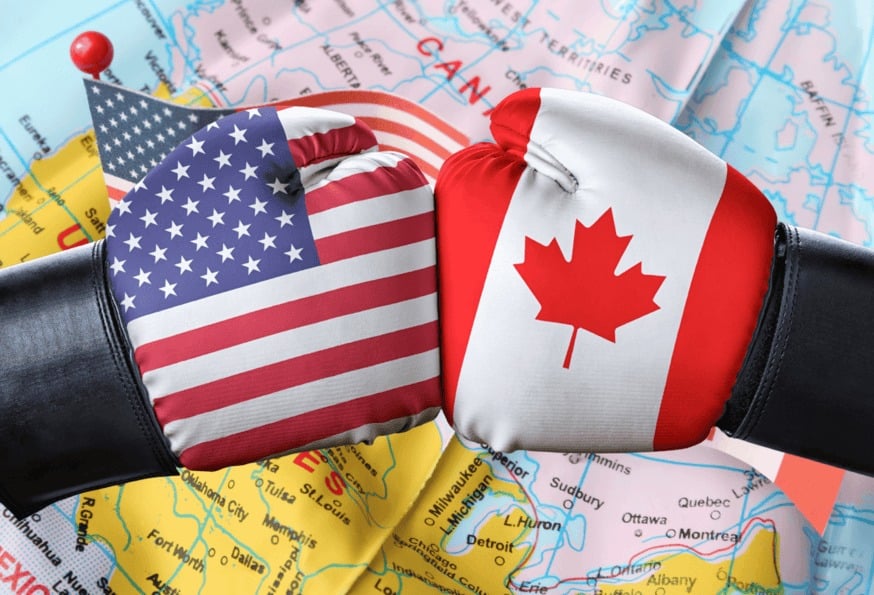
The loudest voices online are calling it a “trade war sequel.” Some are even tossing around the word “war” itself.
But here’s what’s actually happening: Canada is taking a sharp, deliberate turn away from U.S. dependence—on trade, on defense procurement, and even on who gets fast-tracked into the Canadian Armed Forces. And Washington is watching closely.
The spark? A growing cloud of uncertainty around North America’s trade future, with reports that President Donald Trump has been privately questioning why the U.S. should stay in the USMCA trade pact ahead of its mandatory review.
At the same time, commentary outlets and political chatter are floating scenarios where the U.S. could pursue a more bilateral format—potentially leaving Canada isolated.
Into that pressure cooker stepped Prime Minister Mark Carney with something bigger than a speech: a “Buy Canadian” defense-industrial strategy priced at $6.6 billion, aimed at building more military equipment at home, steering contracts toward Canadian firms, and scaling up defense exports. The plan’s headline-grabbers are bold: raise domestic defense procurement from roughly one-third to around 70%, boost defense exports by 50%, and support up to 125,000 jobs over the next decade.
On its face, this is the kind of nation-building policy that gets applause at home: sovereignty, jobs, supply chain resilience, fewer foreign chokepoints. But critics see something else entirely—an intentional pivot designed to reduce reliance on U.S. suppliers and, by extension, U.S. leverage.
Then came the move that turned an already tense conversation into online wildfire: Canada’s immigration system adding a pathway tied to military recruitment.
Despite the viral framing of “foreign mercenaries,” what’s being reported is far more bureaucratic—and far more politically explosive: Canada launched a new Express Entry priority category focused on skilled military recruits, where eligible foreign applicants with a Canadian Armed Forces job offer (including roles like doctors, nurses, pilots) may be invited to apply for permanent residence—subject to standard security screening and military requirements.
Supporters call it pragmatic: Canada’s armed forces need specialized talent, and recruitment has been challenging. Critics call it reckless: importing military capacity while political tensions rise is the kind of headline that writes itself—especially when paired with heated rhetoric about national security and sovereignty.
And the story doesn’t end with trade and defense.
The wider narrative—at least in viral media—feeds off a sense that Canada is spiraling into institutional dysfunction: political defections, partisan blowups, and culture-war flashpoints engineered to keep everyone angry and distracted.
One real example currently fueling that outrage cycle: a Quebec Human Rights Tribunal ruling ordering a hair salon to pay $500 in damages after a non-binary customer complained the salon’s online booking system forced them to choose “man” or “woman.”
Depending on who you ask, it’s either a small but meaningful inclusion issue—or proof that institutions have lost the plot. Either way, it’s the kind of story that becomes gasoline in an already super-heated political climate.
Zoom out, and the throughline is hard to miss: uncertainty drives diversification. When partners fear sudden tariff swings or trade threats, they quietly reduce exposure. When a country feels economically cornered, it starts building alternatives—new suppliers, new alliances, new talent pipelines.
So is Canada “declaring war” on the U.S.?
No. Not in any literal sense—and headlines saying otherwise are commentary, not confirmed policy.
But Canada is signaling something unmistakable: it wants to be harder to pressure, harder to isolate, and less dependent on Washington’s mood swings.
And that is exactly why this moment feels so volatile.
Because in a deeply integrated continent, even “defensive” moves land like a challenge.