Canada just made a move that Washington can’t ignore.
Not a speech. Not a warning. A $6.6 billion blueprint designed to remake who controls the hardware of North American security.

- For decades, Canada’s defence supply chain has lived in the shadow of its closest ally. Buy a lot from the U.S., integrate systems, stay interoperable, keep the pipeline flowing. It was predictable—until the world stopped being predictable.
Now Ottawa is signaling a hard pivot: build more at home, lock in sovereign capability, and stop betting the country’s security on decisions made elsewhere.
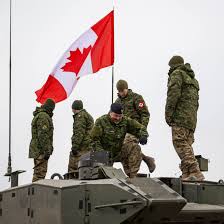
In mid-February 2026, Prime Minister Mark Carney unveiled a $6.6 billion Defence Industrial Strategy built around a simple framework: “build, partner, buy.” In plain terms: build in Canada when possible, partner with allies when necessary, and buy abroad only with conditions that strengthen Canadian control and reinvestment back into Canada.
But the headline-grabbers are the targets—numbers that read like a national mobilization plan:
125,000 new jobs over 10 years
Increase the share of defence acquisitions awarded to Canadian firms to 70% (up from roughly one-third meeting Canada’s needs today, as described in coverage of the plan)
Boost Canada’s defence exports by 50%
Increase government investment in defence-related R&D by 85%

This isn’t being sold as symbolism. It’s being marketed as a direct response to a world where trade disputes, tariffs, and political volatility can turn procurement into a hostage situation. The strategy explicitly frames “sovereign capabilities” as the core: the stuff Canada can’t afford to lose access to if the global mood shifts overnight.
And that’s the part that hits like a warning flare across the border.
Because when a country that’s deeply integrated with the U.S. defence ecosystem starts building a bigger domestic base, it changes leverage. It changes timelines. It changes who gets the first call when factories are at capacity. Some observers call it overdue modernization; others see it as Ottawa quietly drawing a line: Canada will not be dependent by default.
The plan also leans into a second strategy running in parallel: diversify trade and partnerships. The video’s “39 countries, 1.5 billion people” line is off on the specifics, but the underlying idea is real—Canada already has 15 free trade agreements covering 51 countries and about 1.5 billion consumers, and Ottawa has been pushing the narrative of broader market access beyond the U.S.
Here’s why this matters: defence industry isn’t just “jobs.” It’s the foundation of industrial ecosystems—suppliers, advanced manufacturing, specialized engineering, R&D spinoffs, and long contracts that anchor entire regions. Once those supply chains mature in one place, they don’t move easily. That’s why this plan reads less like a budget line and more like a long-term power play: build the capacity now so Canada can choose partners later—without pressure, without delay, without begging for approvals.
The big question is what happens next.
If Ottawa actually executes—faster procurement, real contracts, real production—Canada doesn’t just get more equipment built at home. It gets more control over the terms of its own security. And in a decade defined by uncertainty, that control may be the most valuable asset of all.