They didn’t break the alliance with a speech — they did it with a procurement rule.
And Washington realized it was losing Canada before the day’s first briefing even started.
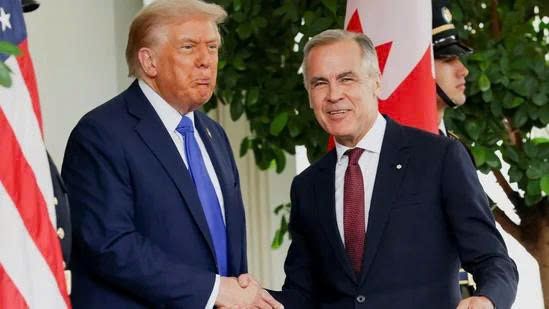
For most of modern history, the Ambassador Bridge stood like a blunt, physical promise: Canada and the United States weren’t just neighbors — they were a single integrated machine. War years. NAFTA. 9/11. The 2008 crash. The system absorbed shock after shock and kept moving.
Then, without an explosion, it stopped being trusted.
Not with tanks. Not with a treaty collapse. With something far more dangerous in the 21st century: capital flows, procurement rules, and contracts.
Because in Montreal, Prime Minister Mark Carney moved first — and he moved like someone who understands that empires don’t fall from enemies alone. Sometimes they erode because allies quietly build exit ramps.
The move has a name: Canada’s first Defense Industrial Strategy. And inside that document is a sentence that landed in Washington like a thrown brick:
“Buy Canadian will be the north star.”
Not “when possible.” Not “as a preference.” A north star means direction even when the weather turns ugly.
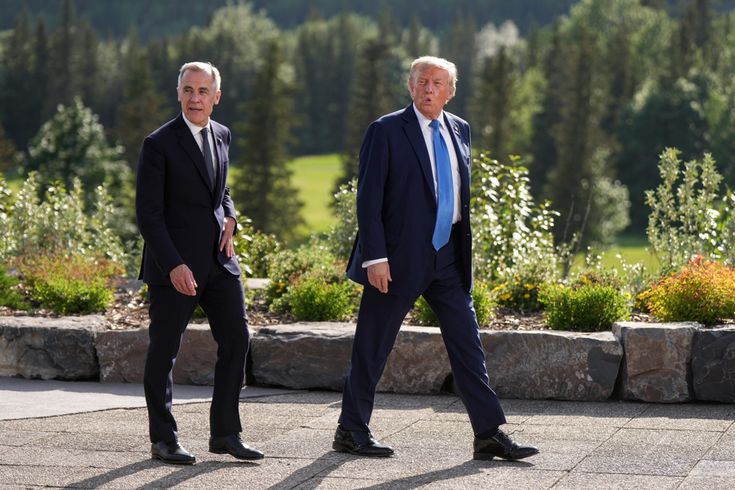
The strategy isn’t framed as a press release. It reads like an engineering blueprint for autonomy. It points Canadian industry toward roughly $180 billion in defense procurement opportunities and $290 billion in defense-related capital investment over the next decade — with an estimated $125 billion downstream economic benefit by 2035. It targets 125,000 high-paying careers and pushes the share of defense acquisitions going to Canadian firms up to 70%.
That’s not Canada “spending more.” That’s Canada building a future where the United States is no longer the automatic default.
Then came the second move — the one Washington couldn’t ignore even if it tried: Canada reached an agreement to join the EU’s Security Action for Europe (SAFE) initiative, expanding Canadian defense firms’ access to European financing and markets.
Put those two together and the message becomes impossible to misread: Canada is designing a defense ecosystem where the U.S. is optional.
And that’s when the temperature spiked.
A call came from Washington that was supposed to be routine — the usual maintenance of the “special relationship.” It reportedly landed as something else entirely: reverse the direction, stop hardwiring “Buy Canadian,” guarantee American firms equal access, and don’t make Europe the alternative engine.
Because “Buy Canadian” isn’t just a slogan. It’s a gravity well. It pulls money, talent, intellectual property, and manufacturing inside the border first — and only then outward if needed. The hierarchy is brutal in its simplicity:
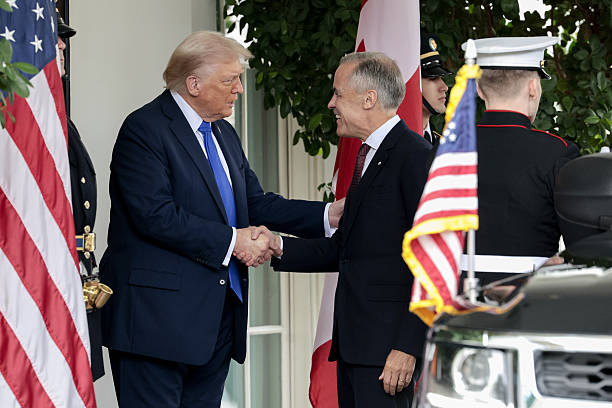
Build. Then partner. Then buy.
Washington hears that and understands what it means in plain language: We used to be the default. Now we’re what Canada considers after it exhausts other options.
And here’s where Carney’s posture becomes the real story. He didn’t answer like a politician throwing elbows on camera. He answered like a central banker pricing risk: calm, measured, and immediately operational. The strategy includes an execution mechanism — a defense investment agency designed to cut red tape, speed delivery, streamline procurement, and serve as a single point of contact.
That isn’t bureaucracy. It’s an engine.
This is the nightmare for Washington: Canada isn’t complaining. Canada is rewiring.
And the contradiction inside the Western alliance is suddenly visible for everyone to see. The U.S. demands allies spend more on defense. Allies respond: fine, we’ll build more at home. The U.S. replies: not like that.
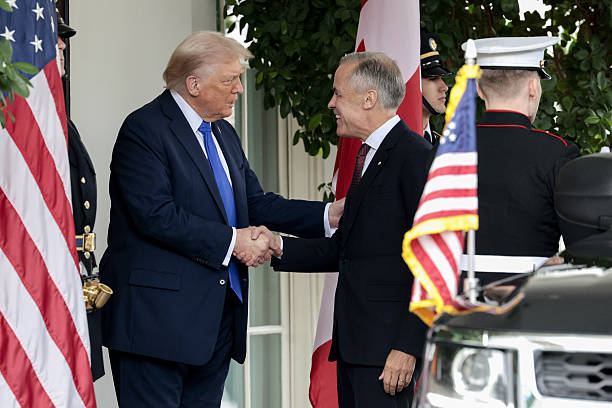
That’s the fight. Because the unspoken assumption has always been that allied spending would mostly route through American industry. Canada’s strategy breaks that assumption in public, on paper, with targets.
Now zoom out from flags and speeches to the part nobody wants to admit out loud: when procurement nationalism turns into alliance tension, you pay for it. Fragmentation raises costs. Retaliation risk creeps into pricing. Markets don’t fear speeches — they fear unpredictable policy swings. And when the closest U.S. ally starts behaving like it expects disruptions, investors price in a harsher future: higher risk premiums, shakier supply chains, and more expensive everything.
Carney’s bet is that stability is a weapon — and “Buy Canadian” is an insurance policy against coercion. Washington’s bet is that dominance restores order: pressure, warnings, threats, retaliation.
But capital has one rule: it isn’t loyal — it’s allergic to heat.
And in a world where reliability is worth billions, Canada is trying to become the “boring” node everyone can count on — while Washington keeps acting like pressure is the same thing as trust.
That’s the shift happening here. Not a breakup in anger — a recalculation in silence.
The question now isn’t whether Canada’s strategy is real. The blueprint is public. The targets are explicit. The direction is locked.
The question is whether Washington understands what it’s watching: not rebellion, but a slow-motion redesign of North America — contract by contract — into a system that no longer revolves around one center.