In the span of a few hours, a $6.4 billion infrastructure project that has been more than a decade in the making was thrust into the center of a cross-border political dispute.
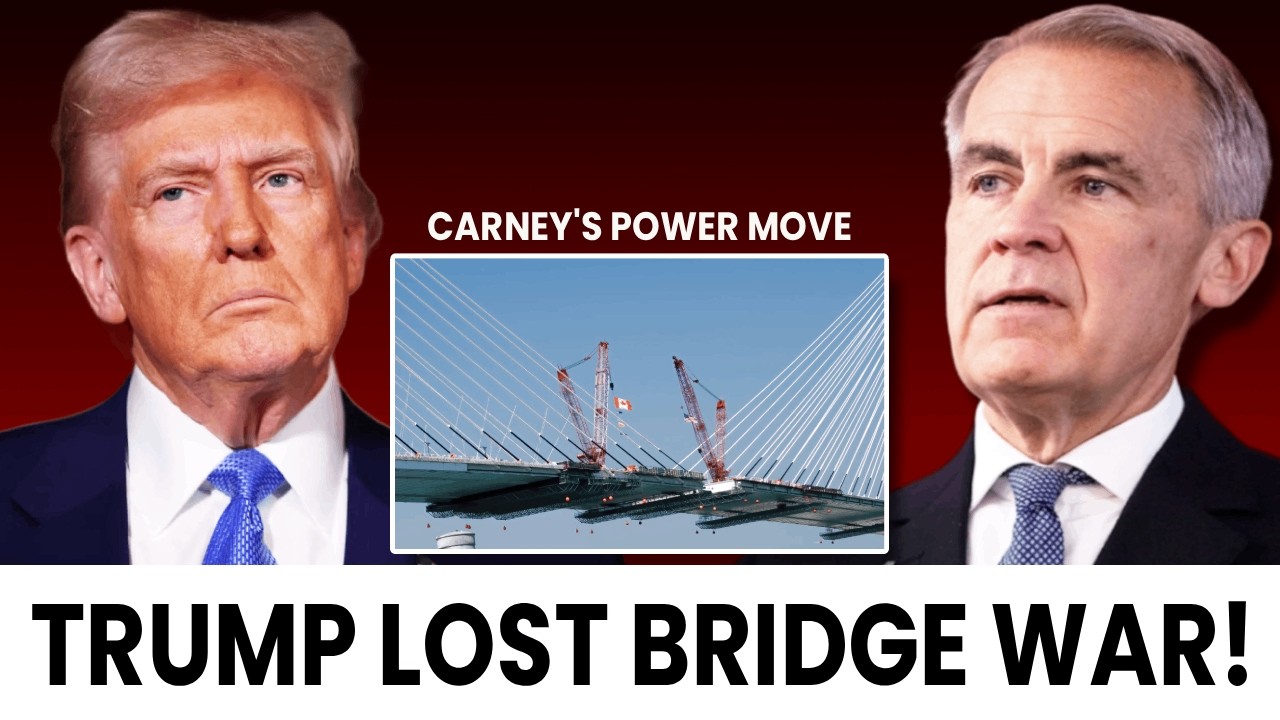
Late one evening, President Donald J. Trump declared on social media that he would seek to block the opening of the Gordie Howe International Bridge, the long-awaited span connecting Windsor and Detroit. By morning, Canada’s prime minister, Mark Carney, had responded in a markedly different tone — calm, measured and rooted in the text of a 2012 agreement that has governed the project from its inception.
The bridge, which stretches across the Detroit River, is designed to carry up to 8,000 trucks a day and to provide a second major commercial crossing between the United States and Canada in one of the busiest trade corridors in North America. Roughly a quarter of all merchandise trade between the two countries passes through the Detroit-Windsor gateway, much of it tied to the deeply integrated auto industry.
Mr. Trump’s post asserted that Canada “owns both sides” of the bridge and suggested that the United States would need compensation before the crossing could open. He linked the issue to broader trade grievances, including Ontario’s restrictions on certain American alcohol sales, Canadian dairy protections and a recent Canadian trade agreement with China that reduced Chinese tariffs on Canadian canola.
But the ownership structure of the bridge is not new, nor is it secret.
Under a 2012 agreement between Canada and the State of Michigan, Canada assumed the full cost of construction — now estimated at roughly $6.4 billion — covering the bridge span, customs plazas and highway connections on both sides of the border. In exchange, Michigan secured a 50 percent ownership stake once Canada recoups its investment through toll revenues. The state contributed no upfront construction funding.
The deal was negotiated during the tenure of former Michigan Gov. Rick Snyder, a Republican, and required federal approval. In 2013, the State Department issued the necessary presidential permit. In 2019, Mr. Trump signed legislation that included $15 million in federal customs funding for the project.
At the time, the bridge was described by leaders in both countries as vital to economic growth and supply chain efficiency.
Mr. Snyder responded swiftly to the latest threat, publishing an opinion essay in The Detroit News correcting what he characterized as misunderstandings about the agreement. Blocking the bridge, he argued, would primarily harm Michigan businesses and workers while preserving the market dominance of the existing crossing, the privately owned Ambassador Bridge.
The Ambassador Bridge, built in 1929, has long been the only span in the region capable of handling heavy commercial truck traffic; the nearby tunnel does not permit such vehicles. Owned by a Detroit-based family since 1979, the bridge has generated tens of millions of dollars annually in toll revenue. For years, its owners opposed the construction of a publicly backed second bridge, financing ballot initiatives and filing lawsuits to block the project. Voters rejected one such ballot measure, and the courts declined to halt construction.
Michigan’s current leadership, though politically divided, signaled concern over the prospect of interference. Gov. Gretchen Whitmer, a Democrat who has maintained a pragmatic relationship with Mr. Trump, emphasized through a spokeswoman that the new bridge supports jobs and strengthens the auto industry. Senator Elissa Slotkin warned that canceling or delaying the project could raise costs for businesses and consumers.
The economic rationale for the bridge rests on both efficiency and redundancy. On the Canadian side, trucks approaching the Ambassador Bridge must navigate city streets before reaching Highway 401, creating congestion and delays. The new bridge will link directly to Highway 401 and Interstate 75, offering a freeway-to-freeway connection. A study by the University of Windsor estimated that the span could reduce commercial transit times by as much as 20 minutes per trip, translating into billions of dollars in long-term savings.
It would also provide a safeguard against disruption. With only one truck-capable bridge in operation, any structural issue, accident or protest can bring commercial traffic to a standstill. A second crossing reduces that vulnerability in a region where automotive parts and other goods routinely cross the border multiple times before final assembly.
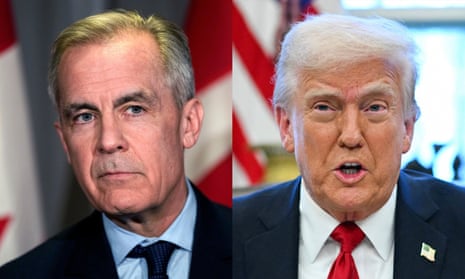
In a phone call the morning after Mr. Trump’s post, Mr. Carney outlined what he described as four basic facts: Canada financed the bridge; ownership is shared under the 2012 agreement; workers and materials from both countries were used; and the project remains governed by binding contracts. Publicly, he framed the bridge as a symbol of cooperation and economic interdependence rather than confrontation.
The White House later stated that it was “unacceptable” for Canada to own the bridge fully, a characterization disputed by Michigan officials and by the terms of the agreement itself.
For now, construction continues toward completion. When the bridge opens, thousands of commuters are expected to cross daily between Windsor and Detroit, alongside the steady flow of commercial trucks that underpin a trade relationship worth hundreds of billions of dollars annually.
What began as a late-night social media broadside has so far altered none of the contractual realities established more than a decade ago. The bridge’s future appears to rest less on rhetoric than on the durability of signed agreements — and on the economic logic that led two neighboring governments to build it in the first place.