Trade friction between the United States and Canada over softwood lumber has re-intensified in early 2026, reviving a dispute that has cycled for decades through tariffs, legal battles, and negotiated pauses.
At the center of the political narrative is former President Donald Trump, whose long-standing criticism of Canadian trade practices helped shape earlier rounds of duties on lumber imports. Meanwhile, Ottawa — under Prime Minister Justin Trudeau — has overseen structural adjustments in Canada’s forestry sector that analysts say are tightening supply without imposing formal export bans.
The result: higher lumber price volatility in the U.S., with housing analysts warning that sustained increases could add thousands — in some estimates up to $15,000 — to the cost of building a new home, depending on market conditions.
A Dispute With Deep Roots

The softwood lumber conflict dates back to the 1980s. The U.S. industry argues that Canadian provincial stumpage systems (fees charged for harvesting timber on public lands) amount to unfair subsidies. Canada rejects that claim, and disputes have repeatedly moved through trade panels and arbitration.
In recent years, the U.S. has imposed anti-dumping and countervailing duties on Canadian softwood imports, often averaging around 20% or more. These measures are designed to protect American producers but tend to raise input costs for U.S. builders.
The issue remains unresolved heading into the scheduled review of the United States-Mexico-Canada Agreement.
Canada’s Structural Shift
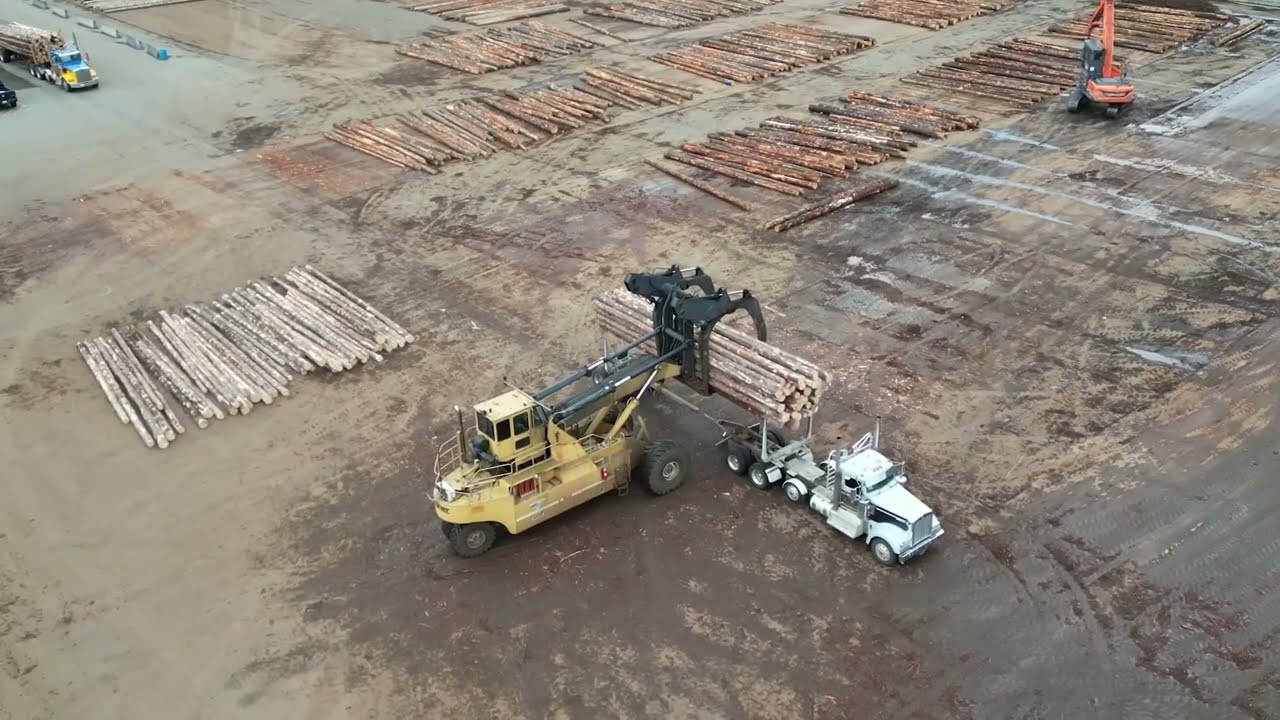
Rather than retaliating directly with counter-tariffs, Canada’s forestry sector has evolved in several ways:
1️⃣ Production Consolidation
Since 2018, output has declined in parts of British Columbia, where mill closures and resource constraints reduced overall supply. Wildfires, pine beetle damage, and environmental policy shifts also played roles. Lower production naturally tightens export availability.
2️⃣ Value-Added Manufacturing
Canada has expanded production of engineered wood products such as cross-laminated timber and glued laminated beams. These higher-margin exports generate more value per unit while reducing shipments of raw dimensional lumber traditionally used in U.S. housing.
3️⃣ Environmental and Certification Standards
Enhanced carbon accounting and sustainability requirements raise compliance costs but also position Canadian producers competitively in markets emphasizing green construction standards.
4️⃣ Market Diversification
Canadian exporters have sought alternative buyers in Asia and Europe. While the U.S. remains Canada’s dominant lumber customer, diversification reduces single-market exposure.
None of these measures constitute a formal embargo. But together, they reshape supply dynamics in ways that limit surplus lumber flowing south.
Impact on U.S. Housing

Canada typically supplies roughly 30% of U.S. softwood lumber consumption. Lumber accounts for approximately 20–25% of the materials cost of building a single-family home.
When lumber prices spike:
Builders face margin compression or pass costs to buyers.
Construction timelines can lengthen amid price volatility.
Affordability pressures intensify, especially in high-rate environments.
Industry groups have estimated that sharp lumber increases can add anywhere from $8,000 to $15,000 to a new home’s price, though actual impact depends on market cycles.
Domestic U.S. production cannot always scale quickly due to:
Environmental permitting requirements
Labor shortages
Capital investment timelines
Regional supply mismatches
Alternative materials such as steel or concrete often carry higher energy and production costs.
Political and Strategic Dimensions

Trump has argued that the U.S. has sufficient timber resources to reduce reliance on Canadian imports. Critics counter that while long-term capacity expansion is possible, short-term substitution is limited.
For Canada, the restructuring supports:
Domestic construction priorities
Higher-skilled forestry jobs
Greater value capture per harvested unit
Reduced vulnerability to recurring tariff cycles
The broader issue highlights how trade disputes do not simply reduce economic activity — they reconfigure supply chains.
What Comes Next?

Several factors will shape the trajectory:
The 2026 USMCA review process
Global housing demand trends
Wildfire and environmental conditions affecting timber supply
U.S. domestic production incentives
Currency fluctuations
A negotiated settlement has historically proven difficult but remains the most stabilizing outcome for both sides.
The Bigger Picture

The softwood lumber dispute illustrates a wider lesson in North American trade:
Interdependence creates leverage — and vulnerability — on both sides of the border.
Canada’s structural supply evolution may not be framed officially as retaliation, but it demonstrates how policy, environmental regulation, and industrial strategy can influence trade flows as powerfully as tariffs themselves.
For U.S. housing markets already navigating affordability pressures, lumber volatility adds another layer of uncertainty. For Canada, the shift represents an attempt to balance sovereignty, sustainability, and economic resilience in a deeply integrated continental economy.






