🔥 HOT NEWS: Davos Speech Sparks Parliamentary Diplomacy Between Canada and Australia
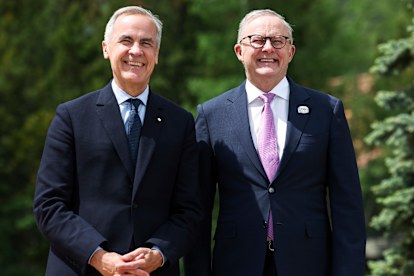
What was expected to be another carefully worded address at the World Economic Forum has instead triggered a visible diplomatic shift between Canada and Australia — one that observers in United States are watching closely.
Days after Prime Minister Mark Carney delivered a pointed message in Davos about economic coercion and middle-power vulnerability, Australian Prime Minister Anthony Albanese extended a striking invitation: Carney will address the Australian Parliament in March.
In diplomatic language, that’s more than symbolism. It signals alignment.
The Message That Didn’t Fade
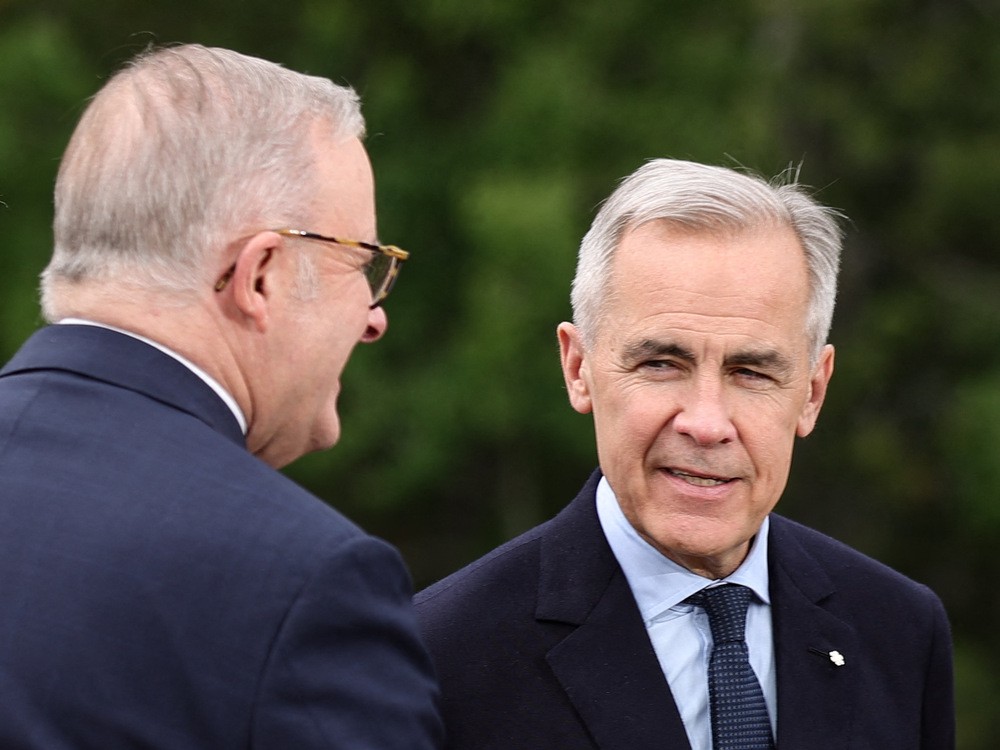
Carney’s Davos remarks challenged a long-standing assumption in global trade: that mid-sized economies must quietly absorb tariffs, coercive trade measures, or shifting rules imposed by larger powers — hoping stability eventually returns.
His core argument was direct:
Economic integration can create leverage, not just efficiency.
Dependence equals exposure.
Middle powers must coordinate intentionally — not rhetorically — to reduce vulnerability.
Initially, analysts viewed the speech as standard Davos fare: polished, thoughtful, unlikely to disrupt geopolitical gravity.
Then Canberra responded.
From Speech to Strategy
Albanese publicly endorsed Carney’s assessment and formalized engagement with a parliamentary invitation. That move elevates the discussion from conference rhetoric to institutional diplomacy.
And the timing matters.
In October, Canada and Australia signed agreements to deepen cooperation on critical minerals — key inputs for renewable energy, advanced manufacturing, and defense industries. Both nations possess significant reserves. Both face concentrated global processing capacity elsewhere.
In November, the Canada Border Services Agency and the Australian Border Force concluded a customs mutual assistance agreement aimed at strengthening supply-chain security and combating trade-related crime.
Now comes the political layer: a parliamentary platform.
Put together, the sequence suggests choreography rather than coincidence.
The Middle-Power Thesis
Carney’s framework challenges the binary structure of global influence — where major powers set terms and others adapt.
Middle powers collectively account for:
Significant GDP share
Critical natural resources
Advanced technology sectors
Strategic geographic positioning
The constraint has rarely been capacity. It has been coordination.
Australia understands this dynamic. Despite its close security ties with Washington, Canberra has experienced trade disruptions linked to geopolitical tensions. Canada, too, has learned that alliance status does not eliminate exposure to tariffs or pressure tactics.
Diversification is no longer just about growth. It’s about resilience.
Watching Capitals
Washington reacted quickly to the Davos tone, with some critics suggesting Carney was recalibrating language under pressure. Yet Australia’s invitation indicates the speech resonated rather than retreated.
This isn’t a dramatic rupture. There are no declarations of independence or confrontational blocs forming.
Instead, something subtler appears to be emerging: a networked model of cooperation among mid-sized economies.
If countries such as Brazil, South Korea, Indonesia, or South Africa begin leaning into similar coordination frameworks, the architecture of global trade could gradually rebalance — not through confrontation, but through structured interdependence.
Why This Moment Matters
Global order rarely shifts through singular events. It evolves through incremental alignment:
A speech in Davos.
A minerals agreement.
A customs pact.
A parliamentary podium in Canberra.
Individually, each step looks procedural.
Collectively, they may signal that middle powers are moving from quiet adaptation toward coordinated leverage.
And in geopolitics, alignment often speaks louder than rhetoric.