In recent months, the United States has found itself at the center of a growing debate within the global tourism industry. Analysts and travel experts are beginning to raise concerns as new patterns suggest that international confidence in traveling to the country may be weakening. While the United States has long been one of the world’s most visited destinations, a noticeable slowdown in international travel is prompting questions about what may be changing — and why.
Tourism data and industry observations indicate that some international travelers are reconsidering their plans to visit the United States. Instead of choosing traditional American destinations, many are increasingly exploring alternatives in Europe, Asia, or other regions. Others are opting to stay closer to home, favoring shorter and more predictable trips over long-haul travel to the U.S.
Experts say several factors appear to be contributing to this shift. Among the most frequently cited concerns are rising travel costs, complicated travel procedures, and broader perceptions about stability and predictability. For travelers planning international vacations months in advance, these considerations can significantly influence where they decide to go.
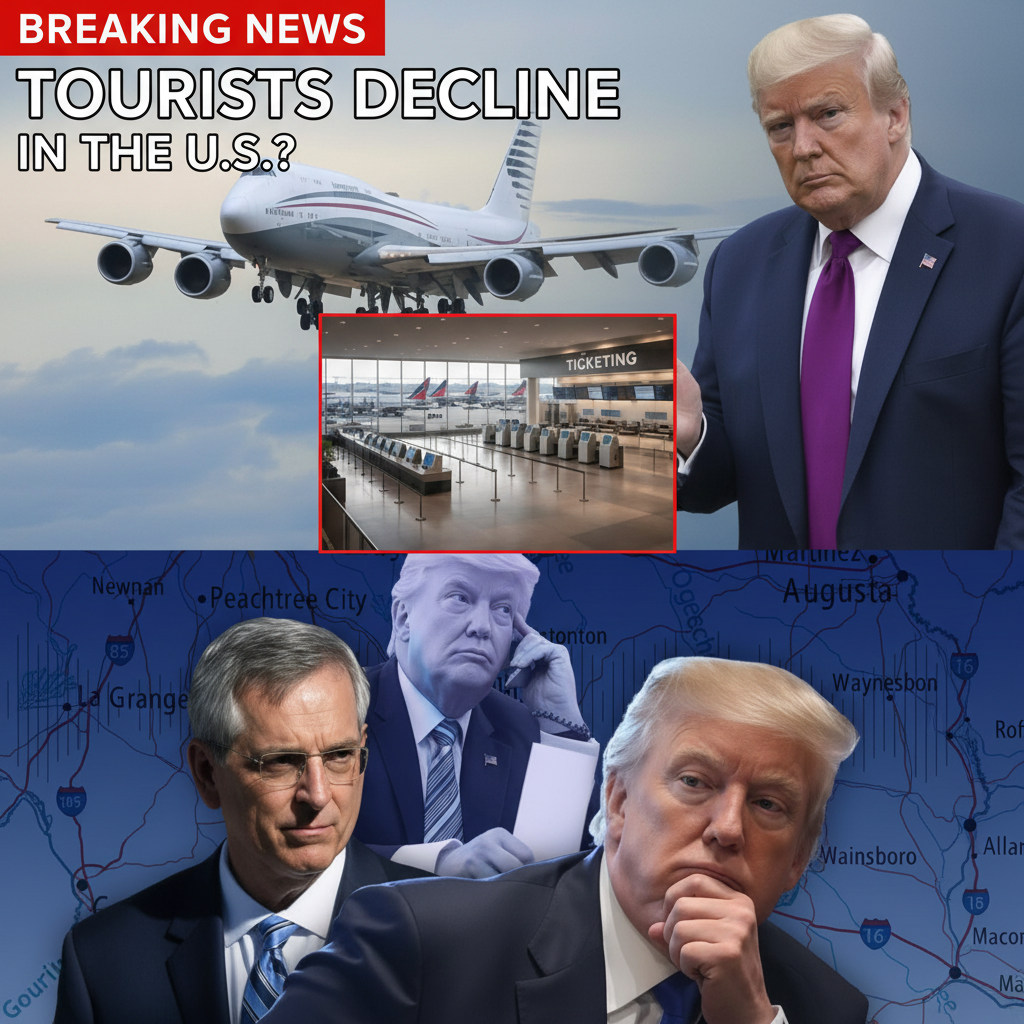
One travel industry insider summarized the situation bluntly: “People travel where they feel secure.”
This statement reflects a broader sentiment that appears to be spreading among global travelers. In an increasingly competitive tourism market, perceptions of safety, ease of entry, and overall travel experience play a critical role in shaping decisions. When uncertainty grows — whether economic, political, or logistical — travelers often respond by choosing destinations that feel simpler and more predictable.
In Washington, the shift has not gone unnoticed. While officials have not described the trend as a crisis, it has quietly sparked discussions among policymakers and industry leaders who recognize the economic and diplomatic importance of international tourism. For decades, the United States has benefited from a steady flow of visitors from around the world, generating hundreds of billions of dollars in tourism revenue and supporting millions of jobs across hospitality, transportation, retail, and entertainment sectors.
Beyond the direct economic impact, international tourism has also played an important role in shaping the country’s global image. Travelers who visit the United States often return home with personal experiences that influence how the country is perceived abroad. From iconic cities to national parks, cultural institutions, and major events, tourism has long served as one of the most visible ways the United States connects with the rest of the world.
This is why some analysts are paying close attention to the current slowdown. Even a modest shift in international travel patterns can carry broader implications over time. When fewer travelers choose a destination, it can gradually affect not only local tourism economies but also the country’s broader cultural presence and influence.
Observers frequently describe tourism as a form of “soft power.” Unlike traditional diplomacy or economic policy, soft power operates through attraction and familiarity. When millions of visitors experience a country firsthand — its culture, people, and institutions — it helps build long-term connections and mutual understanding.
For much of the past half-century, the United States has benefited enormously from this dynamic. Cities like New York, Los Angeles, Las Vegas, and Orlando became global tourism hubs, drawing visitors from nearly every corner of the world. American universities, entertainment industries, technology centers, and cultural landmarks helped reinforce the country’s reputation as an open and dynamic destination.
However, when travelers begin looking elsewhere, even gradually, it can signal subtle changes in global perception. Travel decisions are rarely driven by a single factor. Instead, they reflect a complex mix of practical considerations and emotional impressions. Cost, convenience, safety, and public image all play roles in shaping how travelers feel about a destination.
At the moment, experts emphasize that the situation is still evolving. International tourism trends often fluctuate due to economic cycles, currency shifts, airline capacity, and geopolitical developments. What appears today as a slowdown could stabilize or reverse as conditions change.
Nevertheless, the growing criticism surrounding the United States’ travel climate is becoming harder to ignore. Industry observers note that in a global tourism market where destinations compete aggressively for visitors, maintaining confidence among travelers is essential.
For now, tourism analysts say they are watching the numbers closely. If the trend continues, it could encourage deeper discussions about how the United States presents itself to international visitors and how the travel experience might adapt to meet changing expectations.
Whether the current slowdown proves temporary or signals a longer-term shift remains uncertain. But one thing is becoming increasingly clear: in today’s interconnected world, traveler confidence can change quickly — and when it does, the effects can ripple far beyond the tourism industry itself.