The hearing room was supposed to run on routine, on procedure, on the usual rhythm of questions, evasions, and exhausted spectators waiting for another forgettable day in Washington.
Instead, it became something much heavier, more intimate, and far more disturbing the moment survivors of Jeffrey Epstein’s trafficking network were asked to rise.
That single act changed everything.
It pulled the hearing out of the world of legal language and forced the room to confront the living human cost behind years of files, redactions, headlines, and political calculation.
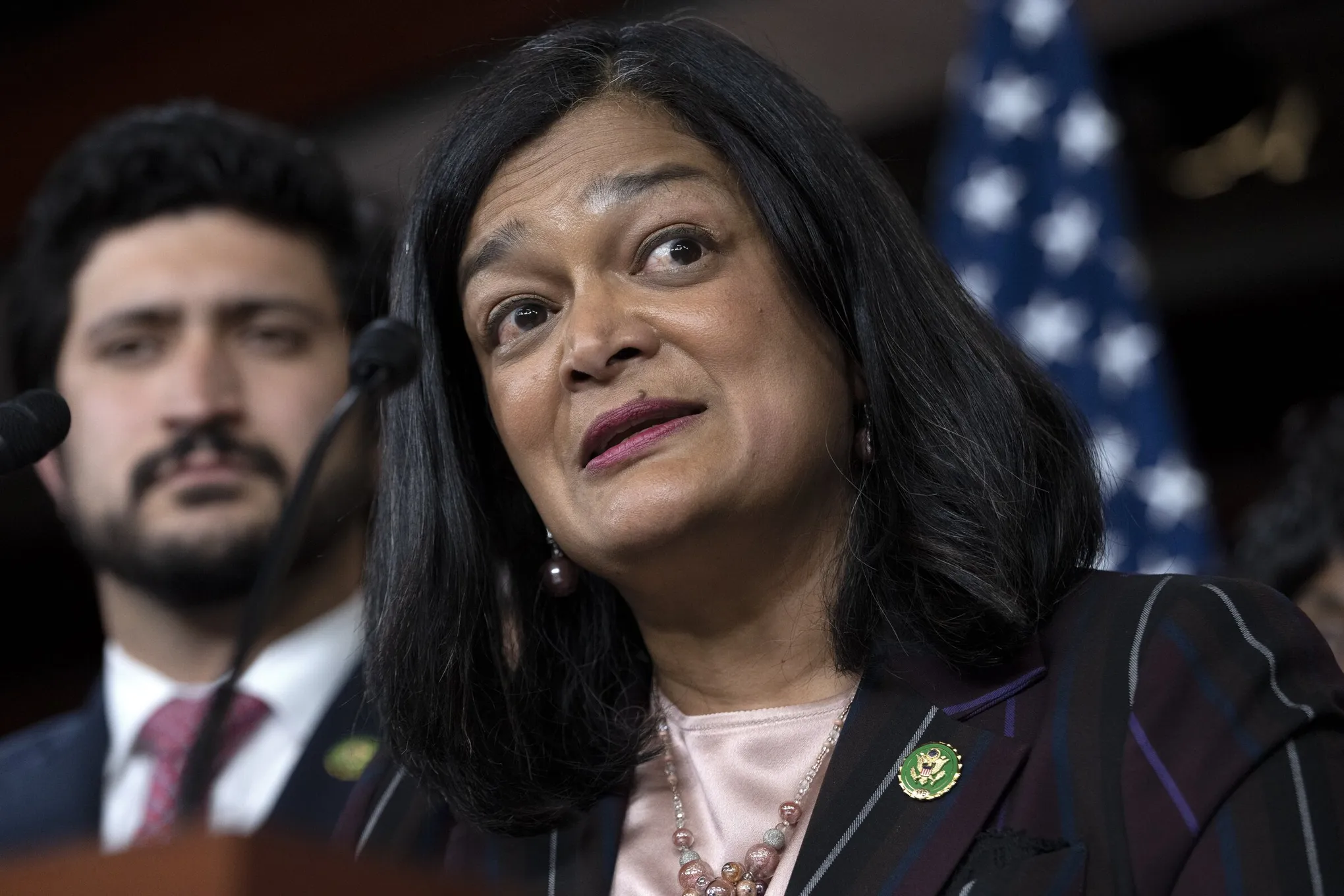
Representative Pramila Jayapal did not begin with abstract oversight jargon.
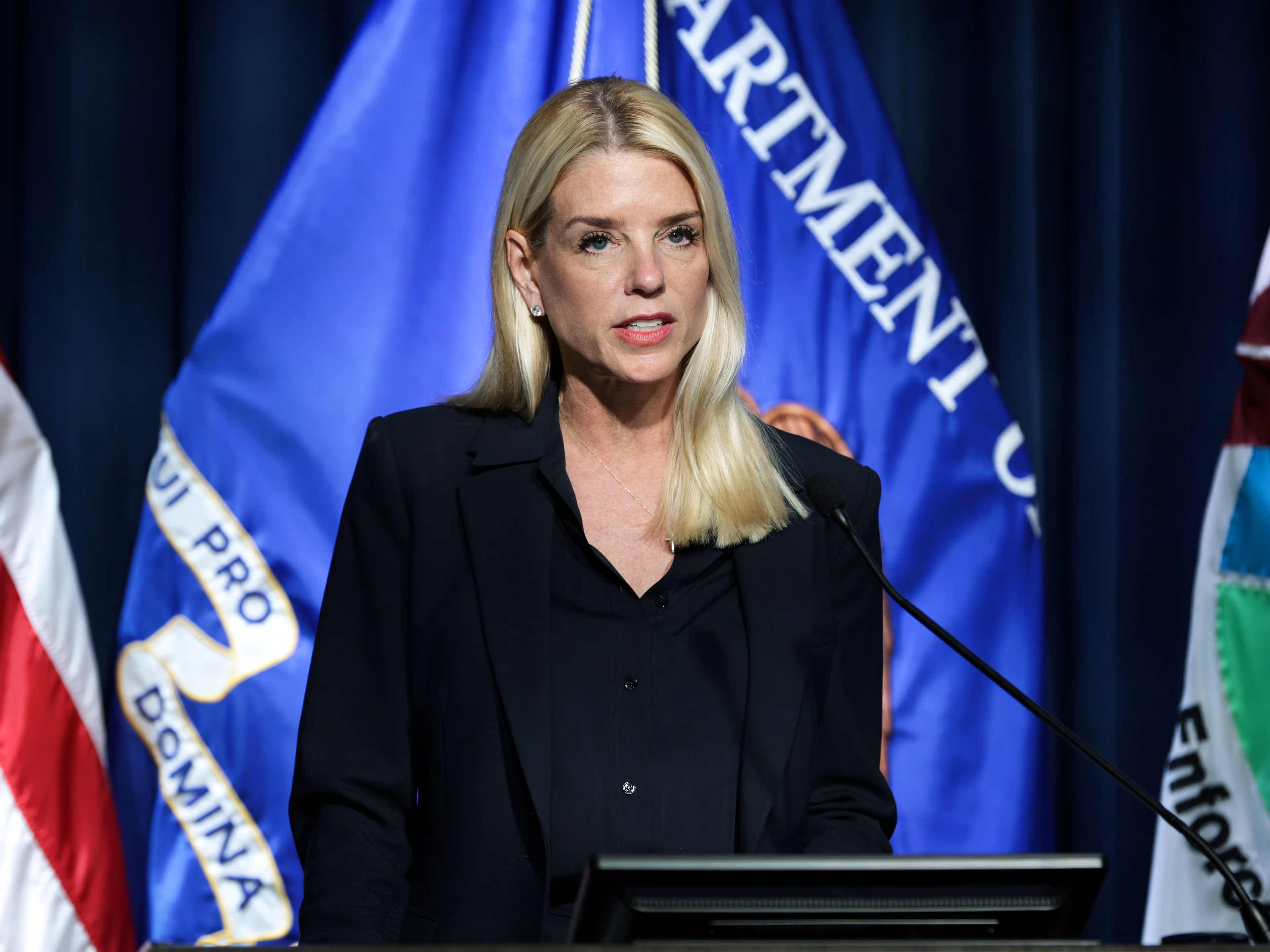
She began with the survivors, with the women seated behind the attorney general, and with the simple fact that courage had brought them into a room where power still seemed reluctant to look back.
That was the moral center of the clash.
Not a partisan fight, not a technical disagreement over records management, but a demand that the people most harmed be treated as more than background witnesses to official excuses.
Jayapal’s argument was devastating because it was built on contrast.
Congress, she said, had required the Department of Justice to reveal perpetrators connected to Epstein’s operation while protecting the identities of survivors whose pain had already been stretched across years.
But according to the accusations raised in the hearing, the opposite happened.
Names tied to powerful men were allegedly shielded while deeply sensitive information tied to survivors was exposed in ways that felt not only negligent, but cruel.
That is why the room tightened.
Because if that account is even partly true, it suggests a grotesque reversal of justice, where the vulnerable are made visible and the influential remain partially hidden behind the language of caution.

Jayapal highlighted specific examples to make that case vivid.
She pointed to redacted material involving powerful individuals and contrasted that with claims that lists, identities, contact details, and even intimate images of survivors were not adequately protected.
That contrast is explosive on its own.
But it became far more powerful when she stopped talking about files and turned directly toward the people in the room who had already paid the highest price.
She asked the survivors to stand if they were willing.
Then she asked them to raise their hands if they still had not been able to meet with the Department of Justice about what had been done.
That moment was the hearing.
Everything before it was setup, and everything after it was fallout.
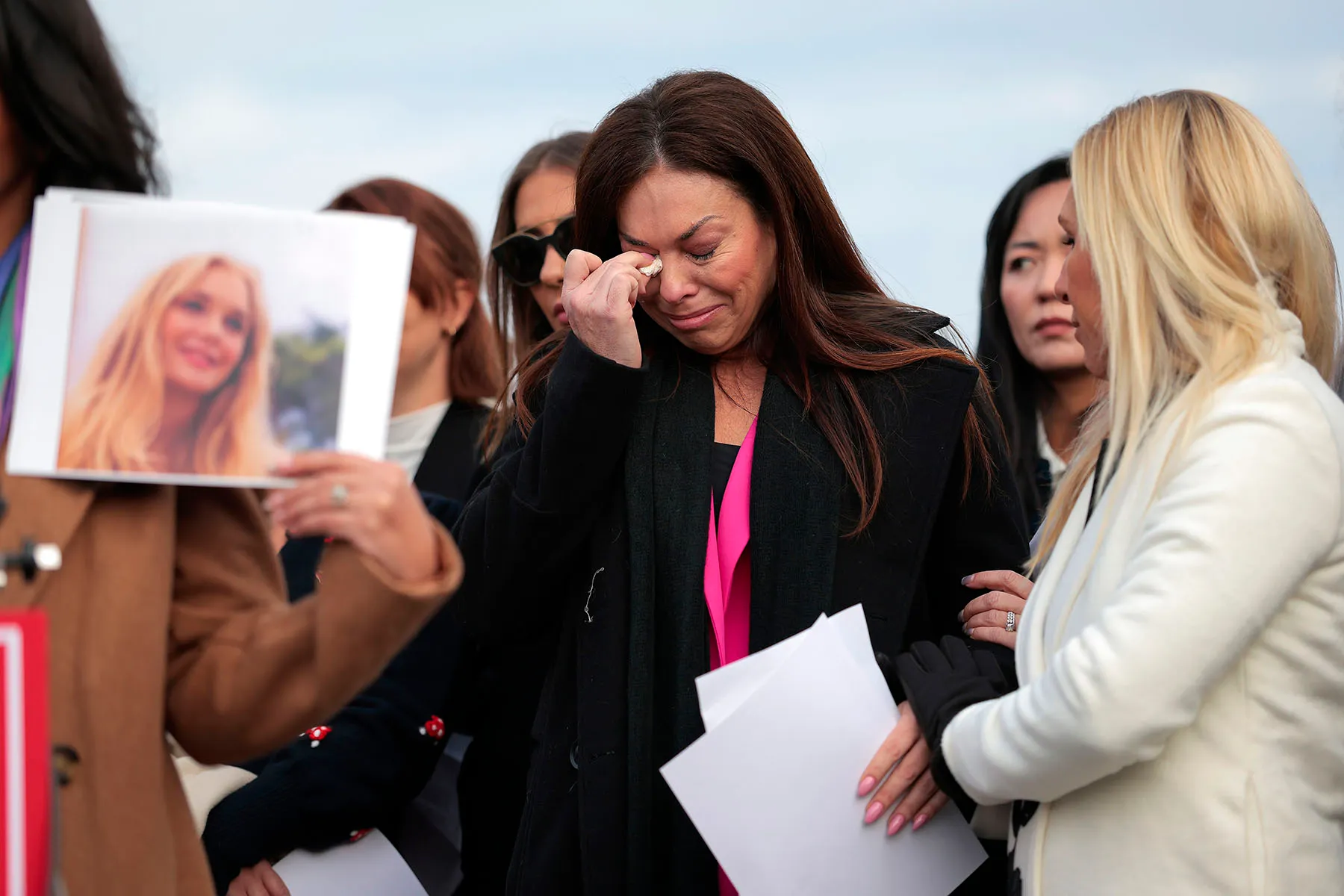
Because once those survivors stood, the argument could no longer hide behind procedural ambiguity.
The hearing was suddenly forced to revolve around bodies in the room, not binders on the desk.
It is hard to overstate how politically devastating that image is.
A government claiming transparency, survivors claiming harm, and the visible gap between official language and human experience standing just feet apart.
That is why the exchange spread so quickly.
It offered the kind of visual moral contrast modern political media feeds on, but it also exposed something deeper that many people already fear about this entire case.
The fear is not simply that Epstein was monstrous.
That is already established.
The fear is that the system around him, before and after his death, never fully stopped protecting power.
And every redaction controversy, every document release, every procedural dodge revives that suspicion with fresh force.
Jayapal then asked the question that defined the entire confrontation.
Would Attorney General Pam Bondi turn around and apologize to the survivors not for Epstein’s crimes, but for what critics say the Department of Justice had done to them through its handling of the files.
It was a simple question.
Simple questions are often the most dangerous in politics because they strip away all the safe language officials usually use to survive public scrutiny.
Bondi did not give the apology.
Instead, she moved toward explanation, comparison, and references to prior administrations, which may have been defensible as politics but felt, in that moment, emotionally hollow.
Jayapal refused to let the question dissolve.
She reclaimed her time repeatedly and insisted that the issue was not about who sat in that chair before, but about who sat in it now.
That distinction mattered.
One of the oldest escape routes in Washington is to point backward, but Jayapal’s point was that responsibility is not historical when the survivors are standing behind you in the present.
That is what made the refusal land so hard.
Not because apologies solve everything, but because in that room, at that moment, an apology would have signaled recognition, and recognition is the first thing survivors are too often denied.
Instead, the hearing slid into a procedural battle.
The chairman invoked order, Bondi was allowed to answer as she wished, and Jayapal kept pushing against what she clearly believed was evasion disguised as process.
This is where the hearing became more than a viral clip.
It became a nearly perfect illustration of how institutions often behave when they are forced into morally uncomfortable territory by the people they failed.
They reach for rules.
They reach for sequence, timing, relevance, and decorum, anything that can cool the moral temperature enough to move the room back toward manageable ground.
But the room was no longer manageable.
Not once the survivors were standing.
That image did not disappear just because the clock ran out.
It stayed in the chamber, and then it left the chamber through every camera lens, every posted clip, every outraged reaction, and every argument across the country about what justice is supposed to look like.
Bondi’s defenders will say this was theater.
They will argue that oversight hearings are full of dramatic gestures and that politicians regularly frame complicated administrative decisions in the most inflammatory possible way.
There is truth in that.
Washington does perform.
But performance does not erase pain, and it does not erase the power of a room full of people watching survivors ask for the smallest possible act of accountability and not receive it.
That is why the scene struck so deeply across ideological lines.
Even people who distrust congressional theater understand the symbolism.
A request was made to face the survivors and acknowledge harm, and the answer was not yes.
That refusal now means more than any carefully worded defense.
In public memory, it will likely become the defining image of the hearing because images are what survive after procedural arguments collapse under their own complexity.
It also revives the central wound of the Epstein story itself.
This case has never lived only in court records, but in the public belief that the truth around powerful men remains fragmented, filtered, and strategically delayed.
That belief is why every new file release creates as much suspicion as closure.
People do not trust that the system is revealing everything, so each disclosure is judged less as transparency and more as a clue about what is still being managed.
Jayapal’s criticism tapped directly into that mistrust.
She framed the release not as an imperfect act of openness, but as a possible continuation of the very imbalance survivors have endured from the start.
That framing is politically lethal because it reorders the public’s assumptions.
Instead of asking whether the department made mistakes, people start asking whether the mistakes themselves followed a pattern about who deserves protection and who never gets it.
Once that question is alive, it spreads fast.
Because it does not belong only to Epstein, but to every public fear about elite impunity, institutional distance, and the coldness of systems that know how to protect themselves better than they know how to protect the harmed.
The hearing also underscored a second truth.
Survivors are often invited into public spaces as symbols of pain, but not necessarily treated as participants with agency, memory, and a right to direct acknowledgment from the institutions acting in their name.
Jayapal tried to disrupt that pattern.
Her demand was not that the survivors be praised, but that they be recognized as the people to whom something was owed, not eventually, not bureaucratically, but then and there.
That is why the silence hurt.
Silence in that setting is not neutral.
Silence becomes a statement of priorities.
It tells the room, and the country watching, what matters enough to answer immediately and what can still be absorbed into procedural delay.
This is why the clash will keep echoing.
Not because everyone agrees with Jayapal, but because almost everyone can feel the moral asymmetry of the moment even if they argue about the politics around it.
For some viewers, Bondi looked cornered by a performative demand she had every right not to indulge.
For others, she looked like the face of an institution that still cannot bring itself to confront survivors with the dignity of direct acknowledgment.
Those competing readings guarantee the moment’s afterlife.
It will be used in arguments about transparency, accountability, victims’ rights, and the growing divide between legal defense and moral responsibility in American public life.
And behind all of that remains the larger, darker fact.
The Epstein case still feels unfinished.
Too many names, too many years, too many files, too many rumors, and too many damaged lives exist in a space where final clarity never seems to arrive.
That unfinished feeling is what makes every hearing feel like a referendum on the system itself.
Was the full truth ever revealed.
Were the right people protected.
Were the wrong people exposed.
And why does justice still seem to fracture whenever wealth, prestige, and political proximity enter the frame.
Jayapal’s confrontation did not answer those questions.
It did something more dangerous for the institutions involved, it made them visible again in a room where survivors were no longer invisible.
That is what Washington could not control.
Not the files, not the reactions, not the spectacle, but the simple, unforgettable image of survivors standing while the apology they were asked to receive never came.
That image now belongs to the public.
And once a moment like that escapes the room, it stops being just another hearing and becomes a judgment people carry with them long after the microphones are turned off.