What happened inside that hearing room was supposed to look like oversight, discipline, and control.
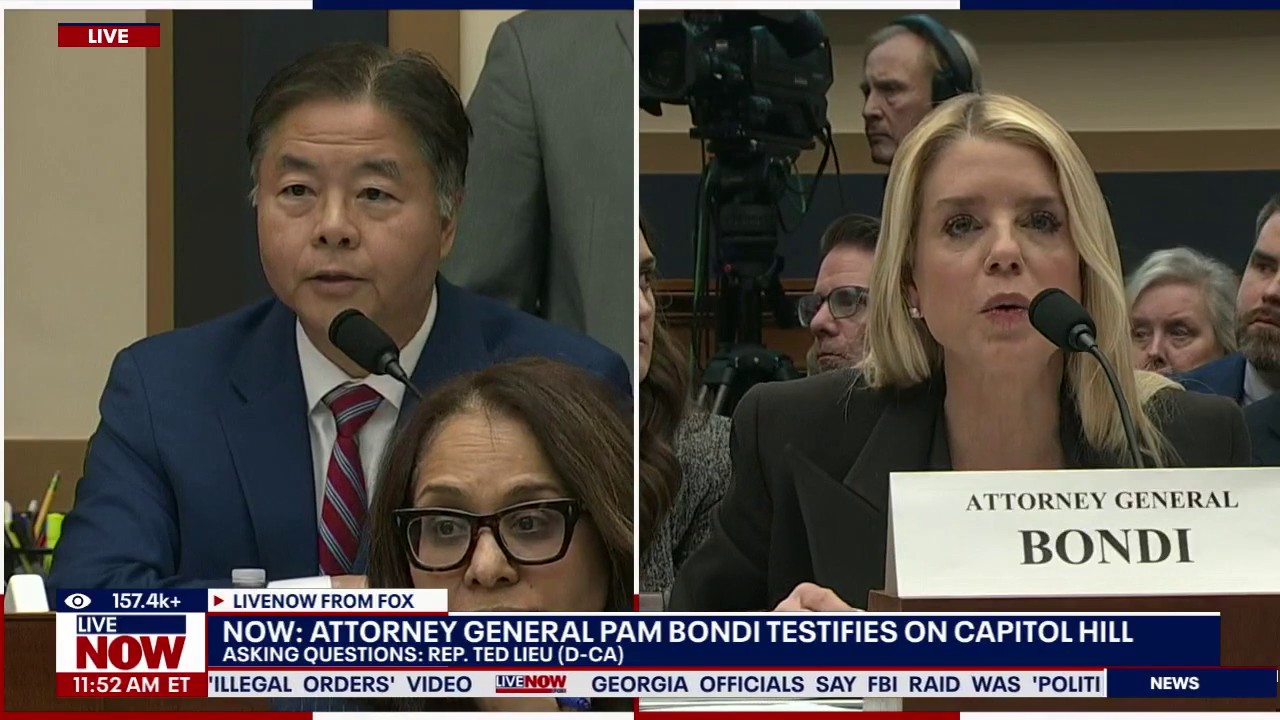
Bondi gets angry after accused of lying under oath
Instead, it turned into something far more revealing, a collision between public suspicion, survivor outrage, and an attorney general who suddenly looked cornered by her own tactics.
The moment did not begin with a screaming match.
It began with an image, a binder, a few documents, and a congressman who understood that sometimes the most damaging thing in politics is not a scandal itself, but the way power reacts when questioned.
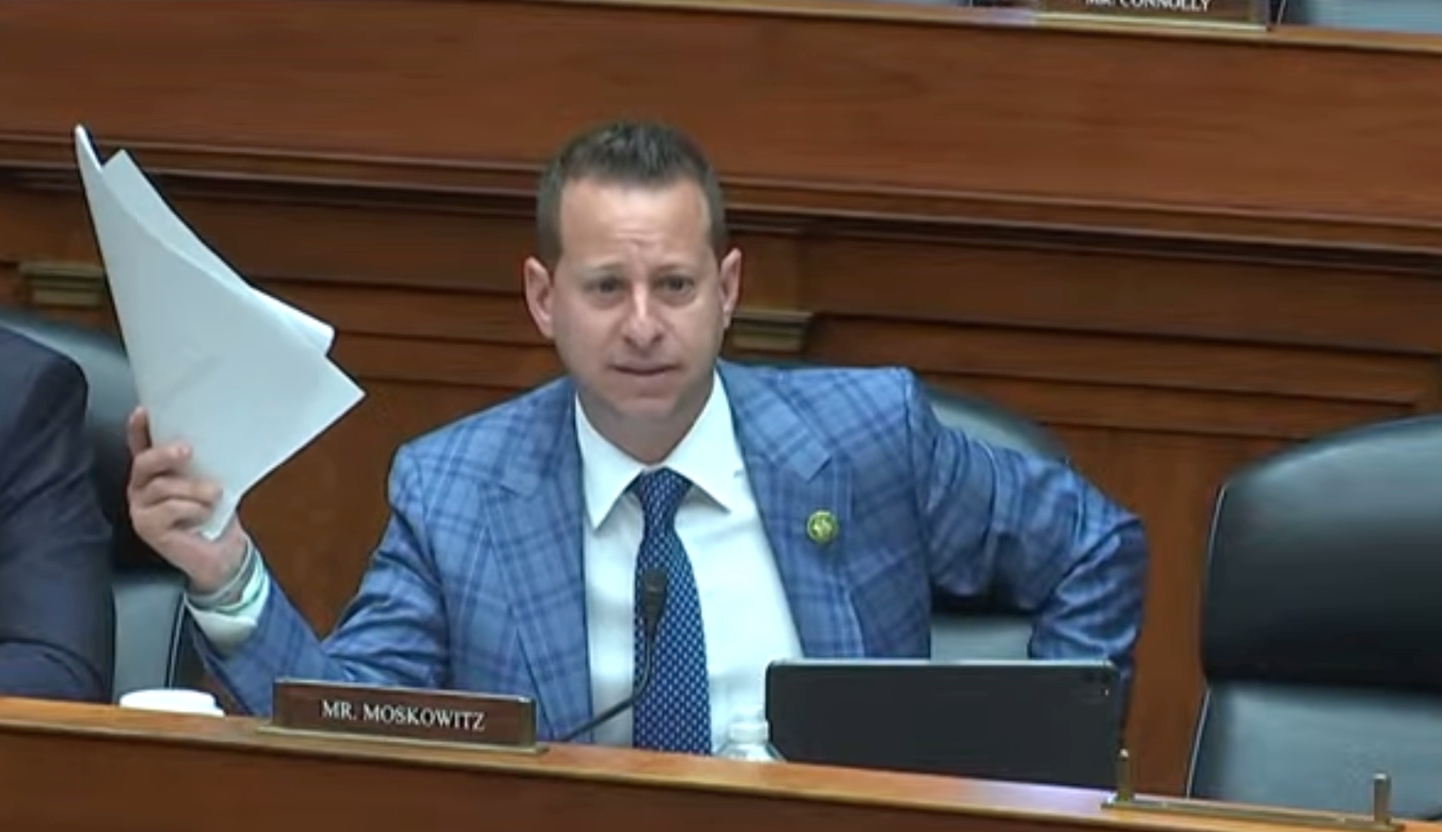
Jared Moskowitz did not approach the hearing like someone walking into a neutral room.
He approached it like someone who believed the public had already been sold a story about transparency that was now collapsing under the weight of contradiction.
Why did she say that?’ Even Trump White House officials are ‘upset with Pam Bondi’ – Alternet.org
That is what gave his questions their edge.
He was not merely asking whether the Department of Justice had released documents, but whether the release itself had been curated in a way that exposed the weak while protecting the powerful.
That is the heart of the fury surrounding the Epstein files.
Americans are not only asking whether records exist, but whether the people controlling those records are deciding who gets exposed, who gets hidden, and who gets protected from humiliation or scrutiny.
Moskowitz pushed directly into that fear.

He challenged the narrative that the administration had been fully transparent and suggested that the public was being shown a version of openness designed more for optics than truth.
That accusation is explosive because it strikes at legitimacy.
Moskowitz Slams Republicans for Prioritizing Culture Wars Instead of the U.S. Military
Once an institution is seen as using disclosure itself as a tool of selective protection, every press statement, every redaction, and every delay begins to look strategic rather than legal.
Then came the binder.
Not just as a prop, but as a symbol.
Moskowitz mocked it as a “burn book,” a phrase that instantly reframed the attorney general’s posture from serious law enforcement official to someone carrying opposition research into a hearing.
That image stuck because it felt personal, political, and strangely revealing all at once.
In ordinary hearings, binders are forgettable.
But in this case, the binder became part of the story because it suggested that oversight was not being treated as oversight, but as combat requiring preloaded personal ammunition.
That is a dangerous message in any democracy.
When the top law enforcement official looks prepared not just to answer questions but to counterattack questioners personally, the hearing stops looking like accountability and starts looking like intimidation.
Moskowitz Criticizes Silence on Antisemitism
Moskowitz understood that instinctively.
So he did not just criticize the binder, he forced it into public view as part of the larger argument that the Department of Justice now behaves more like a defensive political machine than an impartial institution.
Then he turned back to Epstein.
And once he did, the hearing became radioactive.
He laid out the contradiction as clearly as possible.
If this administration is truly the most transparent in modern history, why has the Epstein story become more confusing, more heavily redacted, and more politically chaotic under its watch.
That question lands hard because the public already feels something is wrong.
Too many promises, too many half-releases, too many claims, too many reversals, and too many emotionally charged statements have made the whole process feel unstable and suspicious.
Moskowitz connected those dots in a way built for maximum political damage.
He pointed to shifting public claims about whether lists existed, whether further releases were coming, and whether the administration’s own messaging had changed once the issue stopped being politically convenient.
That is what made the hearing feel less like policy debate and more like exposure.
The argument was no longer over whether files existed, but whether the official story around those files had been manipulated as events changed.
He also hit the issue that most enrages the public in this case.
Redaction.
Redaction is supposed to protect the innocent, the vulnerable, and the integrity of active legal matters.
But when powerful names appear shielded while survivors feel exposed, the black marker starts to look less like legal caution and more like a weapon.
That is the perception Moskowitz pushed hard.
He suggested that the Department of Justice had used its power to hide the identities of potential co-conspirators or influential figures while failing to protect the dignity and privacy of survivors.
Even as a political claim, that is devastating.
Because it transforms the argument from technical compliance into moral inversion, the powerful stay hidden, the harmed get exposed, and the public is told to call that transparency.
No institution survives that impression easily.
Once people believe the rules are being applied in reverse, they stop hearing “procedure” and start hearing “cover-up.”
That is also why the hearing resonated so deeply beyond the room.
The Epstein case is not just another scandal, but a permanent public wound involving sex trafficking, elite access, money, secrecy, and the haunting suspicion that full accountability remains deliberately incomplete.
Moskowitz did not need to prove every hidden detail to make his point.
He only needed to show that the handling of the files themselves had become a credibility crisis for the Department of Justice.
And credibility is everything here.
Because once the public loses faith in the fairness of disclosure, every future document release becomes suspect before it is even opened.
The hearing also grew more intense because survivors were present.
That fact made the room morally heavier than usual and made every pivot, joke, deflection, and personal jab look colder than it otherwise might have.
This is what separates the Epstein confrontation from ordinary partisan spectacle.
The victims are not abstract, the abuse is not hypothetical, and the people waiting for answers are still alive, still watching, and still asking what justice actually means.
Moskowitz used that reality effectively.
He framed the hearing not as a game over headlines, but as a direct test of whether government officials are willing to answer for the way these files have been handled in front of those most affected.
That framing made Bondi’s posture look even riskier.
Because once the hearing is understood as a moral test rather than a political debate, anything resembling defensiveness or mockery becomes far more damaging.
The “burn book” remark sharpened that damage.
It suggested that while survivors wanted acknowledgment and the public wanted clarity, the attorney general came prepared for image management and personal warfare.
That contrast is exactly the kind of thing that ignites social media.
One side sees a congressman exposing the theater of official power, while the other sees a witness under attack responding forcefully in an already hostile environment.
But either way, the visual story is powerful.
A binder full of ammo, a hearing about survivors and redactions, and a lawmaker openly mocking the idea that this is what transparency now looks like in America.
It is hard to invent a more viral political image than that.
And it gets worse for the institution once people start asking a second question.
If this administration is really as transparent as it claims, why does every major moment around the Epstein files seem to produce more confusion instead of more confidence.
That question is lethal because it is accessible.
People do not need legal training to understand it.
They only need pattern recognition, and the pattern increasingly looks like delay, redaction, contradiction, and defensiveness.
That is what turned the hearing into a broader referendum on trust.
Not just trust in Bondi personally, but trust in the Department of Justice, trust in selective transparency, and trust in whether politically dangerous truths can still survive contact with power.
Supporters of Bondi will argue the hearing was grandstanding.
They will say Moskowitz came looking for a clip, not for a fair answer, and that emotionally loaded scandals are too easy to weaponize in committee rooms.
That argument will persuade some people.
But it does not erase the fact that the hearing exposed a deep and growing public fear that the government is staging transparency while carefully controlling the real damage.
That fear is why the clip spread.
That fear is why the binder mattered.
That fear is why every mention of redactions now feels heavier than before.
And that fear is why the administration’s own words about transparency now sound, to many people, more like marketing than truth.
Moskowitz did not settle the case.
He did something politically more dangerous, he made the official defense feel rehearsed, brittle, and suspicious in a room where survivors, records, and public anger were all already present.
That kind of damage lasts.
Because once an institution is seen as protecting itself while claiming openness, it no longer controls the story, it only reacts to it.
And in this hearing, reaction was exactly what people saw.
Not clarity, not confidence, not clean accountability, but a government trying to hold the line while the public asks why the truth still feels so carefully managed.
That is why this moment will keep echoing.
The hearing ended, but the image remained, the binder, the burn book jab, the redaction fight, the survivors in the room, and the growing suspicion that transparency has become a slogan hiding something darker.
If that suspicion keeps growing, the political consequences could spread far beyond one hearing.
Because in a scandal like Epstein’s, the public does not forgive half-truths, and once it believes the evidence is being curated, every missing answer becomes its own accusation.