Beyond the Purchase: How Canada’s Gripen Decision Could Catalyze a Realignment Within NATO
OTTAWA — The Royal Canadian Air Force’s long-awaited, $19-billion fighter replacement program has become more than a national procurement exercise; it has evolved into a pivotal decision with the potential to reshape dynamics within the North Atlantic Treaty Organization. As Canada nears its final selection between the American-made F-35A Lightning II and the Swedish Saab JAS 39 Gripen E, defense analysts and alliance officials are increasingly focused on one scenario: the seismic ripple effects if Ottawa chooses the underdog.
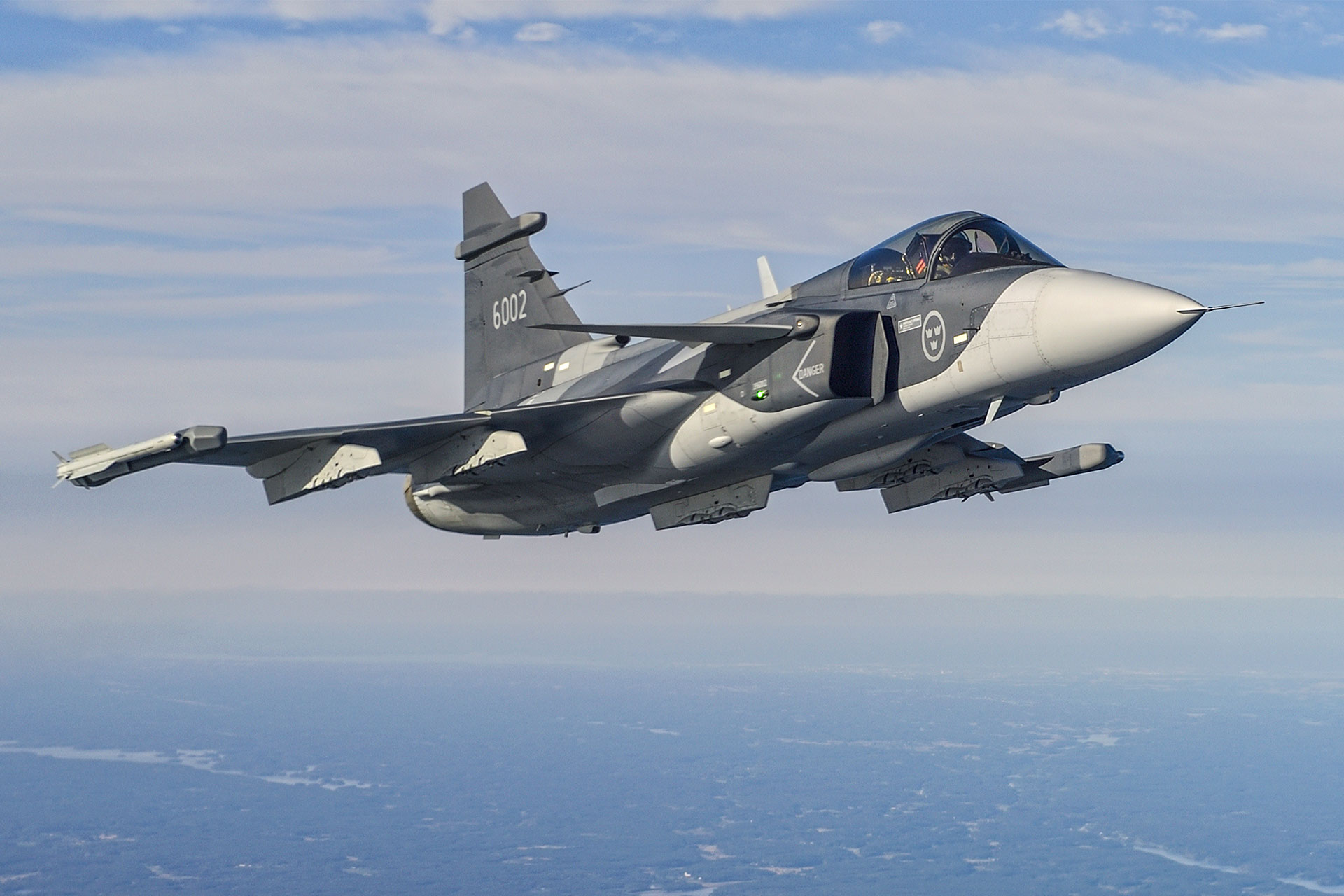
Selecting 88 Gripen fighters would transcend a simple fleet renewal. It would represent the most significant NATO ally to consciously pivot away from the Lockheed Martin F-35 ecosystem—the de facto standard for a generation of Western air power. Such a move would send an unambiguous signal: that major democracies are willing to prioritize operational sovereignty, life-cycle cost efficiency, and tactical flexibility over default political-industrial alignment with a single, dominant supplier.

The Psychological Breakthrough: Legitimizing the Alternative
The initial and most profound impact would be psychological. For two decades, the F-35 program has been framed not just as a weapons system, but as the indispensable backbone of future allied interoperability. Choosing it has been portrayed as choosing cohesion. A Canadian decision for the Gripen would shatter that narrative, legitimizing alternative procurement paths for other mid-sized NATO members.
“It would be a breakthrough moment for strategic diversification,” explains Dr. Lysandra Shaw, a senior fellow at the International Security Program. “Countries like Finland, the Czech Republic, Belgium, and Spain, which operate or are considering legacy F/A-18s or Eurofighters, would immediately be emboldened to conduct more serious, competitive assessments. Canada would provide political cover, proving a robust alternative exists without excommunication from the alliance.”
The Gripen’s selling points—lower acquisition and maintenance costs, an ability to operate from dispersed highway strips and rough fields, and Sweden’s offer of full technology transfer—would suddenly be validated at scale. This appeals directly to nations fearing budget overruns, seeking greater domestic industrial benefits, or, in an era of A2/AD (Anti-Access/Area Denial) threats, prioritizing survivable and flexible basing options over sheer stealth.

Redefining Interoperability: Networks Over Platforms
A key argument for the F-35 has been networked warfare: its unparalleled sensor fusion creates a common operating picture. Critics of a Gripen choice warn it would create a “two-tier” alliance. Proponents, however, argue it would force a healthier evolution.
“Interoperability in the 21st century is increasingly about data links, communication protocols, and shared intelligence, not about flying identical airframes,” says retired Major-General David Fraser, former commander of NATO’s Regional Command South in Afghanistan. “Choosing the Gripen would accelerate the push toward open-architecture systems that allow different platforms to share data seamlessly. It would break the vendor-lock model and prove that alliance cohesion can be built on common standards, not common purchase orders.”
This shift could weaken the long-standing assumption that tactical interoperability is intrinsically tied to a single aircraft family, reopening genuine competition across the alliance and potentially reducing costs for all members.
The Geopolitical Ripple: Redistributing Influence
The timing gives this scenario substantial weight. NATO is grappling with the twin pressures of increased defense spending targets and expanded commitments from the Baltic to the Black Sea. The strain on national budgets is acute. Canada’s move could become a catalyst for a more fiscally conscious, sovereignty-driven bloc within the alliance.
Such a bloc, potentially led by Nordic and Central European nations, could gain considerable negotiating leverage. It would represent a powerful market force, compelling both the U.S. defense industry and European consortiums to offer more favorable terms, greater technology sharing, and more flexible support packages. The center of gravity for influence within NATO, often seen as resting with the largest defense spenders and manufacturers, would subtly shift toward coalitions of savvy, mid-sized consumers.
The U.S. Reaction: A Test of Alliance Maturity
Washington’s response would be a critical test. Publicly, officials would respect Canada’s sovereign decision. Privately, significant pressure and disappointment would be expected. The move would be interpreted as a blow to the Pentagon’s vision of integrated deterrence and a financial setback for the F-35 program, potentially raising costs for other partners.

“The real question is whether the U.S. would treat this as a competitive setback or as an opportunity to demonstrate alliance resilience,” says former U.S. Deputy Assistant Secretary of Defense for Europe, Heather Conley. “Would it work to seamlessly integrate the Gripen into NATO exercises and planning, proving the alliance is bigger than one platform? Or would it create friction? Canada’s choice would, in effect, audit the health of NATO’s political solidarity.”
In choosing the Gripen, Canada would do more than replace its aging CF-18s. It would initiate a chain reaction, challenging orthodoxy, empowering alternatives, and forcing a renewed conversation about what true allied interoperability and resilience mean in a new era of geopolitical competition. The decision, expected within the year, will resonate far beyond Canadian airspace, potentially redistributing industrial, strategic, and political influence across the Atlantic Alliance.