In a striking shift, more Americans are seeking Canadian citizenship as a reaction to political instability in the United States, particularly under the administration of Donald Trump. Recent legislative changes in Canada have opened the door for individuals with Canadian ancestry to reclaim citizenship, leading to a surge in applications from the U.S. This movement is not merely a trend; it reflects deep-seated concerns about the future of governance and social stability in America.
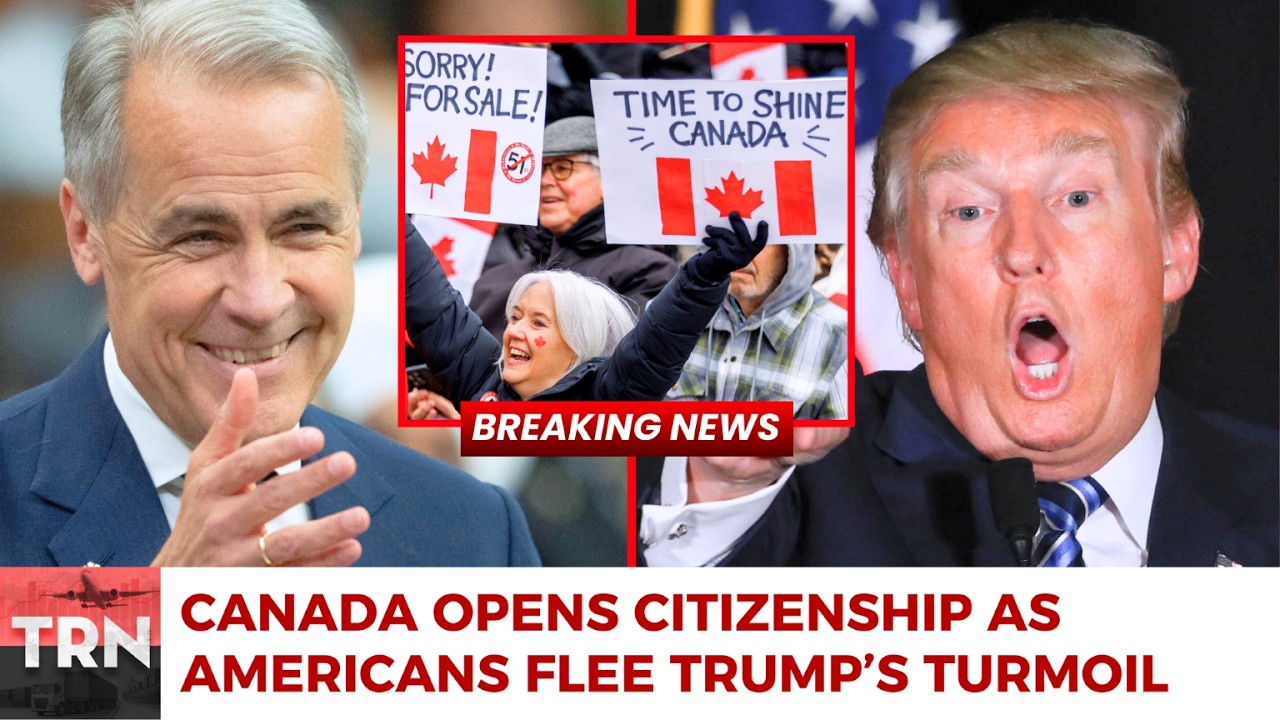
The newly passed “lost Canadians” legislation, which allows citizenship to be transmitted beyond the first generation for those born or adopted abroad, has sparked renewed interest among Americans tracing their Canadian roots. Immigration consultants report a significant uptick in inquiries, with many individuals feeling an urgent need for a backup plan amid the chaotic political climate in the U.S. The sentiment among these applicants is clear: they view Canadian citizenship as a lifeline in an increasingly unpredictable environment.
This shift can be directly linked to heightened political polarization and tightening immigration policies in the U.S., which have left many feeling disillusioned. The Trump administration’s approach has fostered an atmosphere of uncertainty, particularly for mixed-status families and long-term residents, leading many to reconsider their options. In stark contrast, Canada is perceived as a beacon of stability, characterized by universal healthcare, a more predictable political landscape, and a commitment to inclusion.
The implications of this trend are profound. As Canada expands its citizenship framework, it not only corrects historical injustices but also positions itself as a destination for those seeking refuge from the turmoil south of the border. The potential influx of skilled professionals and middle-class families from the U.S. could provide Canada with a unique opportunity to bolster its labor force and enhance its cultural diversity.
Moreover, this movement underscores a broader narrative of shifting geopolitical dynamics in North America. As the U.S. grapples with internal challenges, Canada is poised to attract talent and investment, reinforcing its identity as a stable and welcoming nation. The contrast between the two countries is stark: while the U.S. tightens its borders, Canada is strategically opening its doors wider.
For the United States, this trend signals a worrying erosion of institutional confidence among its citizens. The fact that Americans are actively seeking alternative citizenship options reflects a growing discontent with the current political trajectory. If this perception continues to take root, the U.S. risks long-term consequences, including a potential loss of skilled labor and diminished international standing.
In summary, the recent legislative changes in Canada offer a timely and strategic response to the growing unease among Americans. As more individuals seek to reconnect with their Canadian heritage, the implications for both countries will be significant. Canada stands ready to embrace this influx, while the U.S. must confront the underlying issues driving its citizens to seek stability elsewhere. The narrative unfolding here is not just about citizenship; it is a reflection of the evolving identities and futures of two neighboring nations.