

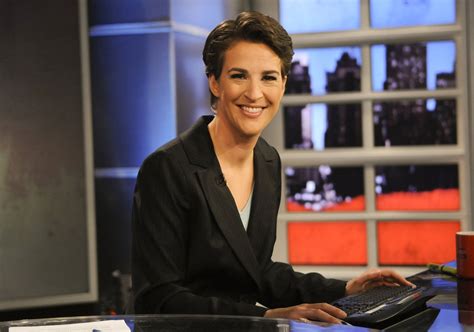
Rachel Maddow has long been one of the most influential voices in American cable news, but her role has taken on renewed significance as the United States enters a turbulent political period following Donald Trump’s return to the center of national power. With institutions under strain and political rhetoric increasingly radicalized, Maddow’s presence on MSNBC now reflects more than partisan commentary—it represents a form of media accountability that many viewers believe is under threat.
Maddow’s recent broadcasts have focused heavily on democratic erosion, warning that the normalization of extreme rhetoric is no longer theoretical. Her tone has sharpened, but it remains rooted in documented facts, historical parallels, and methodical analysis. Unlike many cable news personalities, Maddow resists the soundbite format, opting instead for extended narratives that place breaking developments into broader constitutional and historical context. This approach, once considered risky in a ratings-driven environment, has proven durable in an era defined by political volatility.
Her renewed prominence coincides with heightened public anxiety over the independence of the judiciary, the integrity of federal agencies, and the future of electoral norms. Maddow’s insistence on documentation and institutional memory has positioned her not just as a commentator, but as a chronicler of democratic stress points.
In recent weeks, Maddow has issued direct warnings to political actors who continue to align themselves with increasingly authoritarian positions. Her message is blunt: institutional damage does not occur all at once—it happens when individuals choose convenience over conscience. These remarks have resonated widely, circulating across social media platforms and reigniting debate over the role of journalists in moments of democratic crisis
Critics argue that Maddow’s framing blurs the line between journalism and advocacy. Supporters counter that silence, not scrutiny, is the greater danger. Maddow herself has addressed this tension head-on, stating that journalism’s obligation is not neutrality toward power, but fidelity to verifiable truth. In an environment saturated with misinformation, her viewers see her work as a stabilizing force rather than a partisan one.

Ratings data suggest that audiences are responding. MSNBC has seen increased engagement during Maddow-led programming, particularly among viewers seeking detailed explanations rather than reactive commentary. This reflects a broader shift in audience behavior: depth is once again valued in an age of noise.

As American media faces intensifying political pressure, Maddow’s model offers a counterpoint to the outrage economy. Her work underscores the argument that journalism can remain commercially viable while prioritizing rigor over sensationalism. Whether this model can be replicated across the industry remains uncertain, but its impact is undeniable.
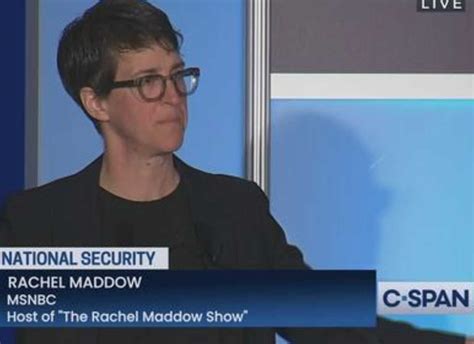
Ultimately, Rachel Maddow’s current chapter is less about ideology than about institutional survival. Her broadcasts serve as reminders that democracy is not self-sustaining—it depends on vigilance, memory, and public accountability. In that sense, Maddow’s role extends beyond television: she is helping define what responsible political journalism looks like when the stakes are no longer abstract.






