OTTAWA — When Prime Minister Mark Carney announced on January 8, 2026, that he would travel to Qatar later this month, the statement sounded diplomatic, even routine.
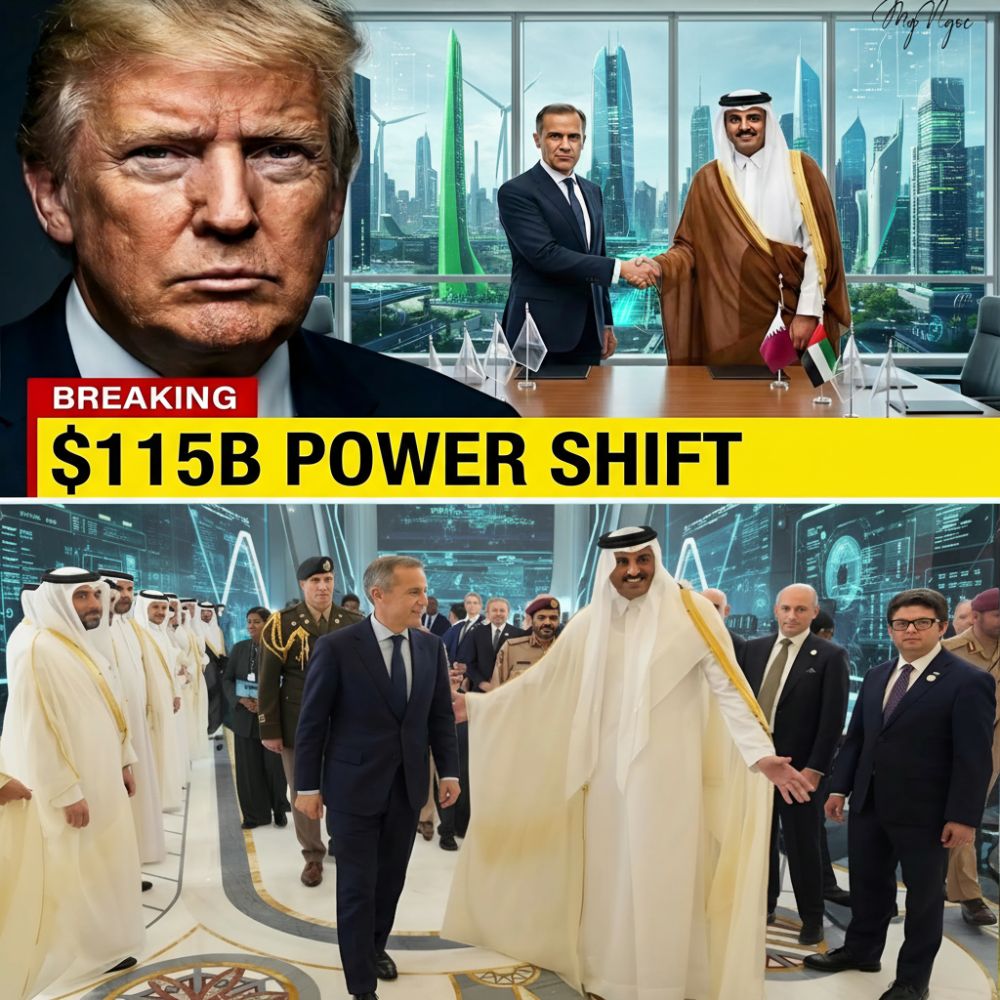
“We are creating a dense web of new connections to attract investment, diversify trade, and build a stronger, more independent Canadian economy,” Mr. Carney said.
In reality, it marked a decisive pivot in Canada’s global economic strategy — one driven less by ambition than by necessity.
Mr. Carney’s visit to Doha on January 18 will be the first ever by a sitting Canadian prime minister to Qatar. It comes just five days after his historic trip to Beijing and only two days before he heads to Davos for the World Economic Forum. Taken together, the itinerary forms a diplomatic blitz aimed at one audience in particular: sovereign wealth funds in the Gulf, institutions that control trillions of dollars and operate largely outside the political orbit of the United States.
The timing is not accidental. As President Donald Trump escalated threats against Canada — including floating annexation rhetoric, imposing punitive tariffs, and publicly referring to the country as a potential “51st state” — Ottawa moved quickly, and quietly, to reduce its economic vulnerability.
The result is a structural shift in global investment flows now taking shape largely beyond Washington’s reach.
The Rise of Gulf Capital
Sovereign wealth funds from the Gulf Cooperation Council have become the most powerful investors in the world. In the first nine months of 2025 alone, they deployed $56.3 billion across 97 deals, accounting for roughly 40 percent of all state-backed investment globally. Their combined assets exceed $5.6 trillion and are projected to reach nearly $9 trillion by 2030.
These funds are not passive holders of financial assets. They build ports, electricity grids, data centers, pipelines and telecommunications networks — infrastructure designed to operate for decades.
Canada has emerged as a prime destination.
Not because of its proximity to the United States, but increasingly because of its distance from American political unpredictability.
The Qatar–Brookfield Signal
The clearest sign of this shift came in December 2025, when the Qatar Investment Authority announced the creation of a new artificial intelligence subsidiary, followed days later by a $20 billion joint venture with Brookfield Asset Management, the Toronto-based global infrastructure giant.
The partnership aims to build large-scale AI infrastructure — data centers, energy systems and compute capacity — in Qatar and select international markets. Canada is expected to be among the primary beneficiaries.
The logic is straightforward. AI infrastructure requires enormous and stable supplies of electricity, long-term regulatory certainty, secure land access and predictable legal frameworks. Canada offers abundant hydroelectric and nuclear power, a cool climate that reduces energy costs for data centers, and a political environment that Gulf investors increasingly view as more stable than that of its southern neighbor.
Crucially, the investment bypasses American intermediaries entirely.
“This is direct Gulf-to-Canada capital,” said one senior financial executive familiar with the deal. “No U.S. approvals, no U.S. banks, no political exposure.”
Energy, Beyond Oil
Qatar’s relationship with Canada is not new. The Gulf state has invested in Canadian oil and gas assets for more than a decade, including significant holdings in Western Canadian production and offshore licenses near Newfoundland and Labrador.
What has changed is the focus.
Qatar Energy and its partners are now prioritizing carbon capture, hydrogen production and renewable energy — areas where Canadian firms are global leaders. Canada’s reserves of critical minerals, including lithium, cobalt, nickel and rare earth elements, further strengthen its appeal as the world accelerates toward energy transition.
Saudi Arabia and the United Arab Emirates are following similar paths.
Both countries are investing tens of billions of dollars in artificial intelligence, energy transition and industrial diversification. Both need access to mining expertise, clean energy technology and politically stable jurisdictions where long-term projects are insulated from sudden policy shocks.
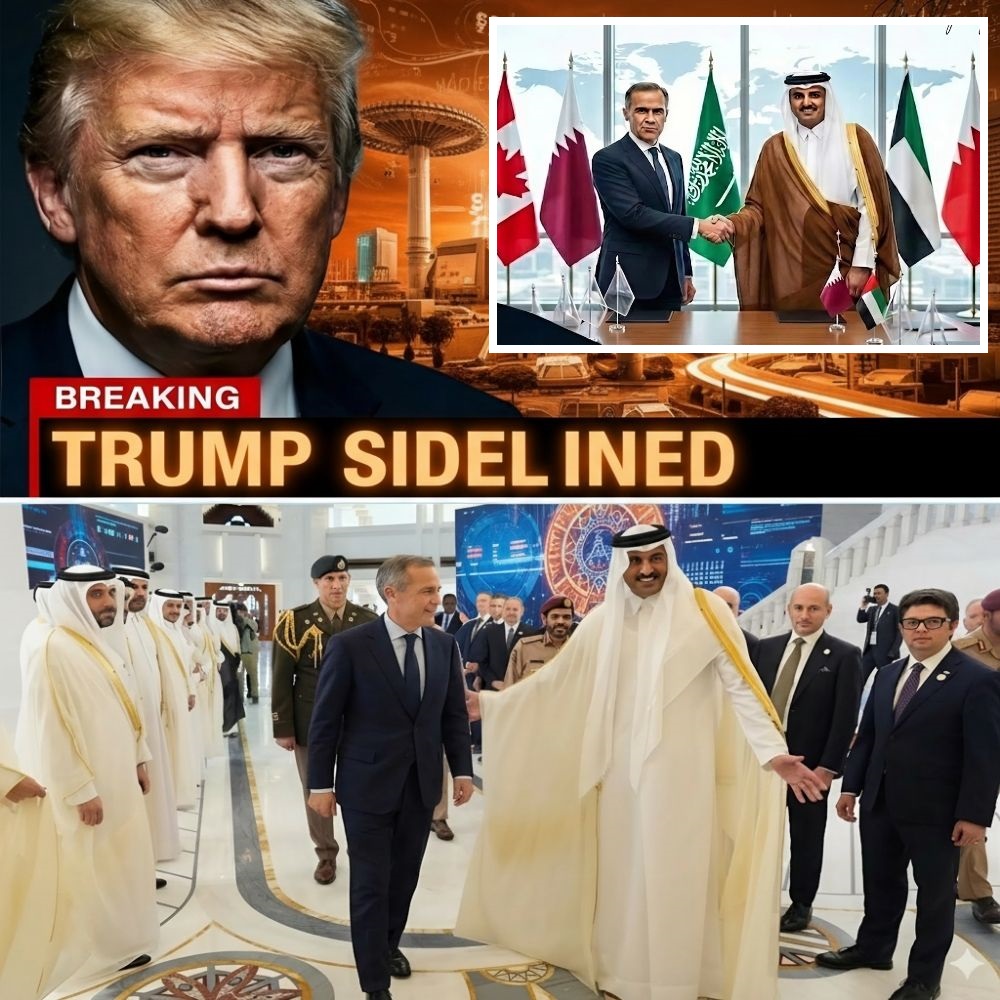
Canada fits the profile.
Mining, Technology and Strategic Stakes
Mining is emerging as one of the fastest-growing areas of Gulf interest.
The United Arab Emirates has announced a comprehensive mineral strategy aimed at securing critical resources globally, with particular attention to Canadian-listed companies. Saudi Arabia’s Public Investment Fund is exploring joint ventures with Canadian firms operating in Africa and Latin America.
The model is consistent: Gulf funds take strategic stakes in Canadian mining companies, provide patient capital, and gain access to technical expertise developed over a century of Canadian operations in challenging environments.
Technology is another pillar.
Canada is home to world-class artificial intelligence hubs in Toronto, Montreal and Edmonton, as well as globally competitive quantum computing firms such as D-Wave and Xanadu. Gulf states, seeking AI capabilities for economic planning, security, logistics and finance, are increasingly willing to fund Canadian innovation directly.
The $95 Billion Question
Taken together, these investments are not isolated deals but components of a larger realignment.
Based on current trajectories, stated investment priorities and recent deployments, Canadian officials and industry analysts estimate that Gulf sovereign wealth funds could invest roughly $95 billion in Canada over the next five to seven years.
That figure includes AI infrastructure, energy transition projects, mining and critical minerals, transportation and electricity infrastructure, and direct investments in technology firms.
Even the low-end estimates exceed $75 billion — capital that would once have flowed through American markets or required American approval.
Why Now
The catalyst was political.
President Trump’s rhetoric toward allies, his willingness to weaponize tariffs, and his open discussion of territorial expansion deeply unsettled global investors accustomed to treating the United States as a predictable anchor.
Gulf sovereign funds, whose investments are designed to last decades, began accelerating diversification away from American exposure — not out of hostility, but risk management.
Canada, with its rule of law, advanced economy and political moderation, became a natural alternative.
Mr. Carney’s 2025 travel schedule reflects that reality. His engagements in Beijing, the Gulf and Europe were not symbolic. They were structured investment roadshows aimed at decision-makers who control capital on a scale that rivals national governments.
A Permanent Shift
Once established, these investments do not reverse easily.
Infrastructure lasts 40 to 50 years. Energy projects operate for decades. Mining partnerships persist across commodity cycles. Technology collaboration creates long-term dependency and shared ecosystems.
By anchoring Gulf capital directly into its economy, Canada is reducing American leverage in a way that is likely permanent.
President Trump sought dominance. Instead, his approach accelerated diversification.
Canada is no longer positioning itself as an extension of the American economic system, but as an independent hub connecting Asia, Europe and the Middle East.
For middle powers watching closely, the lesson is clear: when pressure increases, alternatives emerge.
Canada found one — quietly, deliberately, and with trillions of dollars waiting on the other side.