Washington has always loved loud endings: late-night votes, televised resignations, podium speeches that sound like history snapping in half. But real political decline rarely arrives with fireworks. More often, it leaks in through the seams—through awkward pauses, delayed endorsements, and the kind of silence that feels less like obedience and more like distance.
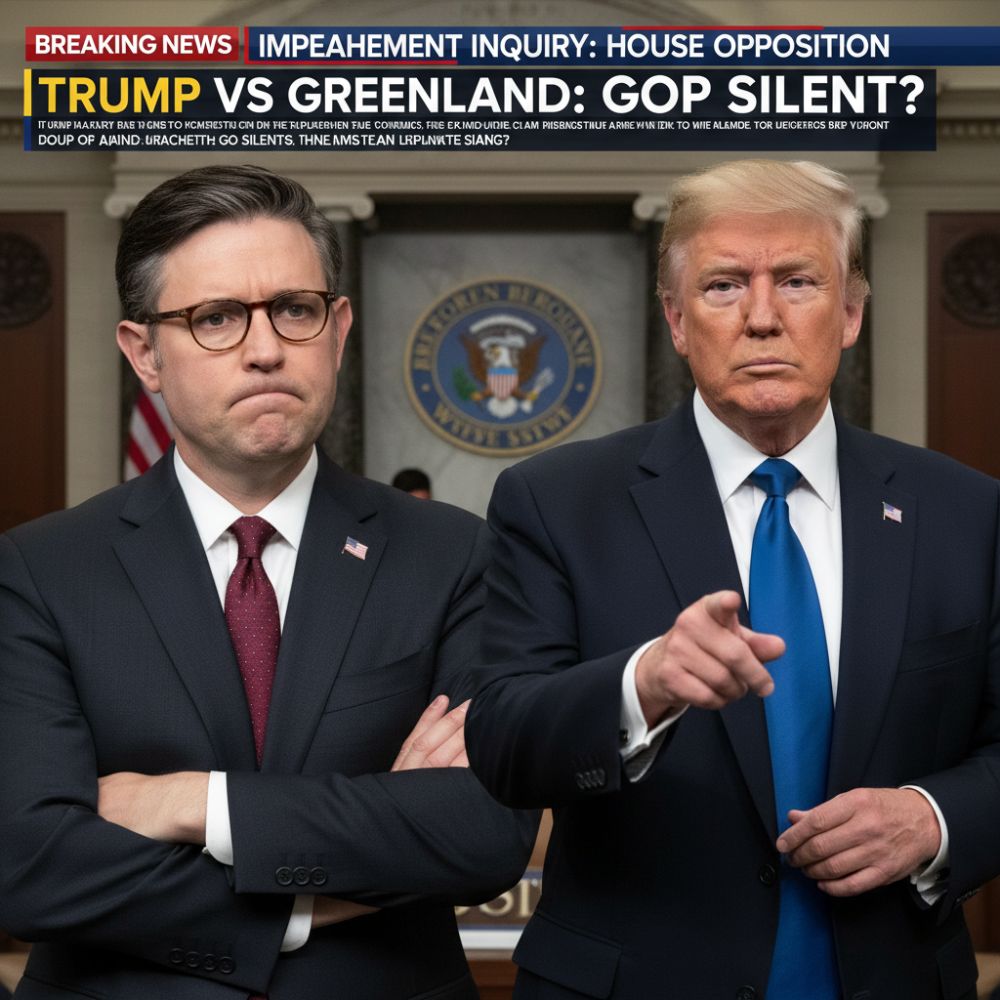
That’s why President Donald Trump’s renewed fixation on Greenland—framed in recent rhetoric as something the United States will secure “at any cost”—has landed differently inside Washington.
What once looked like classic Trump theater now reads like something sharper: a stress test. Not of Greenland, not of tariffs, not even of national security claims—but of loyalty itself, and what happens when fear stops producing predictable results.
For years, Trump’s power inside his party has functioned like a gravity field. The rule was simple: move toward him publicly, and you might be spared privately. Loyalty was expected in full view, without conditions, and without the messy complication of policy nuance. Dissent wasn’t treated as disagreement—it was treated as betrayal.
What’s changed lately isn’t Trump’s instinct. It’s the reaction he’s starting to receive.
When Senate Republicans began voicing objections to the Greenland posture—careful, procedural, often couched in constitutional language—it wasn’t dramatic rebellion. It was something worse for a leader who thrives on dominance: collective hesitation.
The kind that doesn’t scream, doesn’t trend for a day, but quietly erodes the illusion that compliance is automatic.
Publicly, allies have tried to downplay any escalation. Privately, however, lawmakers have found themselves stuck in a contradiction that is harder to defend the longer it sits in the open. If tariffs, emergency powers, or extraordinary measures are justified by national security, then Greenland must represent a serious threat.
Yet the same voices insist there is no imminent threat—no crisis, no immediate danger. Both cannot be true at the same time. And once people notice a contradiction, they begin to notice everything else.
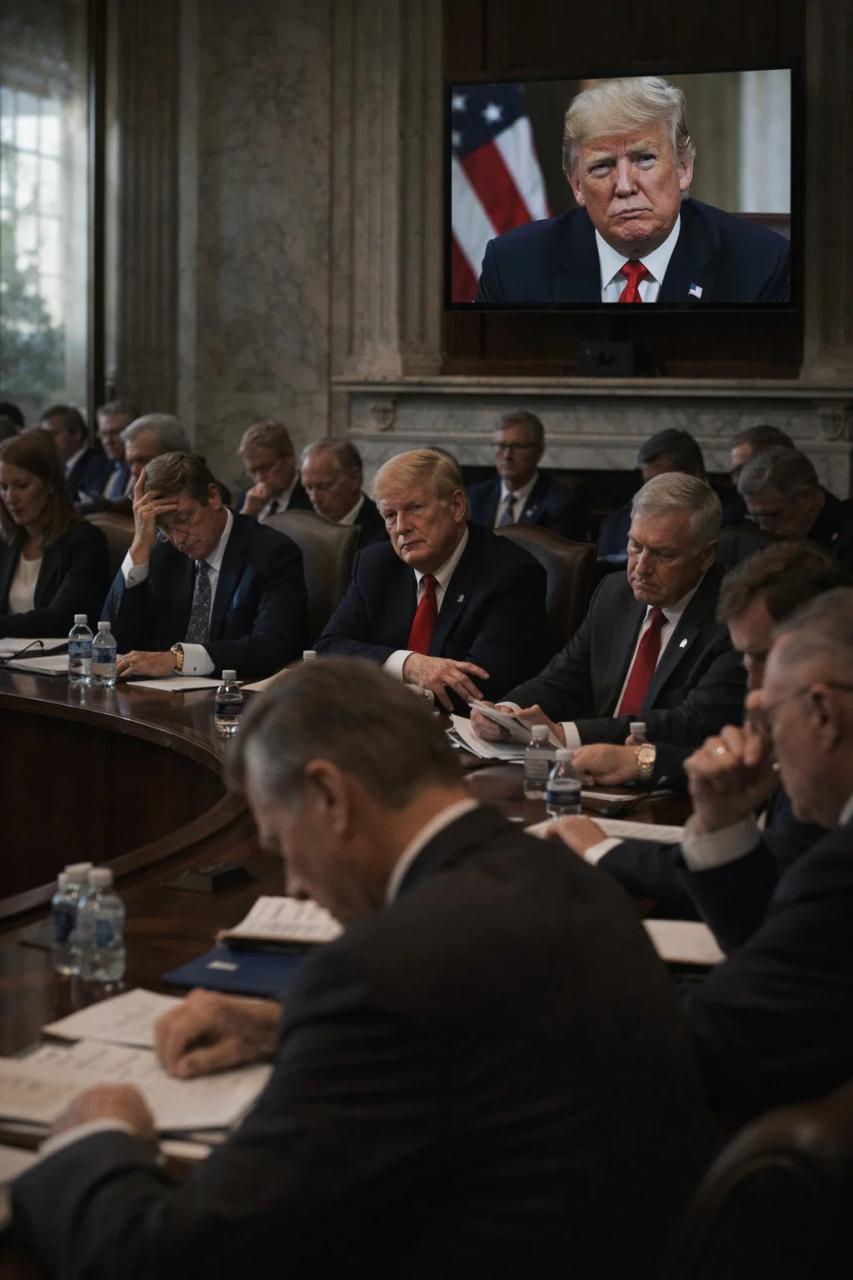
In this atmosphere, even small statements matter. A senator who “doesn’t see the case.” Another who offers a cautious hedge instead of a cheer. A leader who avoids full-throated endorsement and replaces it with procedural language. None of it is a headline-grabbing revolt. But it signals something that Trump’s style has always tried to prevent: shared skepticism.
And shared skepticism is contagious.
There’s a reason that the political fate of senators who once tried to “make peace” with Trump hangs over every calculation.
The lesson many lawmakers quietly absorbed is brutal in its simplicity: loyalty isn’t protection, it’s a delay. You can soften your tone, align your votes, avoid confrontation—yet still find yourself targeted when it’s convenient. When obedience doesn’t buy safety, fear loses efficiency.
That’s when institutions begin to do what they were designed to do—not quickly, not emotionally, but relentlessly.
This phase of resistance doesn’t look like protest. It looks like hearings. It looks like oversight. It looks like statutory language and constitutional questions that can’t be shouted down. Emergency claims invite scrutiny. National security rhetoric demands evidence. Courts introduce time—slow, grinding time that drains momentum from spectacle.
Trump thrives in ambiguity and performance. Institutions thrive in clarity and procedure. And that difference matters more than any single policy fight.
The same pattern shows up domestically, especially in the intensified debates around immigration enforcement.
Widely circulated incidents and allegations of excessive force have fueled arguments that the issue isn’t just funding or training—it’s structure, incentives, and accountability.
In that framing, the controversy isn’t only about what happens in the field, but about a governing philosophy: power first, oversight later.
That’s where Greenland stops being “just Greenland.” It becomes a mirror. A case study in what happens when authority demands absolute loyalty while offering none in return—when leaders punish even careful disagreement, and then act surprised when people begin to step back in public.
Trump’s response to friction is familiar: pressure, personal attacks, threats of political consequence. But intimidation works only when people believe obedience will be rewarded. The quieter truth emerging in Washington is that many no longer believe that.
Missed calls. Delayed statements. Neutral phrasing that reads like insulation. Silence that no longer signals submission, but preparation.
There may be no cinematic collapse, no single vote that ends the story. Instead, there is fatigue—the fatigue of defending contradictions, of normalizing volatility, of treating every demand as inevitable. And once inevitability disappears, leverage follows.
So the Greenland “at any cost” moment may not be remembered for what it achieved. It may be remembered for what it revealed: the exact second a system stops flinching—and a party begins to wonder, quietly, what it has been protecting all along.
If the unraveling is silent, what will it sound like when everyone finally admits they heard it?






