A low-key announcement in Winnipeg has detonated across North American trade corridors, and most people didn’t even notice it happen. But inside the logistics industry—especially in U.S. port cities—alarm bells are ringing.
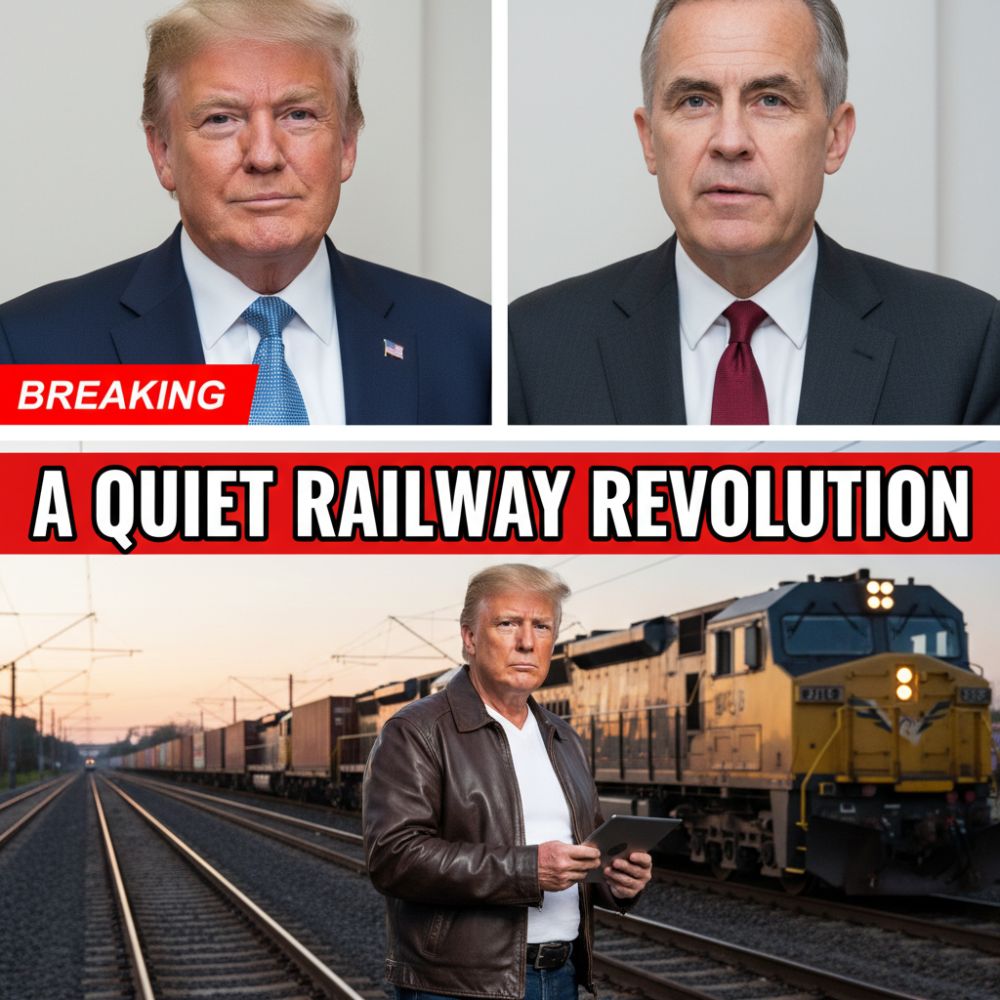
Canada has just committed $262 million to rebuild and modernize the Hudson Bay Railway, a move that could permanently reroute massive volumes of grain, fertilizer, minerals, and energy away from U.S. ports and directly into Europe.
This is not a routine infrastructure upgrade. It is a strategic rupture.
In November 2025, Prime Minister Mark Carney stood beside Manitoba Premier Wab Kinew and reframed a railway most Canadians had written off as obsolete. Steel rails stretching north to the Arctic, Carney said, are not relics—they are sovereignty. And with that, Ottawa signaled it is no longer willing to let Canadian trade be filtered, delayed, priced, and prioritized by American infrastructure.
For decades, Western Canadian exports followed a familiar pattern. Grain, potash, minerals, and energy moved south first—onto U.S. rail networks, through U.S. ports, under U.S. scheduling rules. Even shipments destined for Europe often passed through American hands. Fees were paid. Delays absorbed. Control surrendered.
The Hudson Bay Railway was supposed to be the alternative. Built in the early 20th century to connect the Prairies directly to the Port of Churchill, it promised a shorter route to Europe and freedom from U.S. bottlenecks. Instead, it became a symbol of failure. Permafrost shifted. Floods destroyed track. Maintenance costs spiraled. The shipping season was short. By the 1990s, Ottawa had lost faith and sold the entire corridor—railway and port—to a U.S. company for one dollar.
By 2017, a catastrophic flood shut the line down completely, isolating Churchill and confirming every doubt skeptics ever had.
That should have been the end of the story.
Instead, it was the turning point.
In 2018, a coalition of 41 Indigenous communities and northern municipalities bought back the railway and port, forming the Arctic Gateway Group. At first, the move was seen as symbolic—important socially, but commercially limited. What changed everything was technology, politics, and pressure from Washington.
As U.S. trade rhetoric hardened and Canadian sovereignty became an open talking point during the Trump era, Ottawa reassessed its vulnerabilities. Railways once dismissed as impractical suddenly looked like leverage.

The result is today’s $262 million rebuild, funded jointly by federal and provincial governments, designed to upgrade the entire Hudson Bay Railway to Class 1 standards—the highest freight rating in North America.
This is not patchwork maintenance. It is a ground-up reconstruction.
Engineers have stabilized permafrost with redesigned roadbeds. Heavy-duty rails and sleepers now handle full axle loads. Bridges and culverts have been rebuilt for extreme weather. Ground-penetrating radar, LiDAR mapping, drones, and AI-driven monitoring systems now track subsurface movement in real time. Instead of reacting to failures, maintenance is predicted and scheduled before damage occurs.
The result: a northern rail corridor operating more reliably than at any point in the last three decades.
And reliability is everything.
Once a rail line reaches Class 1 status, global shippers take it seriously. Contracts follow. Capital follows. And cargo starts moving.
That cargo is enormous.
Grain from Saskatchewan and Manitoba can now move north and cross the Atlantic directly to Europe—shorter routes, lower costs, no U.S. port fees. Potash, once almost entirely dependent on American logistics, is already being rerouted through Churchill under signed agreements. Critical minerals like nickel, cobalt, lithium, and rare earths—essential to Europe’s energy transition—are now shipping north instead of south.
Energy is next.
Under the “Churchill Plus” framework, proposals include LNG, hydrogen-derived ammonia, and even Arctic energy corridors that could give Western Canada a direct export outlet to Europe and Asia—again, without touching U.S. ports.
This is why American logistics firms are paying attention.
Every ton that moves north is a ton not handled by U.S. railways. Every ship that leaves Churchill is one that doesn’t dock in an American port. Over a decade, this shift could redirect hundreds of billions of dollars in trade flows.
What was once dismissed as a frozen, unreliable line is now becoming a strategic escape valve.
The deeper reality is this: Canada didn’t just rebuild a railway. It rebuilt an option it hasn’t had in generations—the ability to reach the world without asking permission.
And once trade routes change, they rarely go back.