In early February 2026, as the Trump administration ramps up its aggressive immigration enforcement, a wave of grassroots resistance is sweeping the nation, forcing a rare retreat on key policies.
From rural Virginia to urban Minnesota, ordinary citizens, local officials, and even some Republicans are uniting against proposed ICE facilities, highlighting deep divisions over mass deportations.
This backlash, fueled by reports of excessive force and journalist arrests, raises profound questions about the limits of federal power in a democracy.
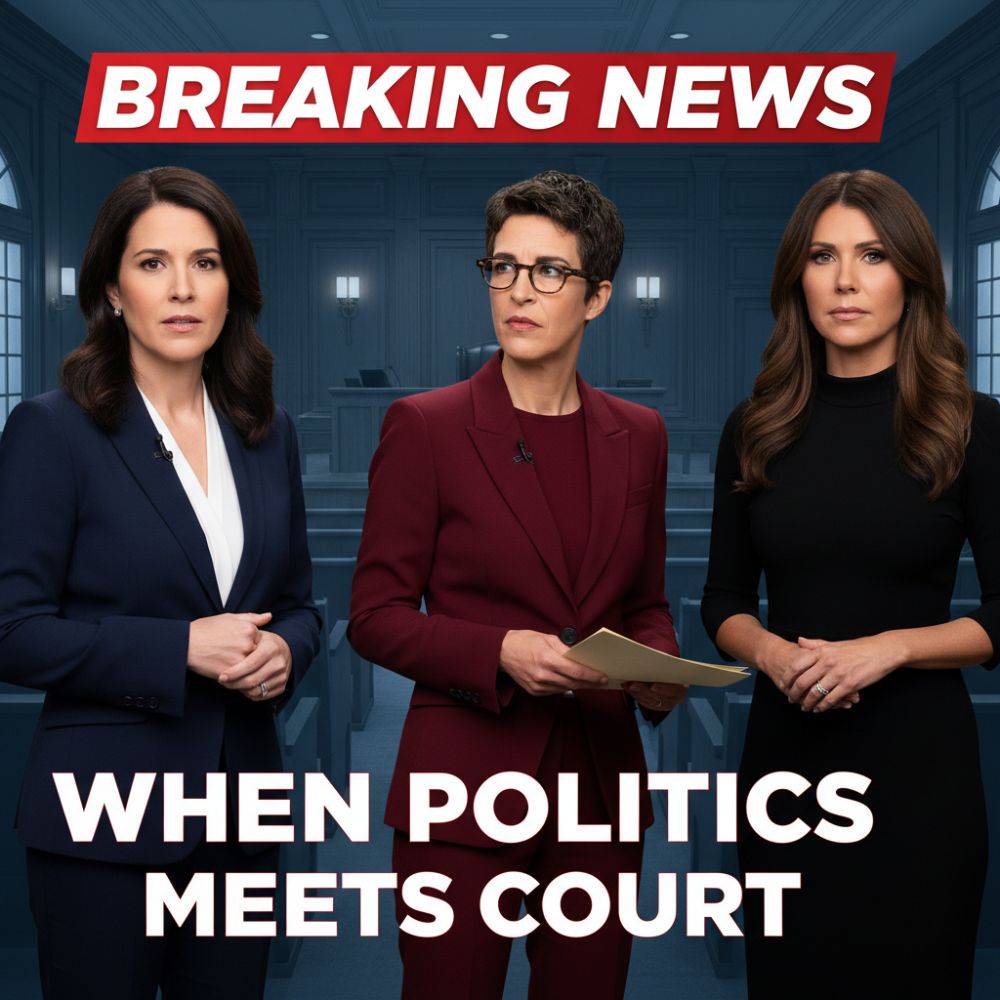
Rachel Maddow, in her February 2 episode, dissected this unfolding crisis with her signature deep analysis, weaving together local stories to illustrate broader democratic pushback.
She opened with Hanover County, Virginia, where a proposed ICE processing center in Ashland sparked outrage in a traditionally conservative area. Maddow’s delivery was measured yet incisive, using a calm, fact-driven tone to underscore how even Trump strongholds are rejecting the human cost of these plans.
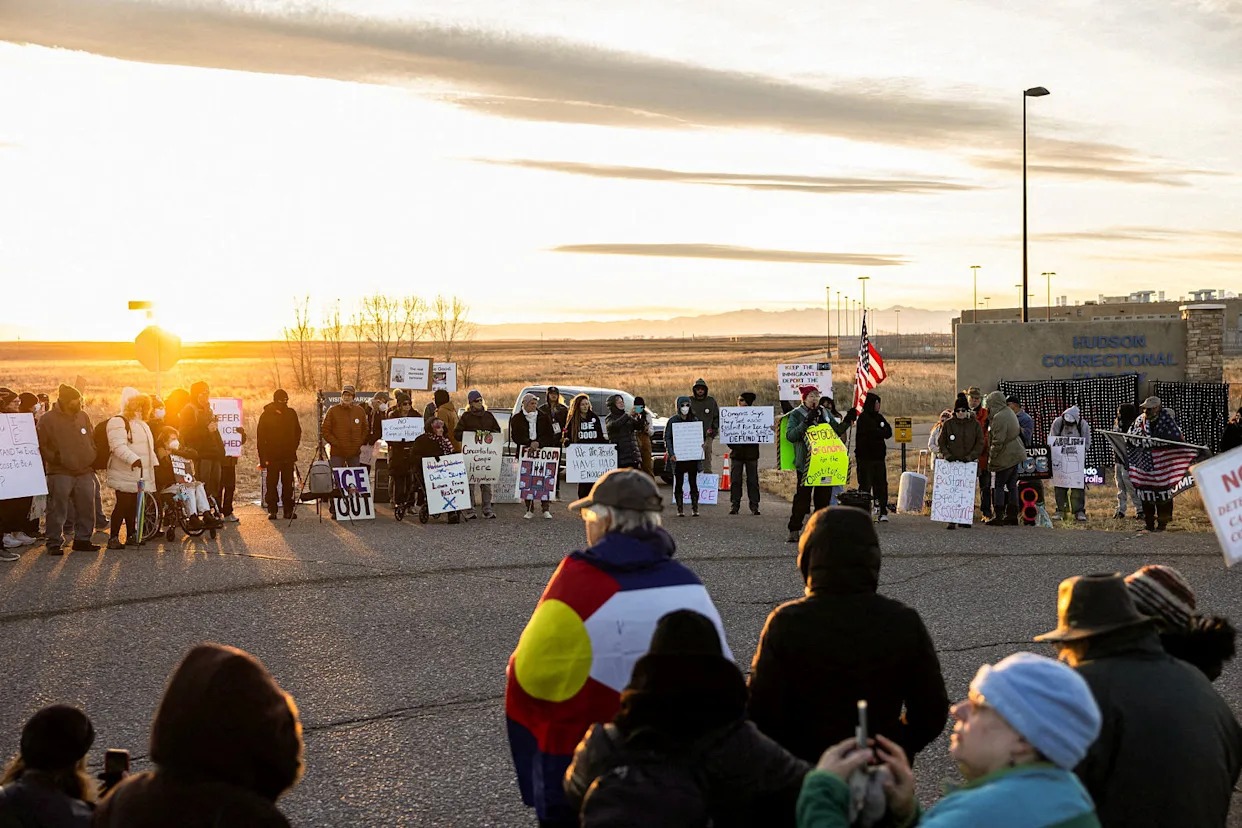
In Hanover County, about 500 residents gathered outside the courthouse on January 28, 2026, chanting against the conversion of a warehouse into a detention site.
The Board of Supervisors, after hearing public testimony, unanimously opposed the sale, directing staff to formally resist the Department of Homeland Security’s intentions. This local defiance reflects a historical pattern of community resistance to federal overreach, reminiscent of past battles over civil rights enforcement.
Maddow highlighted the irony: Hanover, where Trump won by 26 points in 2024, became a flashpoint for bipartisan opposition. She analyzed the presentation with visual aids like maps and timelines, emphasizing how economic concerns—traffic, emergency services—merged with moral objections to detention conditions.
Shifting to Minneapolis, Maddow delved into the arrest of independent journalist Georgia Fort during an anti-ICE protest at a St. Paul church.
Fort, covering the disruption where protesters interrupted a service led by an ICE official, was charged with conspiracy and interfering with First Amendment rights. Maddow’s interview with Fort revealed a chilling effect on press freedom, presented with somber gravity and clips of the chaotic scene.
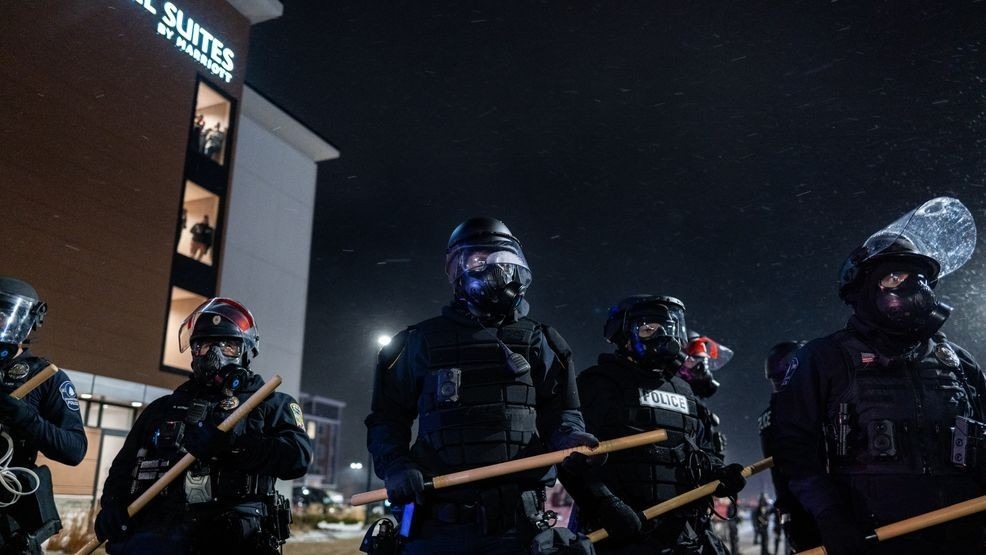
The Minneapolis incidents escalated after ICE agents fatally shot Renee Good and Alex Pretti in separate January 2026 encounters, igniting widespread protests.
These shootings, the third in three weeks, drew criticism from both parties, leading to calls for investigations and funding restrictions on DHS. Maddow framed this as a turning point, using a analytical lens to connect it to Trump’s broader “no release” detention policy.
Across the U.S., similar rejections are mounting. In Surprise, Arizona, representatives demanded transparency over a 1,500-bed warehouse acquisition, labeling it part of Trump’s “deportation machine.”
Local concerns focused on conditions in converted industrial spaces, echoing reports of indefinite detentions and excessive force.
In Roxbury, New Jersey, bipartisan backlash targeted water usage and community impact, with activists flooding meetings to halt the project. Maddow’s segment used on-screen graphics to map these sites, her voice steady but urgent, contrasting the administration’s tactics with peaceful democratic responses.
President Trump, facing plummeting polls and internal dissent, has backpedaled on some elements, including a ban on deporting U.S. citizens removed from funding bills.
Yet, his administration persists with $45 billion in expansion funding, drawing from tax cuts, amid accusations of racial profiling and violence. Maddow critiqued this as a political catastrophe, her chiding humor subtle when noting business leaders and clergy joining the fray.
In Kansas City, Missouri, city council resolutions blocked new centers, while in Texas, protests at Dilley detention facility involved chants from inside and outside. Maddow’s style—methodical breakdowns with historical context—painted these as victories for democracy, avoiding overt bias but vividly illustrating policy failures.
The surge in child detentions, up sixfold under Trump, added fuel, with stories like the arrest of 5-year-old Liam Conejo Ramos going viral. Maddow closed by analyzing the tone: Trump’s aggressive rhetoric met with stalwart, nonviolent opposition, a testament to American resilience.
This resistance signals a potential shift, as communities wield local power to challenge federal mandates. Yet, with enforcement escalating, the question lingers: Can democracy withstand the strain, or will divisions deepen irreparably?