When Canadian Prime Minister Mark Carney stepped onto the World Economic Forum stage, the room expected cautious diplomacy. What it got instead was a direct challenge to the global power structure — and a warning that middle powers were done playing nice.
“If you are not at the table, you are on the menu.”
The line landed like a thunderclap.
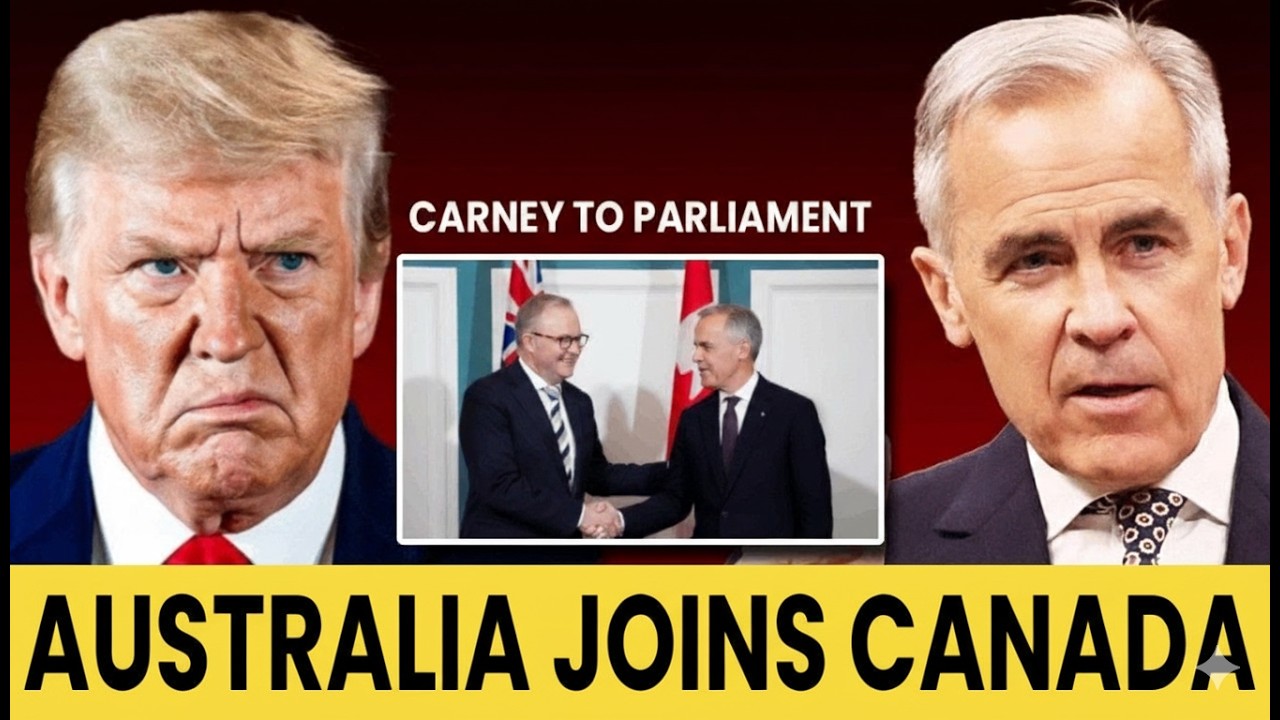
Carney wasn’t speaking in abstractions. He was calling out decades of silent compliance by countries caught between superpowers — nations that followed the rules, absorbed the pressure, and hoped stability would protect them. That era, he said, is over.
His message was blunt: economic dependence has become a liability, not a shield. Tariffs, sanctions, and trade threats are no longer tools of last resort — they are weapons routinely aimed even at allies. And nations that keep pretending otherwise are choosing vulnerability.
Drawing on Václav Havel’s famous “green grocer” analogy, Carney urged countries to stop complying out of fear or habit — to stop “living within a lie.”
The speech wasn’t just provocative. It was a call to action: reclaim sovereignty, forge new alliances, and shape the rules instead of obeying them.
What no one expected was how fast the words would turn into reality.
Within days, Australian Prime Minister Anthony Albanese publicly endorsed Carney’s vision — then took the unprecedented step of inviting him to address the Australian Parliament. That invitation transformed a Canadian speech into an international movement.
This was no symbolic gesture.
For decades, middle powers like Canada and Australia thrived under a U.S.-led order. Disagreements stayed private. Loyalty was rewarded with access and security. But as Washington grew more transactional, the bargain began to rot. Loyalty became assumed. Interests became expendable.
Tariffs arrived without warning. Trade agreements became leverage. Even close allies found themselves treated less like partners and more like pressure points.
Australia understood this pain intimately. So did Canada, staring down U.S. tariff threats, USMCA uncertainty, and rhetoric that turned partnership into risk. What once felt like strength now felt like exposure.
The Carney–Albanese alignment signaled a decisive break.
This wasn’t anti-American defiance. It was strategic self-preservation.
The emerging Canada–Australia pact is built around action: coordinating on critical minerals, securing supply chains, aligning customs enforcement, and reducing reliance on any single market. Instead of waiting for superpower direction, they are leading themselves.
And they’re not alone.
Mexico has joined the initiative, adding a crucial Latin American voice and proving this isn’t an Anglosphere club — it’s a flexible global network. Other midsized economies are watching closely, drawn to a “third way” that avoids choosing sides in great-power rivalries.
The logic is simple: when trade becomes coercion, diversification becomes survival.
Canada has already committed to doubling non-U.S. exports and accelerating new trade deals worldwide. Australia is following a similar path. This isn’t hostility — it’s resilience in a world where economic tools are routinely weaponized.
The implications are enormous.
For the first time in decades, middle powers are coordinating openly, pooling leverage, and negotiating collectively. Power is being redefined — not by military might or GDP alone, but by the ability to connect, coordinate, and adapt.
In this new model, strength comes from networks, not dominance. From trust, not fear. From shared action, not silent obedience.

Washington’s reaction has been predictably sharp — but that only underscores the point. The old assumption that allies will absorb pressure indefinitely is collapsing. Dependence is no longer stability. It’s exposure.
What began as a speech in Davos has become something far larger: a blueprint for a multipolar future, where middle powers refuse to be sidelined and instead shape the global agenda together.
Carney didn’t just speak truth to power.
He invited others to stand beside him.
And Australia said yes.