Here’s the question rattling Washington tonight:
What happens when the president who built his entire economic identity on tariffs starts quietly dismantling them — not because foreign leaders pressured him, but because his own voters did?
And more importantly: what happens when Canada is watching?
The Trump tariff machine is no longer roaring. It’s sputtering. And the cracks aren’t coming from Beijing, Brussels, or Ottawa. They’re coming from American consumers, American manufacturers, and even members of Trump’s own Republican Party.
That’s not just political noise. That’s structural stress.
Let’s rewind.
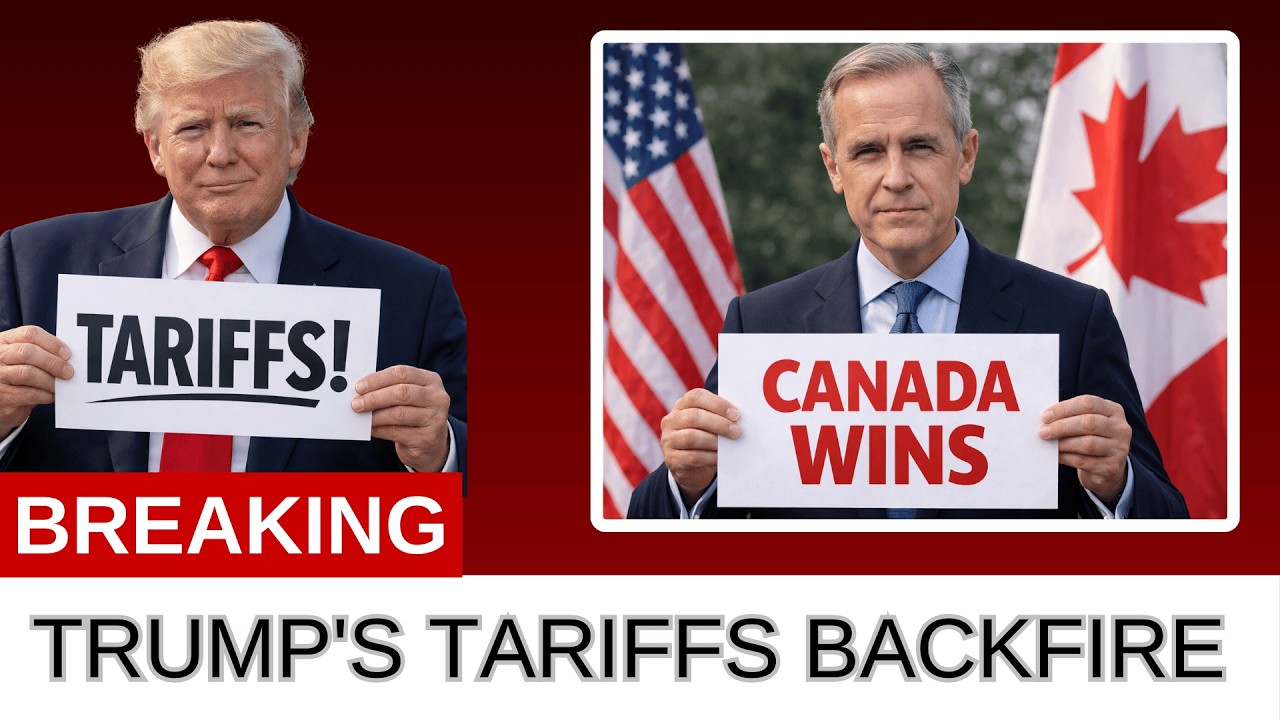
Last summer, Trump escalated his trade war with sweeping tariffs — up to 50% on steel and aluminum, later expanded to cover a broad list of finished goods: appliances, industrial components, even baking equipment. The message was simple: America first. Everyone else pays.
But that’s not what happened.
Prices climbed. Supply chains tightened. Small businesses absorbed higher costs. Consumers saw it at checkout counters. And polling began to shift.
Recent Pew Research data shows over 70% of Americans now rate economic conditions as fair or poor. Even more troubling for the White House: a majority believe Trump’s own policies made conditions worse.
That’s a political earthquake for a president who branded himself as the architect of prosperity.
Then came the moment that changed the narrative.
The U.S. House of Representatives voted to overturn Trump’s tariffs on Canada — and it wasn’t just Democrats. Republicans crossed the aisle to rebuke the policy. When your own party votes against your signature economic weapon, that’s not strategy. That’s vulnerability.
Trump is expected to veto the bill, but the signal is already sent. Republican lawmakers facing tight midterm races are choosing local economics over party loyalty. Voters don’t debate abstract trade theory. They ask why groceries cost more and why factories cut shifts.
Behind the scenes, something even more telling is happening.
According to officials familiar with internal discussions, trade agencies are reviewing tariff lists, considering exemptions, and shifting toward narrower, targeted national security probes instead of blanket duties.
Translation: the broad “tariff wall” is being quietly dismantled.
The administration isn’t admitting failure publicly. It’s calling the approach “nimble and nuanced.” But when a policy moves from aggressive expansion to cautious retreat, markets understand what that means.
And here’s where Canada’s opportunity emerges.
When Trump imposed tariffs, he didn’t just tax foreign goods. He disrupted deeply integrated North American manufacturing. Auto parts that cross the border multiple times. Construction materials from Canadian mills. Energy components flowing through shared infrastructure.
Every disruption forced American companies to reassess risk.
Some diversified suppliers. Some signed new long-term contracts elsewhere. Some simply lost trust in policy stability.
And trust doesn’t reset automatically when tariffs are rolled back.
That’s Canada’s once-in-a-decade window.
Because Ottawa didn’t panic. It didn’t escalate recklessly. Instead, under Mark Carney’s leadership, Canada accelerated diversification — strengthening ties with Europe, deepening Indo-Pacific engagement, expanding options beyond Washington.
The strategy wasn’t dramatic. It was disciplined.
While Washington governed through economic coercion, Ottawa governed through structural resilience.
Now the dynamic has flipped.
If tariffs soften, American businesses will remember who introduced volatility and who maintained stability. Canada can position itself not as a reactive partner begging for access, but as a reliable node in global supply chains — one that doesn’t weaponize trade every election cycle.
This is the critical insight: when economic coercion becomes domestic liability, the coercer loses leverage permanently.
China adapted. Europe diversified. Mexico reoriented supply chains. Canada built redundancy.
And once countries adjust, they rarely revert fully.
The real risk for Washington isn’t short-term tariff rollback. It’s reputational damage. A perception that U.S. trade policy is governed by political cycles rather than strategic consistency.
That perception drives capital allocation decisions. It shapes where factories are built. It influences where companies embed themselves long term.
For Canada, the smartest move now isn’t celebration. It’s acceleration.
Lock in diversified agreements. Deepen integration with Europe and Asia. Make Canadian supply chains so globally embedded that no future administration — regardless of party — can meaningfully threaten them with broad tariffs again.
Because here’s the uncomfortable truth for Washington:
When your own party revolts, your voters lose confidence, and your trade agencies start trimming policies you once called essential, the tariff wall isn’t holding.
It’s collapsing inward.
And Canada, for the first time in years, isn’t reacting to U.S. pressure.
It’s building beyond it.