🚨🔥 Canada Rejects America’s Jets as Sweden Courts Ottawa — The F-35 vs Gripen Showdown Intensifies 🇨🇦✈️🇺🇸🇸🇪
Canada faces a seismic defense dilemma as it weighs scrapping the $33 billion American F-35 jet deal in favor of a bold Swedish Gripen offer that promises 10,000 jobs and full technology transfer. The U.S. threatens to reconsider NORAD air defense, igniting a fierce geopolitical showdown with urgent implications.
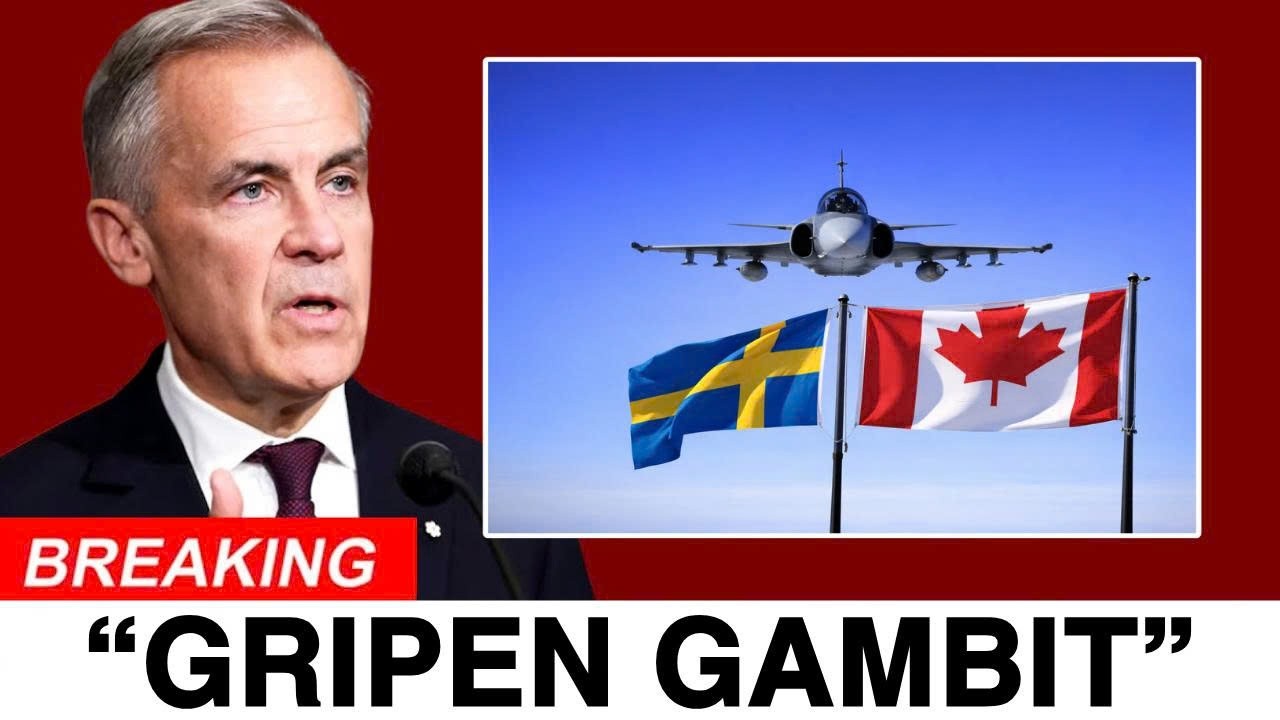
In an unprecedented move, Sweden’s Saab defense company has aggressively courted Canada by proposing not just sales but domestic assembly and technological sovereignty with its Gripen E fighter jets. This offer comes amid soaring costs and significant delays dogging Canada’s existing $33 billion F-35 agreement with Lockheed Martin.
Originally pegged at $19 billion, Canada’s F-35 program costs have ballooned by nearly 75 percent. The Government Accountability Office confirmed a $6 billion overrun and years of delay on the critical Block 4 upgrade, intensifying Ottawa’s doubts about America’s flagship stealth fighter.
More than just dollars and timelines, Canada faces deep strategic concerns. Lockheed’s centralized software system ties Canadian jets’ combat capabilities directly to U.S. servers, fueling fears of long-term dependency. Critics warn this restricts Canada’s operational autonomy in a volatile geopolitical landscape.
The Canadian government, under Prime Minister Mark Carney, who took office in early 2025, initiated a full review of the deal citing escalating trade tensions under former U.S. President Donald Trump. Only 16 of 88 jets are confirmed; the rest remain in limbo amid growing political uncertainty.
Saab’s new pitch is a game-changer. The Swedish company pledges full technology transfer and local manufacturing, creating up to 10,000 Canadian aerospace jobs. Saab’s CEO confirmed ongoing talks with Ottawa and Bombardier for Canadian assembly lines, effectively embedding Canada into a key international defense supply chain.
This is not theoretical—Saab and Bombardier already collaborate on the GlobalEye airborne early-warning aircraft, successfully built in Canada with final integration in Sweden. This existing partnership bolsters Saab’s credibility and presents a tangible alternative to the U.S. offer.
Technically, the Gripen E is a 4.5-generation fighter optimized for Canada’s extreme Arctic conditions, capable of operating from short runways and even highways—vital advantages given the country’s vast northern geography. This operational versatility starkly contrasts with the stealth-focused fifth-generation F-35.
The stakes extend beyond defense procurement. Sweden recently signed a letter of intent to supply Ukraine with up to 150 Gripen jets, a deal that Sweden cannot fulfill alone. Canada’s aerospace industry and its significant Ukrainian diaspora position the country as a potential critical partner in supporting Ukraine’s defense.

Washington responded swiftly with pressure tactics. U.S. Ambassador Pete Hoekstra warned bluntly that abandoning the F-35 could jeopardize the decades-old NORAD agreement, with American jets needing to patrol Canadian airspace—an unprecedented erosion of Canadian air defense sovereignty.
Hoekstra went further, condemning the Gripen as an inferior choice lacking interoperability with U.S. systems, implying that Canada’s decision could compromise continental defense cohesiveness. These remarks have sparked political backlash in Ottawa, with former national security officials dismissing them as undue diplomatic coercion.
Public sentiment in Canada clearly favors the Gripen alternative. A December 2025 survey found 72% of Canadians support incorporating the Gripen into their Air Force, signaling a profound shift in popular opinion against the established F-35 plan, which has only 13% backing.
This pressure from Washington is not new. Similar warnings about interoperability and NORAD surfaced earlier in 2025. Repeated diplomatic brinkmanship has raised questions about the limits of Canadian sovereignty in defense decisions and the true nature of the Canada-U.S. alliance.
The Canadian defense procurement 𝒹𝓇𝒶𝓂𝒶 unfolds amid a broader global realignment. Brazil and Colombia recently adopted Gripen jets, Hungary and the Czech Republic seek alternatives to U.S. systems, while Denmark reevaluates its F-35 purchase. Middle powers worldwide are challenging dependency on superpower arms.
Analysts highlight a critical insight: purchasing U.S. weapons often means long-term political and technological entanglement, risking sudden strategic vulnerabilities following political shifts. Canada’s choice becomes a statement about defending sovereignty versus defaulting to dependency amid geopolitical volatility.
Prime Minister Carney confronts a wrenching trade-off: remain locked into the expensive, delayed F-35 program with continued reliance on the U.S., or pivot to Sweden’s Gripen, securing industrial benefits and autonomy but risking friction within NATO and NORAD’s integrated defense framework.
The domestic political dimension cannot be overstated. Canada’s Ukrainian community forms both a demographic and moral force, linking procurement choices with support for Ukraine amidst its ongoing conflict with Russia. Embracing Gripen projects a stance that transcends mere military hardware.

As Canada inches toward a historic decision, the international community watches closely. The outcome will resonate beyond borders, potentially heralding a new era where middle powers assert greater control over their defense acquisitions and alliance terms. The world’s defense landscape hangs in the balance.
In this high-stakes moment, the government must navigate complex trade-offs where security, sovereignty, and economics collide. Whatever the verdict, Canada’s choice will shape not only its skies but the strategic paradigm governing partnerships and independence for years to come.
The clock is ticking. The F-35 vs. Gripen confrontation is more than a fighter jet procurement—it’s a defining test of Canada’s defense sovereignty, alliance politics, and global identity amid rising geopolitical fissures. The decision will echo for generations.