For nearly a century, the Detroit–Windsor corridor has functioned as the industrial heartbeat of North America. Auto parts cross that stretch of water multiple times before a single vehicle rolls off the line. When the corridor slows, assembly plants stall within hours.
For decades, one structural vulnerability loomed over that system: its busiest commercial crossing was effectively controlled by a single privately owned bridge.
That era is about to end.
The Gordie Howe International Bridge, a massive publicly backed infrastructure project linking Detroit, Michigan, and Windsor, Ontario, is scheduled to open in early 2026.
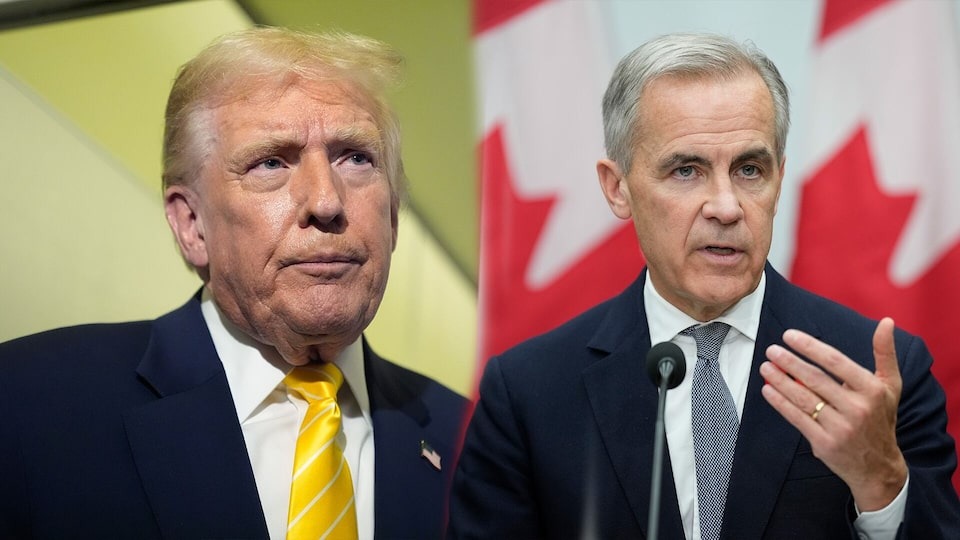
And just weeks before completion, former President Donald Trump threatened to block it.
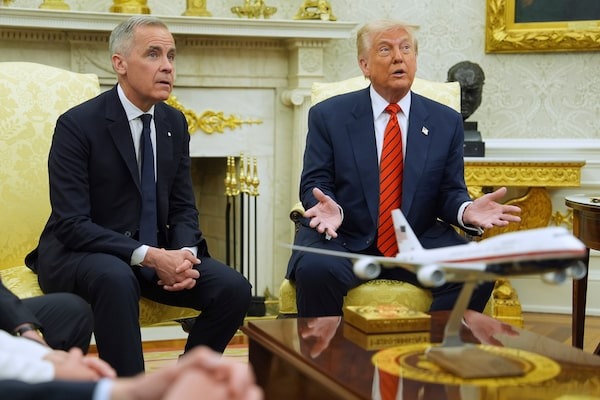
Prime Minister Mark Carney responded not with rhetoric—but with contracts, ownership documents, and federal filings.
The End of a Choke Point
For decades, heavy truck traffic between the two countries relied overwhelmingly on the Ambassador Bridge, a privately owned span long criticized for its monopoly-like position in commercial freight movement.
The structural weakness became undeniable in February 2022, when blockades at the bridge disrupted supply chains and forced temporary production cuts across the auto sector. In a just-in-time manufacturing system, even short interruptions cascade quickly.
For Ottawa, that episode reframed the issue: this was no longer a matter of convenience. It was systemic risk.
A second crossing wasn’t expansion—it was redundancy.
Who Owns the Bridge?
Trump’s latest claim suggested Canada was gaining unilateral control over a critical U.S. trade artery and that Washington deserved compensation or majority ownership.
The public record says otherwise.
The Gordie Howe bridge was formalized under a 2012 cross-border agreement framework. While Canada financed the bulk of the construction costs, ownership is structured as a joint public asset between Canada and the state of Michigan.
American workers helped build it. American steel went into it. Michigan will benefit directly from it.
Carney’s rebuttal was straightforward: the terms were negotiated, signed, and ratified years ago. There is no surprise takeover. There is no hidden clause.
And notably, past reporting shows that Trump himself had previously expressed support for the project during earlier phases.
The Legal Clock Is Already Running
This is not a theoretical project that can be halted with a political statement.
The U.S. Department of Homeland Security has already moved through the formal administrative process to designate the bridge as an official port of entry, with an effective date set in early 2026. That step represents one of the final procedural hurdles before operations begin.
At this stage, blocking the opening would require reversing established regulatory actions, triggering legal and political consequences—especially in Michigan, where economic stakeholders overwhelmingly support the project.
What the Bridge Actually Changes
Claims that the bridge gives Canada “control” over U.S. auto trade are exaggerated.
What it does provide is more subtle—and strategically powerful:
• It eliminates single-point-of-failure dependence in the continent’s most critical trade corridor.
• It introduces competition to a crossing historically associated with private monopoly power.
• It ensures trade continuity even during political or logistical disruptions.
In other words, it reduces leverage for anyone—public or private—who might attempt to weaponize the corridor.
Why the Threat Backfired
The Detroit–Windsor corridor supports hundreds of thousands of American jobs. Michigan manufacturers depend on predictable border throughput.
Blocking a jointly structured infrastructure project would not only strain bilateral relations—it would risk backlash within the U.S. industrial heartland.
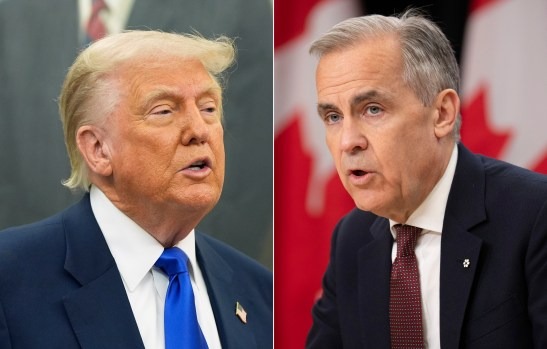
Trump attempted to create leverage by threatening the bridge.
But the bridge itself is leverage.
It was conceived after a supply-chain crisis precisely to prevent any actor from holding North America’s manufacturing core hostage again.
The Bigger Picture
The opening of the Gordie Howe International Bridge marks more than a new crossing. It signals a shift in how North America manages risk.
In an era of trade volatility and political brinkmanship, redundancy equals resilience.
And this time, the paperwork is already signed.






